ST. JOHN’S — The Assembly of First Nations moved Tuesday to repudiate what Innu leaders describe as a “discredited and unscientific” account suggesting the Innu people came to Labrador only about 300 years ago — a claim that has inflamed tensions over history, hunting rights and reconciliation in the province.
Motion brought by Sheshatshiu chief
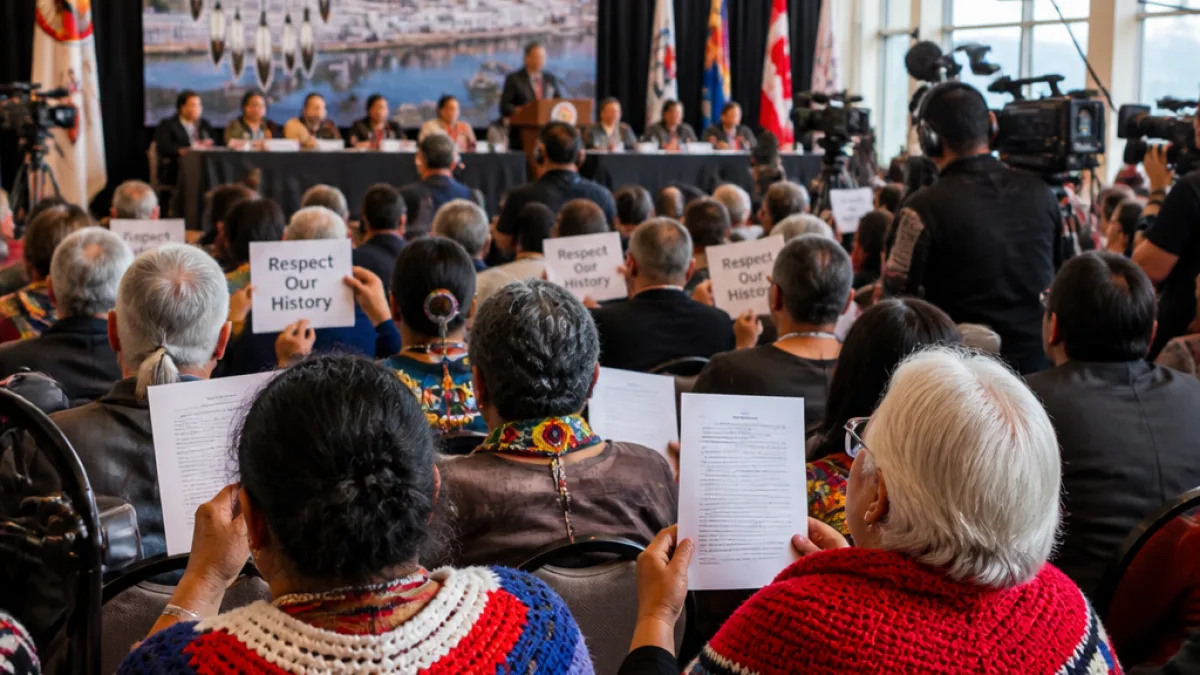
Passed by consensus at the AFN’s annual meeting in Ottawa, the emergency resolution was introduced by Chief Eugene Hart of Sheshatshiu Innu First Nation. In his appeal to the assembly, Hart said the provincial position disrespects elders and communities and called it “a slap in the face” to people who assert a much longer presence in the region.
“It’s a slap in the face, basically,”
Elizabeth Penashue, an Innu elder born in 1944, also addressed the gathering and — according to Hart, who translated her remarks — rejected the provincial government’s timeline.
Roots of the dispute
The controversy intensified after a provincial archaeologist’s report, filed in a court case tied to charges arising from 2013 and stayed in 2022, suggested the earliest known archaeological evidence for Innu in Labrador dates to the 18th century. Innu leaders say that position endorses a fringe theory that effectively erases thousands of years of their history.
The Innu Nation had planned a cultural exhibit about its history last month but says it cancelled the show after learning the province had raised concerns about the exhibit’s timeline.
Practical and political implications
The dispute has implications beyond historical debate. How the presence and continuity of Indigenous peoples are portrayed can affect legal arguments about hunting and land rights, public education, and the province’s reconciliation efforts.
- AFN passed the motion by consensus at its annual meeting in Ottawa.
- The provincial report in question is dated December 2021 and authored by a provincial archaeologist.
- Charges related to the underlying hunting case were stayed in 2022.
| Year | Event |
|---|---|
| 2013 | Charges laid in hunting-related case |
| 2021 (Dec.) | Provincial archaeologist's report filed in court arguing earliest Innu evidence from 18th century |
| 2022 | Charges stayed in the hunting case |
| 2026 (Jul.) | AFN passes motion denouncing the provincial position |
Leaders from the Innu Nation say the provincial report undermines reconciliation by dismissing oral histories and the authority of elders. They have asked for recognition of a far longer Innu presence in Labrador and for government to retract or revise the contested conclusions.
For residents of Labrador and the island, the dispute raises questions about how provincial institutions assess and present Indigenous histories and how those determinations intersect with legal and cultural rights. The AFN motion signals national Indigenous concern and could increase pressure on provincial officials to respond publicly or to engage with Innu communities and scholars to review the evidence and its presentation.
Officials from the provincial government did not provide comment to the AFN meeting in the accounts available Tuesday. The next steps for the Innu Nation include continued advocacy and outreach, including cultural programming that asserts their version of history.
Resolving the matter will likely require dialogue between Innu leaders, provincial archaeologists, independent scholars and federal authorities to ensure historical interpretations reflect a robust review of evidence and Indigenous perspectives.