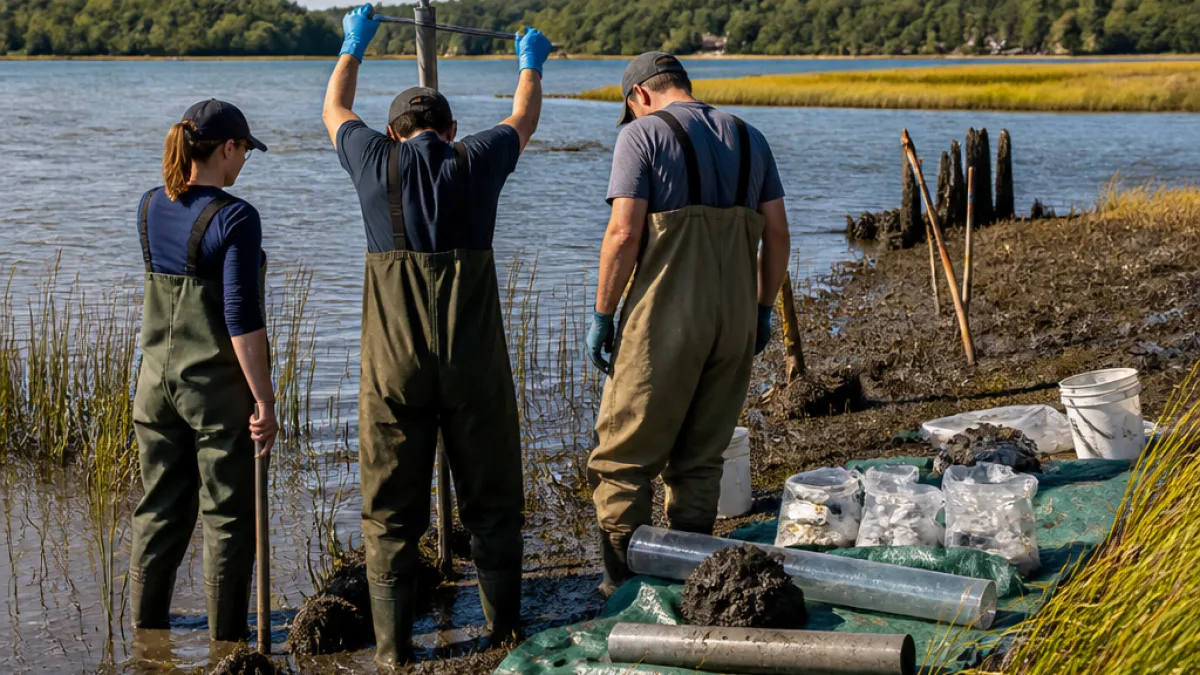
Researchers working around Hobcaw Barony, the former plantation complex across Winyah Bay from Georgetown, are examining marsh sediments and former rice fields to better understand past ecological conditions and help shape future protections for the estuary.
Field work aims to link history and future management
A team led by Clemson University geoarchaeologist Reed Goodman and colleagues from Coastal Carolina is gathering soil core samples and using geological and archaeological methods to document how the landscape has changed. The work takes place in tidal marshes such as Forlorn Hope and in old rice field sites that once fed into Winyah Bay.
The researchers say the project is a race against changing tides: core samples and other landscape evidence are being used to reconstruct past conditions so planners can better anticipate how the estuary might respond to sea-level rise.
Incorporating traditional and historical knowledge
To build a fuller picture of the estuary’s past, the investigators are consulting indigenous Waccamaw knowledge and techniques used historically in West Africa. Those sources are being examined for lessons about sustainable ecosystem augmentation and practices for allowing natural processes to proceed.
“This is history in soil,” the team said, describing the significance of the sediment cores taken from former rice fields.
- Location: Hobcaw Barony and surrounding marshes across Winyah Bay from Georgetown.
- Focus: Soil cores, geology and archaeology to reconstruct landscape change.
- Objective: Informing a Rights of Nature framework for the Winyah Bay estuary.
Policy intent: Rights of Nature
The project’s findings are intended to support development of a Rights of Nature framework for the estuary. While particulars differ across jurisdictions, Rights of Nature approaches aim to recognise legal rights for ecosystems — giving them standing to be represented and to persist over time.
| Element | Role in project |
|---|---|
| Soil cores | Reconstruct historical marsh and rice-field conditions |
| Indigenous and West African practices | Provide historical and cultural context for sustainable management |
| Rights of Nature | Policy framework to guide future estuary protections |
The interdisciplinary effort combines field sampling with historical and cultural knowledge to produce evidence that policymakers and conservation managers can use when planning for the estuary’s changing future.