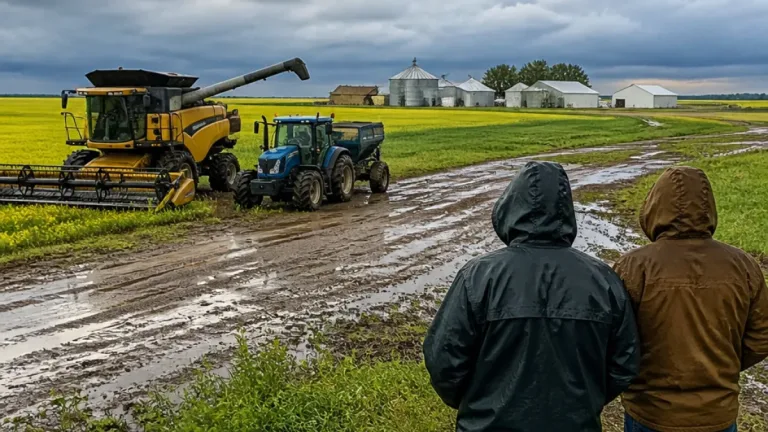

Heavy rainfall and subsequent flooding have left a substantial portion of Manitoba’s agricultural land inundated, with reports indicating that more than 300,000 acres of farmland are being affected. The situation, documented by regional reporting, has prompted growers and rural communities to begin assessing how crop production and field operations will be disrupted this season.
Scope of the impact
CTV News reporting describes thousands of acres submerged after recent precipitation and flash flooding across parts of the province. The figure of over 300,000 acres conveys the scale of affected land, which includes fields that were intended for planting or that are already in the growing season.
| Item | Reported detail |
|---|---|
| Acreage affected | More than 300,000 acres |
| Source | CTV News (Joseph Bernacki) |
Immediate consequences for farmers and communities
Flooded fields can cause a range of challenges: delayed seeding or crop loss, damage to emerging plants, and difficulties accessing fields with machinery. Even where crops survive inundation, saturated soils can lead to compaction and delayed drying, affecting the timing of operations later in the season. Rural roads and ditches can also be strained by high water, complicating movement of equipment and livestock.
- Crop disruption: planting schedules and yield prospects may be altered where fields remain waterlogged.
- Soil condition: prolonged saturation increases compaction risk and may require additional field work once soils dry.
- Operational delays: access for machinery and livestock transport can be impeded until water recedes and surfaces firm up.
What farmers and residents should consider
Producers and landowners are advised to document conditions and any losses carefully. Photographs, dates and notes on field status will be useful for insurance claims or program applications. Where possible, contact insurers, crop specialists or agronomists to discuss options tailored to specific crops and soil types. Keep an eye on local road advisories if travelling to or from rural properties.
Provincial and federal supports for natural-disaster losses exist in various forms, and affected parties typically seek guidance from their local agricultural offices, producers’ associations or municipal emergency coordinators about available programs and next steps.
The flooding also comes amid other regional developments reported this week, including evolving logistics at grain ports and local wildfire smoke concerns, underscoring a busy season for Manitoba’s rural emergency and agricultural services.
Coverage and on-the-ground reporting of specific communities and municipalities affected by the flooding are continuing; local residents should monitor updates from municipal offices and broadcast outlets as water levels and assessments evolve.