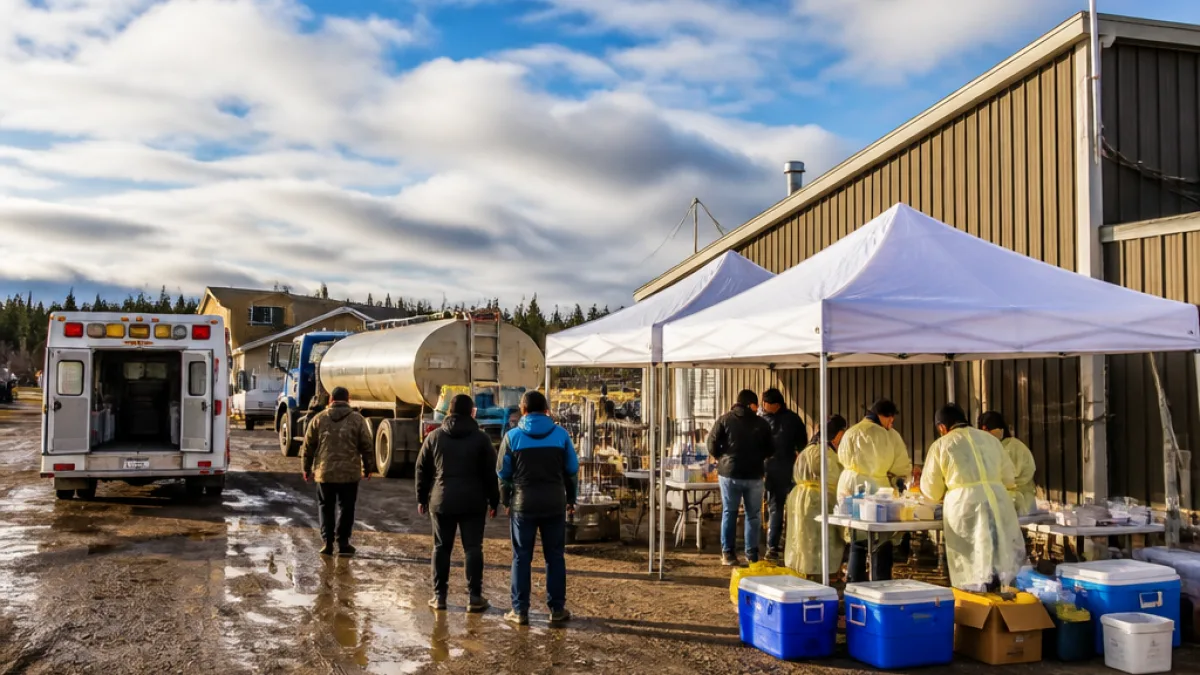
The Assembly of Manitoba Chiefs (AMC) says it stands with Shamattawa First Nation after the community in northeastern Manitoba declared a state of emergency in response to a growing outbreak of Hepatitis A.
Community asks for urgent, coordinated response
The emergency declaration, announced by Chief Jordna Hill, signals the community’s need for rapid increases in health-care capacity and public-health coordination to contain the outbreak and protect residents. Shamattawa is a remote northern First Nation and, like similar communities, faces added challenges in mounting a swift response because of limited local health resources.
“Our leadership has taken this step because the health and safety of our citizens must come first. We need immediate support that is led by and works alongside our Nation to protect our people today while addressing the long‑standing inequities that continue to place First Nations at greater risk.”
The AMC’s statement said it supports Shamattawa’s call for immediate action and emphasised several areas where support is needed, including community‑led vaccination programs, public‑health education, and longer‑term investments in water, sanitation and housing to reduce the risk of preventable infectious diseases.
Why remote communities are vulnerable
Health officials and Indigenous leaders have repeatedly pointed to structural barriers that make outbreaks harder to control in remote First Nations: limited local access to clinicians, staffing shortages, reduced on‑site diagnostic capacity and logistical limits that complicate vaccine delivery, testing and isolation measures.
The Hepatitis A outbreak affecting First Nations in Manitoba began in 2025 and has continued to impact several communities. The AMC said it will continue to press for measures that are led by local communities and backed by adequate provincial and federal resources.
- Immediate needs: enhanced healthcare capacity, coordinated public‑health measures and vaccination support.
- Short‑term actions: on‑the‑ground vaccine delivery and public‑health education.
- Long‑term priorities: investments in clean water, sanitation and healthy housing to prevent future outbreaks.
| Requested support | Intended effect |
|---|---|
| Increased health‑care capacity | Faster diagnosis and treatment, reduce transmission |
| Community‑led vaccination programs | Protect at‑risk populations and halt spread |
| Investments in water, sanitation, housing | Address structural drivers of infectious disease |
The AMC reiterated the importance of community leadership in the response, underscoring that supports must work in partnership with local authorities. The statement framed the emergency declaration as a necessary step to prioritise the safety of citizens while calling attention to long‑standing inequities facing First Nations communities.
Provincial or federal responses to Shamattawa’s declaration were not detailed in the AMC release. Health officials at all levels typically coordinate on outbreak responses in remote communities, balancing immediate clinical needs with public‑health measures and logistical support.
InfoRadar will follow developments and report on any provincial or federal actions and local health updates as they become available.