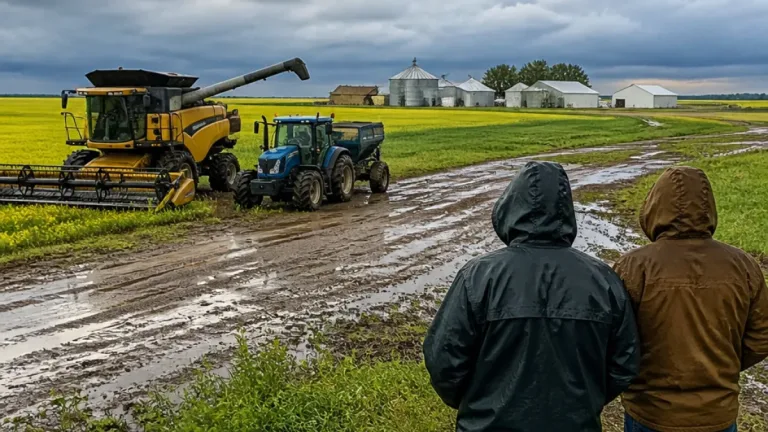

Manitoba producers and conservation advocates gathered this week to highlight farmer-led solutions meant to limit damage from the increasingly extreme weather now affecting the province.
Conference returns to province where it began
Alternative Land Use Services (ALUS), a non-profit started two decades ago in Manitoba, hosted about 100 participants for its national field conference in Steinbach. Delegates toured four southeast Manitoba farms to see measures intended to reduce losses from floods, wind erosion and other climate-related threats.
ALUS works with private landowners to fund and support on-farm projects such as wetlands, riparian buffers and shelter belts. The organisation now partners with roughly 2,400 farms across six provinces, and chose Manitoba for this year’s conference because it is where the initiative began.
Farmers report growing, immediate risks
Farmers in the region described an unusually destructive May windstorm that deposited silty dust across fields and clogged drainage ditches. Municipalities in parts of the Red River Valley declared local states of emergency after dust turned to mud in drains, complicating water management and crop care.
Harold Janzen, owner of Marsh River Farms east of Morris and a councillor in the rural municipality of Montcalm, said the storm caused substantial topsoil loss at a farm that has been in his family for 100 years. The event reinforced the urgency of conservation practices that keep soil and water on the land.
"Many people lost tons and tons of topsoil. ALUS has programming that will help you, whether it's through wind or water…. It helps preserve your biggest ingredient to farming — your land,"
Jordan Sinclair, ALUS chief executive officer, told delegates the group’s farmer-led approach helps increase adoption because producers see peers implementing solutions that work in local conditions.
Practical steps farmers are using
- Shelter belts to reduce wind erosion and protect soil and livestock;
- Wetland restoration and water-retention ponds to slow runoff, reduce flooding and improve recharge;
- Riparian buffers along watercourses to filter sediment and nutrients;
- Targeted native plantings to stabilise soil and support biodiversity.
Farmers and municipal officials at the tour said these measures are adaptable to individual operations and can be scaled to address local risks.
| Metric | Figure |
|---|---|
| Farms partnered with ALUS | 2,400 |
| Provinces with ALUS projects | 6 |
Delegates included producers from across Canada who came to see real-world examples on Manitoba farms. Organisers said showing working projects on the landscape helps other farmers evaluate what might fit their land and business planning.
As the province enters a summer already marked by floods, dust storms and a tornado reported in the opening weeks, farmers and municipalities will continue looking to practical conservation measures to reduce damage and protect the agricultural base that supports local communities.