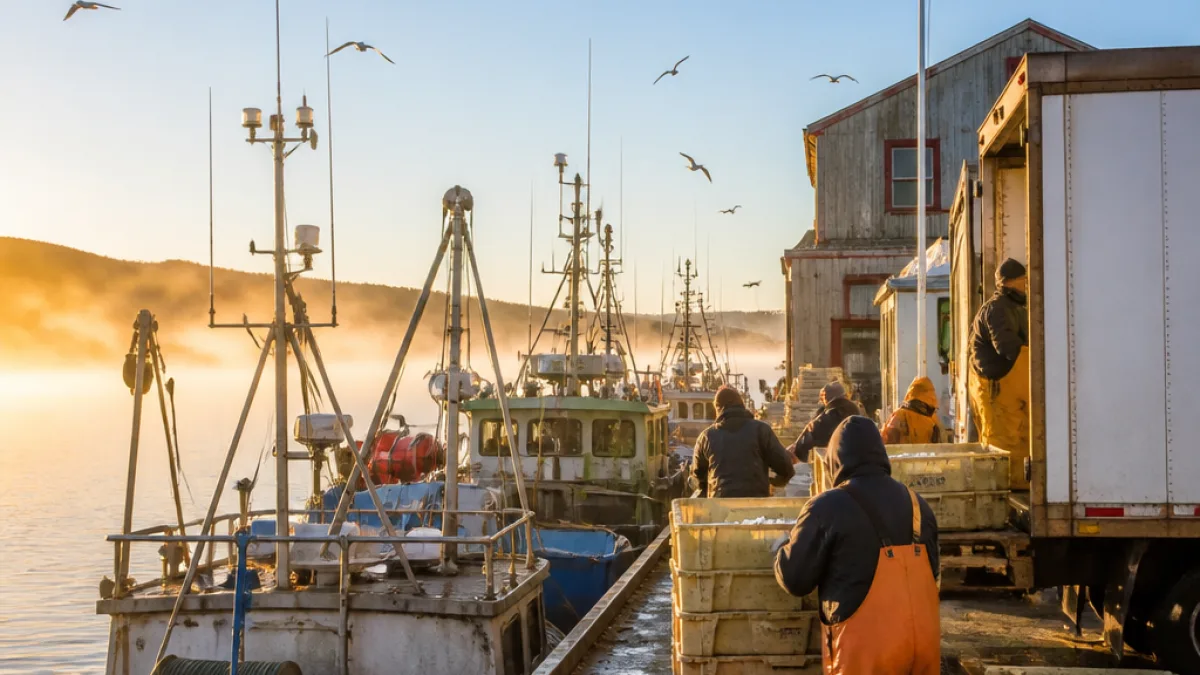
Federal officials have expanded the cod fishery this year, increasing the total allowable catch (TAC) by 55 per cent, a decision that provincial businesses and fishery observers say could open a fresh chapter for the long‑storied industry in Newfoundland and Labrador.
More cod, more questions for local industry
The latest adjustment to catch limits follows years of constrained cod removals and comes at a moment when some processors and producers are signalling a readiness to grow supply. Industry representatives describe the change as a window of opportunity to regain market share and to promote Newfoundland product, though they caution that translating higher quotas into sustainable economic gains will require coordination across harvesting, processing and marketing sectors.
Local fishery stakeholders will need to contend with seasonal timing, labour availability, and infrastructure capacity if they are to take full advantage of the increased TAC. The province’s fishing communities, many of which have endured decades of uncertainty since the moratoriums of the early 1990s, stand to benefit if supply chains and product value can be rebuilt.
What this means on the water and at the wharf
- Harvesting: Fishers may have more allowable removals, subject to federal management rules and licensing conditions.
- Processing: Plants will be under pressure to scale operations to handle increased volumes while maintaining quality and safety standards.
- Markets: Buyers and exporters will consider availability, pricing and brand positioning for Newfoundland cod.
Industry watchers say the timing of sales and the ability to supply consistent, high‑quality product will determine whether the increased TAC translates into longer‑term revival rather than a short‑term spike in landings.
| Metric | Detail |
|---|---|
| Change in TAC | 55% increase announced federally |
| Primary outcome | Described by industry as a "window of opportunity" for Newfoundland product |
For communities along the province’s rugged coastlines, any uptick in cod activity triggers both hope and realism. Rebuilding a fishery after decades of decline involves not only landing fish but also reestablishing processing capacity, investing in vessels and gear, and recreating the supply relationships with domestic and international buyers.
As the season progresses, attention will turn to how catches are distributed among fleets and licences, and whether the expanded quota leads to visible economic gains in harbours and plants that have been largely quiet in recent years. For many here, the measure is not merely the tonnage hauled ashore but whether it supports year‑round employment and viable coastal communities.
Further details on allocation and management measures are expected from federal authorities and will be closely watched by provincial officials, industry groups and fishing communities across Newfoundland and Labrador.