Global policy veteran enters local race
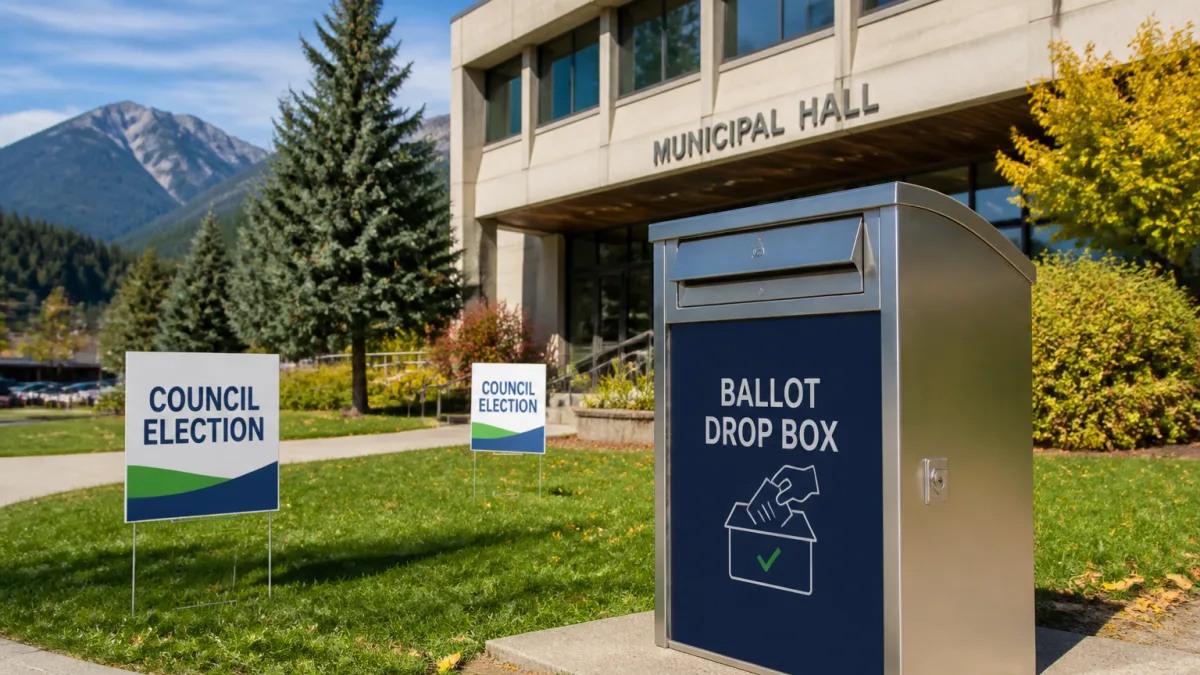
Jaime Webbe, a West Vancouver resident with a long record in international sustainability work, has formally entered the race for West Vancouver council in the upcoming municipal election. In a campaign launch shared via news release, Webbe positioned her bid around data-driven decision-making and environmental stewardship informed by more than two decades at the United Nations and the World Bank.
Webbe’s professional background spans files such as climate change, biodiversity and sustainable development, as well as gender equity. She argues that experience equips her to interrogate local proposals with rigour and to push for transparent, measurable outcomes. Her message seeks to link high-level policy expertise to neighbourhood-scale issues that have dominated recent council terms, from growth management to ecological protection along the seaside and North Shore mountains.
“I bring a global perspective, but my feet are firmly planted here, in the schools, rinks, and neighbourhoods of West Vancouver,”
she said, underscoring family ties in the community.
Local roots and international leadership
Raised and educated on the North Shore, Webbe is a Collingwood School alumna and holds a Master of Arts in Geography from McGill University. Her career has taken her to Denmark, Kenya and the United States, but she now raises three children in West Vancouver — two attending Mulgrave School and one at École Cedardale. She has previously volunteered with the community’s Hockey for Autism program, spoken to local students about work at the UN, and served on the West Vancouver Community Engagement Committee. She currently advises the Airbus Foundation.
Her leadership posts include steering national and university-based organizations focused on global development. Those roles, she says, shaped a commitment to making civic institutions accessible to younger residents and to embedding human rights considerations in everyday municipal decisions.
| Role | Organisation |
|---|---|
| President & CEO | United Nations Association in Canada |
| Lead | UBC’s Canadian International Resources Development Institute |
| Advisor | Airbus Foundation |
| Member (past) | West Vancouver Community Engagement Committee |
Platform framed around evidence and inclusion
Webbe has organized her campaign around four stated priorities, pairing environmental safeguards with a pledge to ground growth decisions in data and best practices. She also emphasizes inclusion and youth representation, seeking to open more formal seats for young people on civic bodies.
- Protect sensitive ecosystems — forests, shoreline and mountain areas — while supporting evidence-based growth.
- Build an inclusive community that welcomes residents regardless of background or ability.
- Apply international best practices and a human-rights-based approach to municipal decision-making.
- Expand youth involvement in governance, including seats on community boards and advisory groups.
These planks speak to persistent tensions in West Vancouver planning: how to accommodate change while maintaining the District’s natural character, how to improve participation for groups that have been under-represented in civic processes, and how to ensure public bodies are responsive to younger families alongside long-time residents. The platform also signals a focus on measuring outcomes — an approach that, if adopted by council, would require clearer performance indicators for initiatives ranging from housing and transportation to parks and climate adaptation.
Accountability lens on municipal decisions
West Vancouver’s council has faced complex choices over recent terms, particularly with provincial housing directives, climate resilience, and infrastructure renewal shaping the agenda. While Webbe’s launch does not detail specific bylaws or budget lines, her emphasis on data transparency and “international best practices” suggests she will press for benchmarking and public reporting on how plans perform over time. That could include clearer rationales for rezonings, more systematic tracking of environmental impacts, and structured opportunities for youth to question and contribute to policy.
Her community involvement — from the Hockey for Autism program to previous service on a civic engagement committee — provides a local entry point to those goals. If elected, establishing youth representation on advisory groups would require council endorsement and adjustments to terms of reference, followed by recruitment and orientation. It would also call for staff capacity to support participation and ensure recommendations are elevated to elected officials before key votes.
“Long-term thinking” as a ballot proposition
Webbe casts her candidacy as a push to bring global rigour to municipal files frequently dominated by immediate demands. In her words:
“I’m running because I believe that our local government can, and should, reflect the same rigour, inclusion, and long-term thinking I’ve spent my career bringing to the global stage.”
With the municipal election approaching, Webbe joins a contest in which voters will weigh experience, priorities and approaches to growth and conservation. Her bid adds a governance lens grounded in sustainability, rights-based frameworks and youth engagement — themes that, if they resonate, could shape how council sets metrics, invites participation and evaluates progress in the next term.