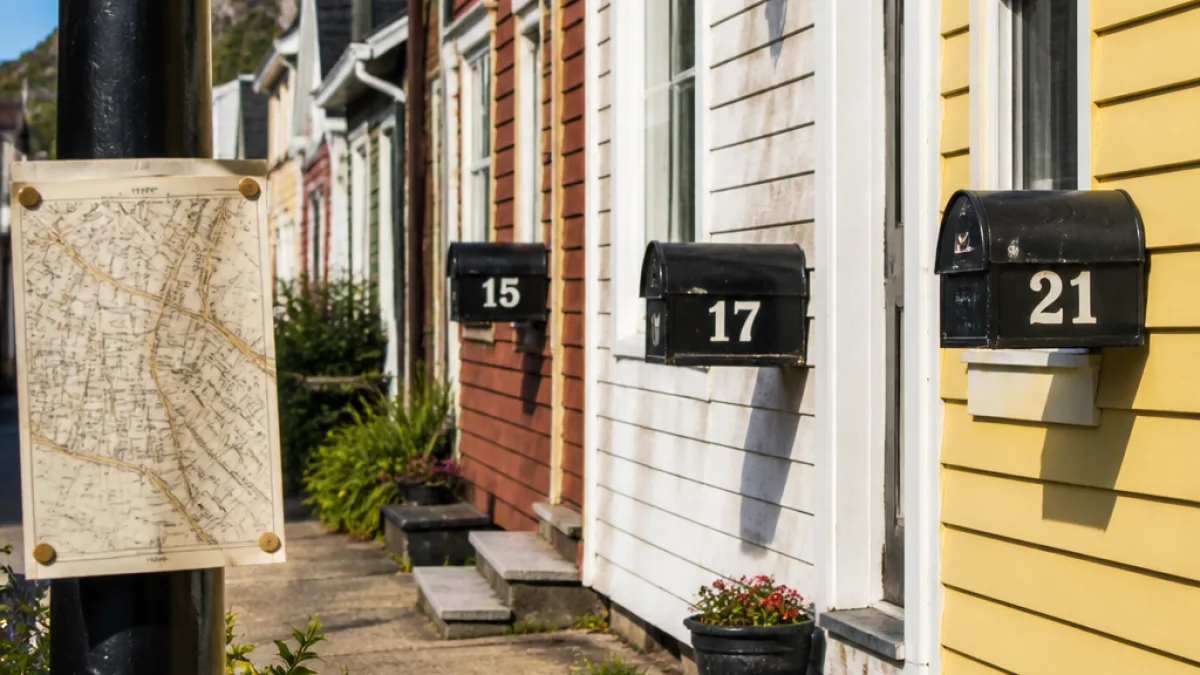
Many older addresses in St. John's do not include a house numbered 19, a quirk that stems from a regional euphemism dating back decades. From the early 1900s through the 1960s, residents across Newfoundland used the phrase "number 19" as slang for an outhouse, and the association was strong enough that homeowners sometimes objected when that number was assigned to their property.
Local memory and city records
Oral history and archival mapping show the practice was widespread. In one family account from Smith Avenue, a homeowner in the 1940s refused the assigned address when he learned it would be 19. The family's son, Randy Cooper, recounted how his grandfather protested and the city later agreed to change the number to 21. That house remains numbered 21 today.
“I can’t have my house to be number 19! That’s a shithouse number.”
Cooper examined St. John’s City Archives and old insurance maps and found several other streets historically lacking a 19. Some streets still without the number include Smith Avenue, Morris Avenue and Cashin Avenue. Earlier maps show even more gaps in the 1920s, naming Mullock Street, Cook Street, Gear Street and Allan Square as places where 19 was omitted. The pattern appeared beyond the Pennywell Road neighbourhood and was noted across the island, from the Baie Verte Peninsula to Bay d’Espoir.
How common was it, and where?
The surviving evidence is both documentary and anecdotal: insurance mapping from the early 20th century and family recollections. The following table summarises streets cited in the archival search and in the family story.
| Streets cited in archives | Streets still lacking 19 today |
|---|---|
| Mullock Street, Cook Street, Gear Street, Allan Square, Cabot Street | Smith Avenue, Morris Avenue, Cashin Avenue |
What it reveals about place and custom
The omission of number 19 is a small but telling example of how local language and beliefs shape the physical environment. A number that once meant something unclean carried enough stigma that municipal authorities sometimes acceded to residents' requests to reassign addresses. While the practice is less visible among newer developments, pockets of the old numbering pattern persist, preserving a curious link between everyday speech and the city’s built form.
- The euphemism for an outhouse—"number 19"—was in use across Newfoundland from about 1900 to the 1960s.
- City archival maps show multiple St. John's streets historically skipped 19; some still do.
- Local family stories, such as the Gulliver/Cooper account on Smith Avenue, explain individual re-numberings.
For residents and visitors tracing the layers of St. John's history, the missing number is an everyday reminder of how language, custom and municipal practice can leave marks on neighbourhoods. It also underlines the value of city archives and family histories in explaining small, persistent oddities on local streets.