City rethinks heritage safeguards as provincial housing law takes hold
Coquitlam is preparing a comprehensive overhaul of its heritage program after the Province’s Small-Scale Multi-Unit Housing (SSMUH) legislation changed the calculus for owners and builders across the city. In a presentation to council-in-committee on July 13, municipal planners outlined a year-long work plan to reposition local heritage conservation tools so they align with a development environment that now permits up to four units on most residential lots.
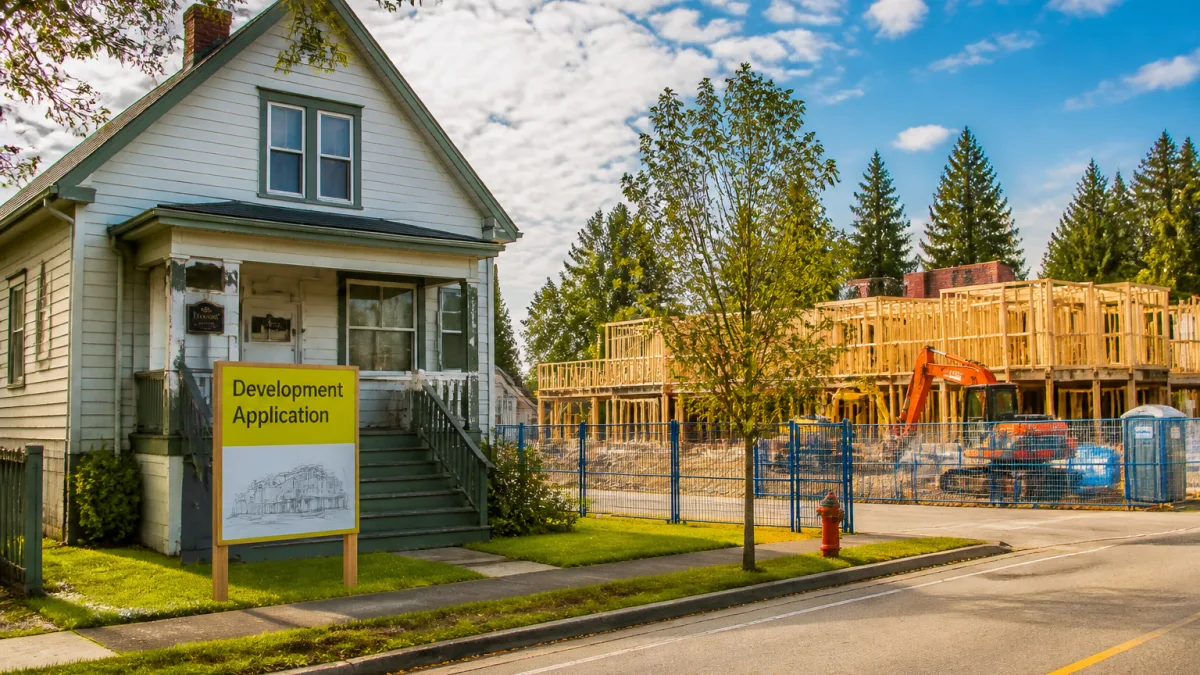
City staff warned that the Province’s pre-zoning approach streamlines applications directly to the building-permit stage, removing rezoning checkpoints where heritage considerations have often been discussed. That acceleration, they said, heightens the risk that older houses will be cleared without review of their cultural value.
Planners Taryn Plater and Laura Beveridge, who manage policy and community plans, told council the objective is to examine how other B.C. municipalities are protecting significant buildings and to determine which approaches could work under Coquitlam’s circumstances. The reset will reassess existing incentives and consider stronger protections where warranted, with the aim of balancing growth targets and conservation.
Existing HRAs under strain
Coquitlam has typically relied on heritage revitalization agreements (HRAs) to encourage restoration by offering bonus density or variances. Staff reported that 28 homes currently benefit from HRAs — many clustered in Maillardville, the city’s historic French–Canadian neighbourhood — while another 65 buildings appear on inventories without formal protection.
| Category | Number | Status |
|---|---|---|
| Homes with HRAs | 28 | Incentive-based protection |
| Inventory-listed buildings | 65 | No legal protection |
Coun. Craig Hodge criticized the Province’s framework for leaving municipalities with fewer levers to entice owners to conserve heritage, arguing that the value proposition of such voluntary tools has weakened.
“The incentive to heritage preservation has been lost,”
he told colleagues during the discussion.
Debate over mandatory protection versus flexibility
General manager of planning and development Andrew Merrill said SSMUH will significantly affect older properties unless the city adopts additional measures, noting that heritage protection orders could be one option. Yet council members signalled caution about imposing mandatory designations that would fetter owners or lead to unintended consequences.
Coun. Dennis Marsden pointed to Vancouver’s experience, saying rigid restrictions can at times burden homeowners and, in some cases, see historic structures deteriorate and become neighbourhood eyesores. Coun. Robert Mazzarolo asked staff to bring forward a clear menu of options that reflect Coquitlam’s context, so council can decide what mix of carrots and sticks would best preserve the city’s most significant buildings without stalling much-needed housing supply.
What the city will study next
Staff said the immediate priority is to modernize Coquitlam’s program against the backdrop of provincial housing targets and financing changes. The review will drill into how to retain character homes and landmarks while removing friction from approvals where heritage value is limited or unproven. While details are still being developed, the city’s analysis is expected to consider:
- Refinements to HRA incentives to keep restoration attractive for owners and builders.
- Potential use of heritage protection orders in narrowly defined cases of high significance.
- Comparative practices from other B.C. municipalities that are navigating SSMUH.
The conversation has particular resonance in Maillardville, where the concentration of older homes means the effects of pre-zoning could be felt quickly as redevelopment interest grows. Staff emphasized the goal is not to halt construction enabled by SSMUH, but to ensure a measured approach where irreplaceable assets are identified early and, where feasible, retained through adaptive reuse or negotiated preservation.
Accountability and the path ahead
Coquitlam’s reset acknowledges a central tension now facing municipalities across Metro Vancouver: accommodating more homes on serviced lots while maintaining the historic fabric that grounds neighbourhood identity. Staff will report back with options and best practices during the next year, giving council decision points before demolition pressure intensifies. Any changes would also need to be communicated clearly to homeowners, builders and realtors to prevent surprises at permit time.
For residents, the stakes are immediate. The rules enabling four homes per lot create new opportunities for multi-generational living and ownership — but, without calibrated protections, they also make it easier to erase the city’s built history. Council’s choices in the coming months will determine how Coquitlam manages both realities.