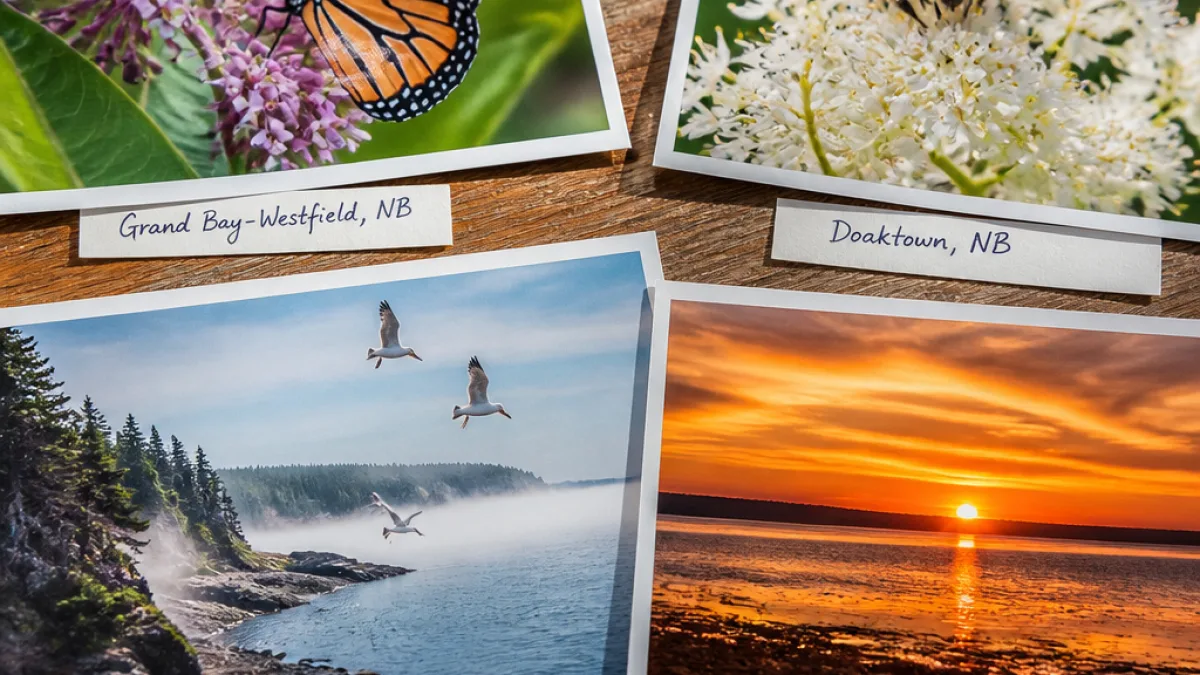
Community snapshots spotlight a vibrant New Brunswick summer
Butterflies lingering on milkweed, bumblebees working fresh blooms and shorelines lit by golden skies — a new selection of reader-submitted images showcases the breadth of New Brunswick’s summer. The weekly Your Lens feature highlights photographs and videos shared from around the province, spanning inland rivers, coastal coves and neighbourhood backyards.
This week’s collection ranges from Sackville to the Bay of Fundy and the Northumberland Strait, capturing the season’s pace through wildlife and waterside vistas. Contributors included the names and locations of their submissions, a requirement to be featured, and offered a brief note describing the moment behind each shot.
Send your best snaps and video from around the province to cbcnb@cbc.ca
Where New Brunswickers pointed their lenses
From pollinators to marine life, the gallery underlines how accessible nature is in communities large and small. Among the highlights:
- A monarch butterfly feeding on milkweed in Sackville.
- A bumblebee gathering pollen from meadowsweet in Fredericton.
- The Burton Bridge over the St. John River east of Oromocto.
- A community park scene in Florenceville-Bristol, north of Woodstock.
- A frog sunning on a lily pad near Fredericton.
- A sunset at Parlee Beach in Pointe-du-Chêne on the Northumberland Strait.
- A visiting cedar waxwing in a yard in St. Martins, east of Saint John on the Bay of Fundy.
- A squirrel pausing along a boardwalk in Oromocto.
- A sunset in Bathurst.
- A sunrise in Whites Cove on Grand Lake.
- A seal cruising through Passamaquoddy Bay off Saint Andrews.
Each image adds a piece to a province-wide mosaic: coastal towns sharing water views, river communities spotlighting bridges and wetlands, and urban backyards alive with pollinators and songbirds. The breadth of submissions reflects how residents experience summer rhythms where they live — whether on a familiar trail, a community park or a well-known beach.
How to take part
The feature invites ongoing contributions that include two essential details: the submitter’s name and the location where the photo or video was captured. Submissions focus specifically on New Brunswick subjects. Organizers also encourage a short description that explains the moment or subject featured.
| What to include | Why it matters |
|---|---|
| Name | Ensures proper credit for the creator |
| Location in N.B. | Confirms the subject is within the province |
| Brief description | Adds context about what’s happening in the image |
Submissions are accepted by email, and entries that do not identify who took the photo and where it was taken will not be used. The weekly cadence means there are frequent opportunities to be featured as the season changes and new scenes appear.
Scenes that define the season
From early morning light on lakes to evening colours along the coast, the gallery underscores how quickly summer reveals its variety across New Brunswick. Pollinator shots point to gardens and wildflower patches in full bloom, while coastal images capture the draw of open water during peak season. Wildlife glimpses — a frog on a lily pad, a seal in a tidal channel, a cedar waxwing dropping into a backyard — illustrate moments residents encounter in daily routines.
For many contributors, the appeal is part aesthetics, part place-making. A bridge view or a boardwalk squirrel can be as evocative of summer as a marquee beach, and together these images map the province’s character during the warm months. As new submissions arrive, the collection builds a living archive of how New Brunswickers see their communities — not only the landmarks, but the small, fleeting scenes that mark a season.
Submitting your photo or video
The call remains open to all New Brunswickers. Entries must show subjects within the province and include the photographer’s name and the location. A short description helps curators share what viewers are seeing and why it matters. With each new week’s set, the feature offers residents a platform to document the province’s natural and community spaces at their most active.