Publication ban adjusted in Saint John double homicide
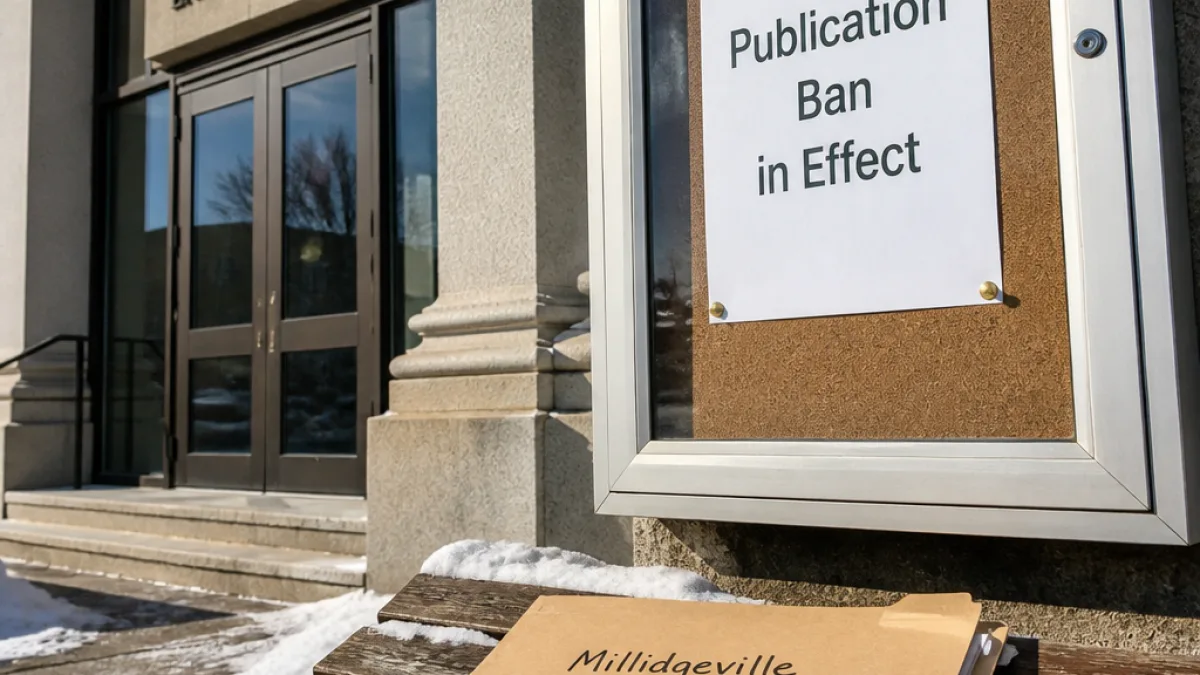
An altered publication ban now permits media to describe the family relationships at the centre of a tragic Saint John case in which a father was convicted of killing his two sons. A jury found Roman Kamyshnyy, 46, guilty of two counts of first-degree murder in the deaths of his boys, aged 10 and 17, following a January 2025 attack inside the family’s Millidgeville apartment in the city’s north end. Identities of the minors and a key witness remain protected under court order.
While the names of the victims, identified in court records as A.B. and C.D., and a witness known as Witness A are still shielded, the adjusted order permits reporting on how they were related. That change offers a clearer public record of the case, which prosecutors described as an act of domestic violence.
“Driven by vengeance.”
That is how the Crown characterized the motive behind the killings during the Saint John proceedings. Kamyshnyy told the court he could not remember what occurred. He testified that in the months before the attack he had started consuming wine and beer, saying he was under strain after a Nov. 8, 2024, divorce that ended a 20-year marriage. He remained in the apartment after the separation while he looked for a place he could afford on his own, court heard.
Evidence outlined by prosecutors
According to the Crown’s case, the assault began as the younger child slept. Prosecutors said Kamyshnyy used a kitchen knife to stab the 10-year-old in bed. The blade broke as he then attacked the 17-year-old, who briefly escaped while Kamyshnyy went for a larger knife. The teen was dragged back into the unit and killed on the kitchen floor, the court was told.
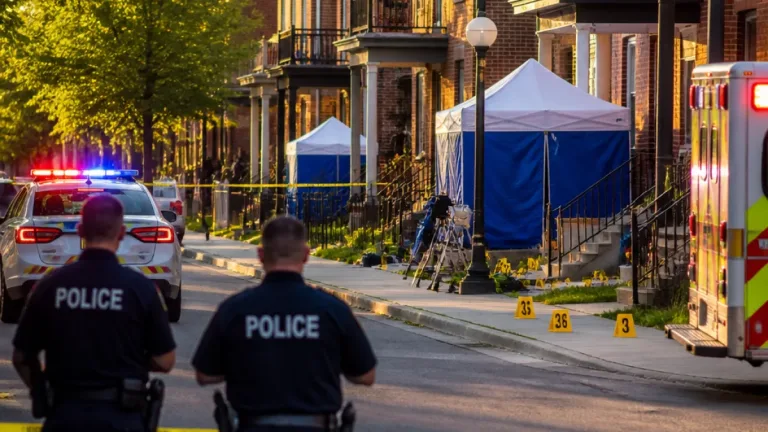
Police responding to a 911 call made by the older victim reached the Millidgeville apartment at 7:18 a.m. on Jan. 29, 2025, where officers found both boys dead inside a barricaded home. Investigators reported locating a broken knife blade on the bedroom floor and a sock that matched one missing from the body of the older youth. Kamyshnyy later attempted suicide with a nail gun, shooting himself in the head twice, according to evidence presented.
Disputed premeditation and motive
Prosecutors alleged the killings were planned for at least eight days and carried out to punish his former spouse for alleged infidelity. Kamyshnyy denied planning the attack. The jury convicted him of two counts of first-degree murder, which in Canadian law requires proof of intentional killing that is planned and deliberate, or that occurs in specified circumstances. Sentencing details were not discussed in the material available under the current court orders.
Witness testimony and family background
In testimony protected by the publication ban, Witness A told the court she had sought to separate from Kamyshnyy, but the start of war in Ukraine shifted her focus to protecting their sons from conscription risks. The family planned to come to Canada for temporary safety. As she recounted in a subdued voice, the move was intended to keep the boys from harm; two years later, both were dead.
The court’s revised ban continues to withhold names but now allows the roles and relationships of people in the case to be reported. That limited change increases clarity for the public about what unfolded in the apartment and who was involved, while preserving the anonymity of minors and certain witnesses.
Timeline of key events
| Date | Event |
|---|---|
| Nov. 8, 2024 | Divorce finalized after about 20 years of marriage; Kamyshnyy remains in the apartment. |
| Jan. 29, 2025 | Police respond at 7:18 a.m. to a 911 call; both boys are found dead in Millidgeville. |
| Recent verdict | Jury finds Kamyshnyy guilty of two first-degree murders; altered publication ban issued. |
What the court orders still protect
- Names of the two victims remain suppressed; they are identified as A.B. and C.D..
- The identity of Witness A is protected.
- Reporting can now describe the relationships among the accused, victims and witness without naming them.
Millidgeville residents awoke to a heavy police presence on the morning of the killings, a scene that has lingered in the city’s memory as details emerged through the trial. With the revised publication ban, Saint Johners can now understand the familial connections at the heart of the case, even as crucial identities remain sealed to comply with the court’s protection orders.