City seeks changes to Canada Post rollout
New Westminster council is urging Canada Post and federal officials to temper a plan that would replace door-to-door mail delivery with community mailboxes across much of the city, citing accessibility risks and new municipal costs. At its July 13 meeting, council received a staff analysis and backed a motion to write to the local member of Parliament, the federal minister of public services and procurement, and Canada Post to register the city’s objections.
The postal corporation announced in June 2026 that it would proceed with a multi-year conversion program to modernize its network and restore financial sustainability. The next phase targets 485,000 addresses in 37 communities for conversion in 2027, adding to 136,000 addresses in 13 communities already identified for late 2026 or early 2027.
“We have heard from members of the community about concerns about Canada Post transitioning away from door-to-door delivery in large parts of New Westminster, along with Burnaby, Coquitlam, Port Coquitlam and Port Moody,” said Mayor Patrick Johnstone. “I have talked to some other mayors of those cities who are also raising similar concerns.”
The city’s staff report estimates the shift could touch roughly 5,000 single-detached homes within New Westminster and require installing 120 to 140 community mailbox sites throughout neighbourhoods. The analysis warns the change would carry “significant implications” for the public realm, municipal infrastructure, accessibility, neighbourhood planning and ongoing maintenance responsibilities.
Accessibility and equity at the forefront
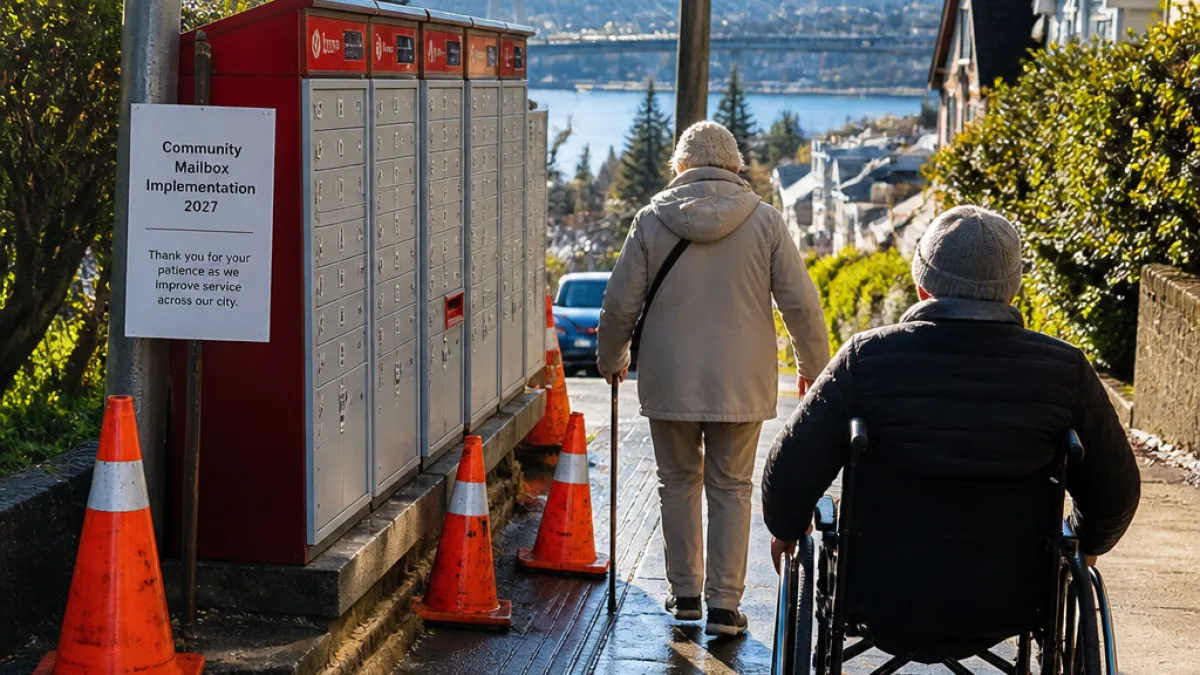
Council members say the plan poses barriers for residents with mobility challenges and older adults who currently rely on deliveries to their door. The mayor underscored the potential disproportionate impact on vulnerable residents:
“This is a significant change in service which disproportionately affects seniors and people with disabilities in our community,” he said. “The second is that there are actual material costs to local governments for this shift.”
Staff noted that even well-sited community mailbox clusters can pose hurdles on steep grades or where sidewalk connectivity is limited. The city also anticipates increased demand for curb ramps, lighting, and safe approaches around new mailbox locations to ensure they can be used year-round and in varied weather conditions.
Municipal costs and logistical challenges
While the conversion is a federal undertaking, the report indicates the city would likely shoulder ongoing work associated with public space adjustments, including site integration, path-of-travel improvements and upkeep around mailboxes. Those obligations would come at a time when municipalities across Metro Vancouver are facing tight operating budgets and growing infrastructure backlogs.
According to the staff review, introducing 120 to 140 new mailbox locations will require careful coordination to prevent conflicts with underground utilities, driveways and established pedestrian routes. The report also flags potential implications for parking, boulevard landscaping and street furniture in residential areas. Additional concerns include site selection, traffic and pedestrian safety.
Call for a "balanced approach"
New Westminster is not alone in objecting. The mayor said counterparts in neighbouring Burnaby and the Tri-Cities are also pressing for changes to the implementation plan. Council’s resolution asks for a balanced approach that reflects community design, population density and the needs of seniors and persons with disabilities.
City officials say early engagement from Canada Post would help determine where mailbox clusters can be placed with the least disruption and how accessibility objectives can be maintained. Council’s correspondence will also seek clarity on responsibilities for capital works near mailbox sites and how Canada Post will mitigate effects on residents who cannot easily travel to a cluster.
What’s next for residents
Canada Post has set out an aggressive timeline for its modernization program, with large-scale conversions scheduled for 2027 following earlier phases in late 2026 or early 2027. The city’s intervention aims to secure design and siting commitments before any installations proceed within New Westminster’s boundaries.
As the process unfolds, residents can expect further updates through council meetings and city channels. The municipality plans to provide input on locations and accessibility features once Canada Post initiates detailed site planning. Until then, the city is positioning itself to manage the local impacts of a national cost-savings strategy while protecting essential access for those most affected.
By the numbers
| Measure | Figure |
|---|---|
| Addresses slated for conversion in 2027 (national plan) | 485,000 in 37 communities |
| Previously identified addresses for late 2026 or early 2027 | 136,000 in 13 communities |
| Estimated affected homes in New Westminster | ~5,000 single-detached |
| Projected community mailbox sites in New Westminster | 120–140 locations |
What council wants addressed
- Accessibility: Ensure seniors and people with disabilities are not disadvantaged by the conversion.
- Costs and responsibilities: Clarify who pays for and maintains public-realm changes near mailbox sites.
- Site selection and safety: Collaborate on locations to limit conflicts and protect pedestrian and traffic safety.