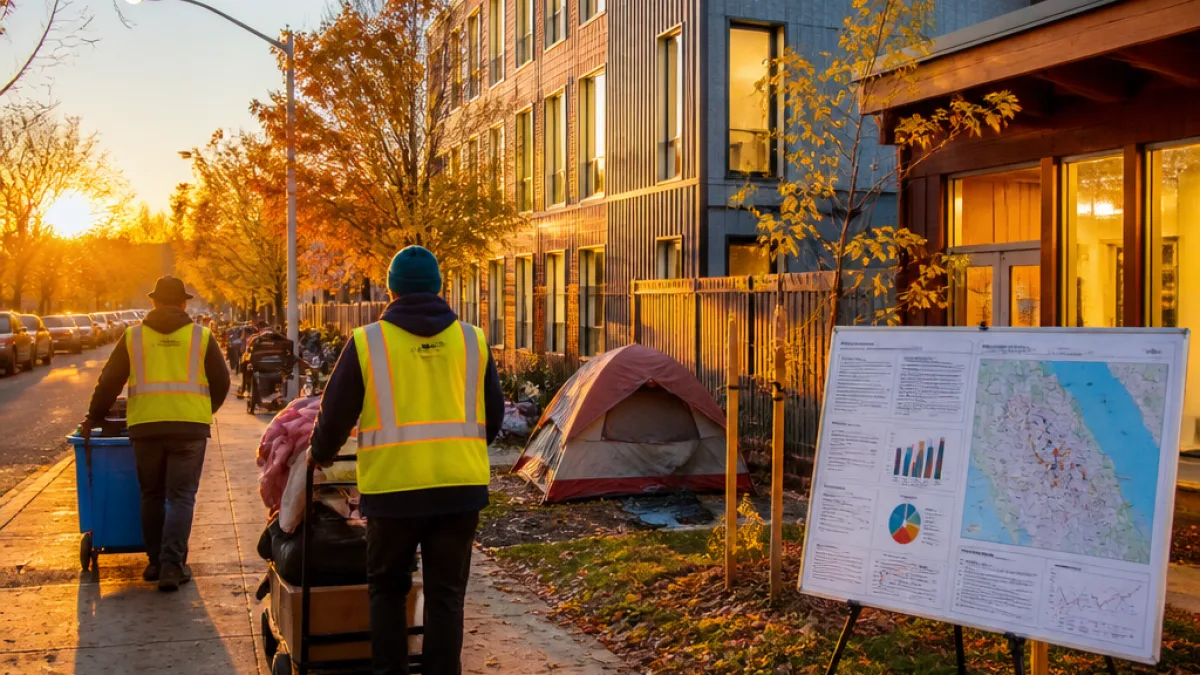
City presents first-year outcomes while unsheltered counts remain steady
The City of Victoria has presented a first-year accounting of its $10 million Safety and Wellbeing Plan, reporting measurable additions to shelter capacity, recovery housing and enforcement staff while acknowledging that the number of people living without housing in the city remains high.
Officials say the count of people sleeping outdoors in Victoria averages between 180 and 210 on any given day, with roughly 100 concentrated along the Pandora corridor and adjoining streets. Council heard that those figures rise by another 50 to 100 during daytime hours as people congregate to access services.
What the first year delivered
City staff outlined the following results attributed to the plan launched in July 2025:
- 77 new shelter beds;
- 20 new recovery housing apartments;
- 12 additional bylaw officers;
- 9 additional police officers;
- expanded programming for youth, people with disabilities and women; and
- a $1 million non‑profit housing grant.
Staff also highlighted the city’s role as a convener, bringing service providers together to coordinate responses to an overlapping drug poisoning crisis, a chronic housing shortage and rising living costs.
“It shows what a local government can do, if they’re willing to take risks, be really innovative and step into spaces they traditionally wouldn’t have been,”
Mayor Marianne Alto delivered that assessment while staff described a decline in encampments and sheltering in parks compared with previous years. Peter Rantucci, the director of the newly formed Community Safety and Wellbeing department, said the city has seen reductions in sheltering in parks of about 30 per cent year over year and as much as 65 per cent compared with 2024 figures.
Relocations and remaining questions
City staff noted that since the housing relocation program began in 2023, 75 people have been moved from park encampments into housing. At the same time, council members were told there was no updated line‑by‑line financial breakdown accompanying the year‑end presentation; last year’s budget allocation showed the plan’s spending framework, but staff did not present a detailed update on how the funds were spent during the year.
| Item | Quantity / Amount |
|---|---|
| New shelter beds | 77 |
| Recovery housing units | 20 |
| Bylaw officers added | 12 |
| Police officers added | 9 |
| Non‑profit housing grant | $1 million |
The presentation to council framed the plan as a pilot of intensive local intervention in a complex social crisis. City officials asked council to consider the plan’s early indicators — reduced sheltering in parks and new housing and supports — while acknowledging ongoing pressures on emergency services and public spaces.
For Victoria residents, the results raise two central questions: whether the early reductions in outdoor sheltering will be sustained, and how transparently future spending and outcomes will be reported as the city moves into subsequent stages of the plan.