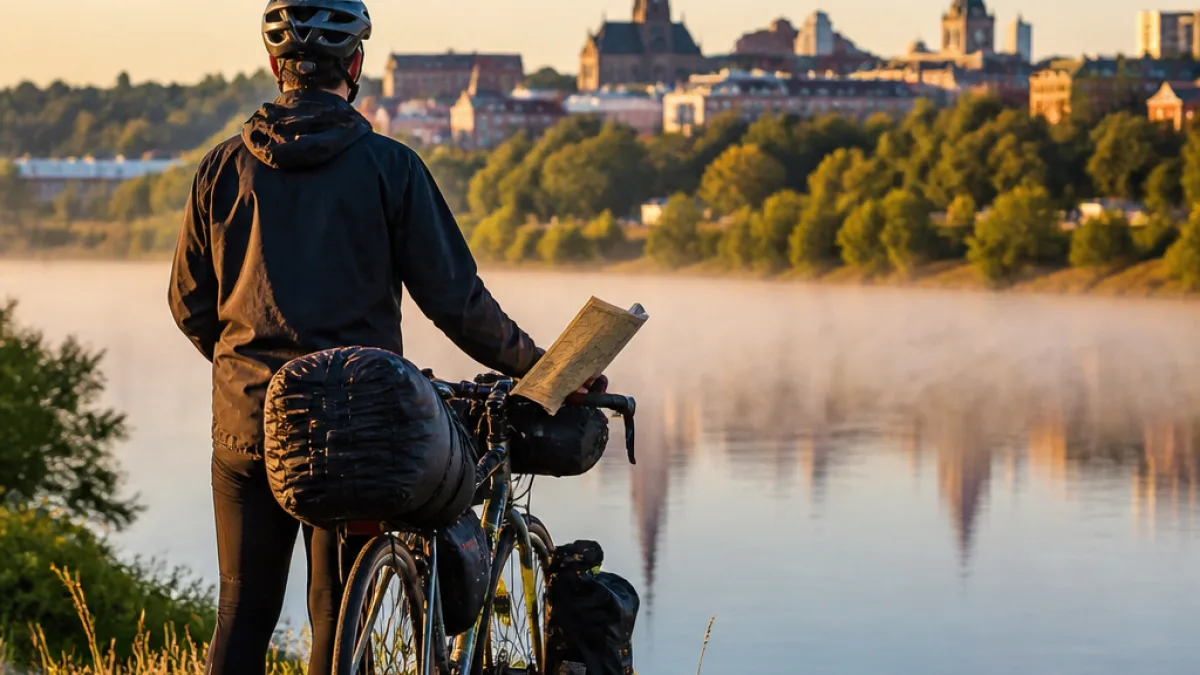
Fredericton — A New Brunswick cyclist is set to begin one of the sport’s toughest self-supported events this weekend, departing Trondheim, Norway, for a route that spans roughly 5,000 kilometres and finishes in Kalamata, Greece.
Race format and route
The Transcontinental Race asks riders to reach a sequence of checkpoints but leaves the exact route between them to each competitor, within some restrictions. Fredericton’s Luis Cardoso has spent months plotting a course that balances distance, elevation and legal route choices.
| Start | Checkpoints (selected) | Finish |
|---|---|---|
| Trondheim, Norway | Flåm (Norway), Tatra Mountains (Slovakia), Sarajevo (Bosnia and Herzegovina), Leskovik (Albania) | Kalamata, Greece |
Route planning and equipment choices
Cardoso has used mapping tools to refine his itinerary and deliberately trimmed segments to reduce total distance. His original plan included long stretches through Norway and Sweden down into Denmark and Germany; adjustments took him into Poland from Sweden, cutting several hundred kilometres from the route.
"[I've] really been working on it for months really — the route part of it," Cardoso said.
Decisions on whether to favour pavement or gravel, avoid restricted tunnels and manage climbs versus flatter but longer alternatives are all part of the preparatory work for the solo race. Riders must also be entirely self-sufficient: no support crews, so food, repairs and rest stops are the competitor’s responsibility.
What this means locally
- Cardoso’s effort highlights New Brunswick athletes competing at international endurance events.
- His route choices show the detailed planning required for unsupported ultra-distance races.
- Local cycling clubs and recreational riders can expect to follow his progress for inspiration and practical insight into long-distance route planning.
Cardoso’s participation underscores the growing interest among Atlantic Canadian cyclists in ultra-distance and self-supported events. The Transcontinental Race is both a physical and logistical test, demanding navigation skill, resilience and careful equipment selection. For New Brunswick readers, his entry provides a concrete example of the level of preparation elite amateur athletes undertake to race across international terrain without external assistance.