
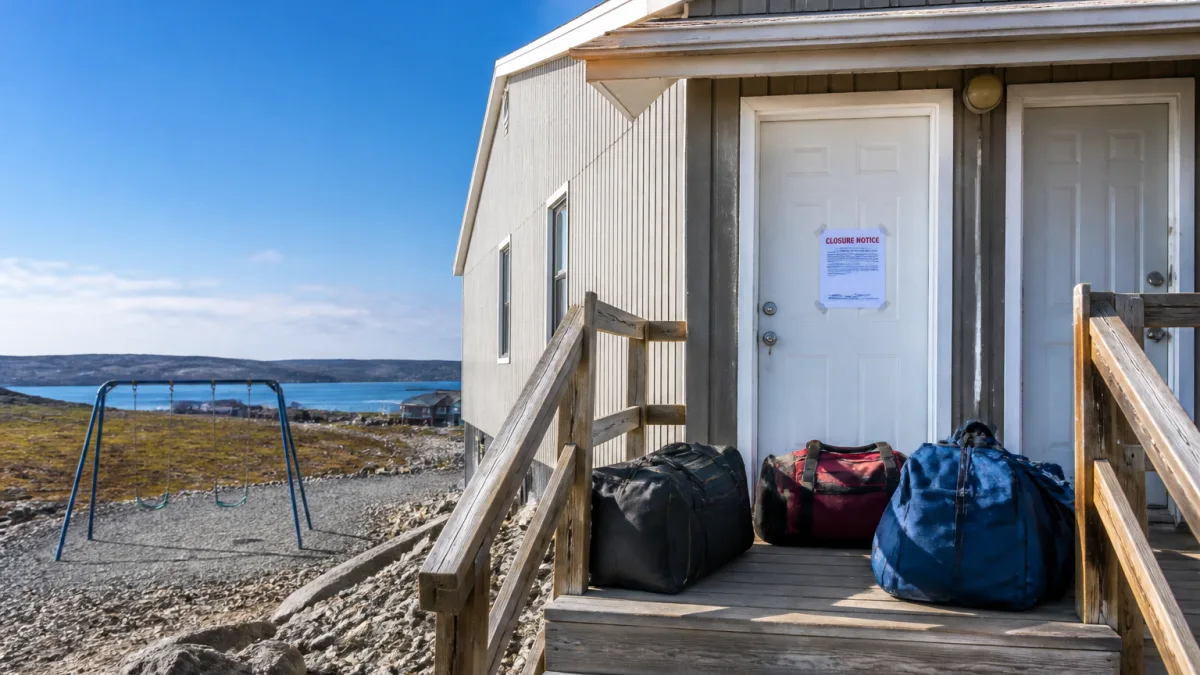
Group homes set to shut as contract ends
Two group homes operated by the Angirraq Corporation in Iqaluit are preparing to close after the territorial government terminated the company’s contract, putting the futures of seven children in care in immediate doubt. The facilities, which have provided respite services since 2025, received a 30-day termination notice dated June 17 from Nunavut’s Department of Family Services.
Sakhile Sibanda, Angirraq’s managing director, said the end of the agreement this week means children could be moved out of Nunavut for placements, a prospect that has already unsettled some youth staying at the homes.
“I cared for the youth like they were my kids,” Sibanda said. She added that some have run away out of fear of being taken out of the territory and one has asked people to adopt him because he wants to remain near family.
Children fear being sent away from home
Sibanda described a tense final stretch as youth grapple with separation from familiar surroundings, caregivers and kin. For families, the potential for out-of-territory placements often means expensive travel, fewer in-person visits and added strain during already difficult periods. For staff, sudden closures can fracture hard-won trust and continuity of care built over months.
Advocates, workers and relatives are questioning whether closing the homes and sending youth away aligns with the best interests of the children, especially when connections to local culture, language and extended family are part of their support systems. While specialized placements in the South are sometimes used by the territory, each move creates new distances to bridge for caregivers and case managers.
What we know so far
- Angirraq has run two facilities in Iqaluit since 2025, providing respite services for children and youth under the Department of Family Services’ care.
- The department issued a 30-day termination notice on June 17; the contract ends this week.
- Seven children are currently in Angirraq’s care and could face out-of-territory placements, according to Sibanda.
Timeline and scope
| Detail | Information |
|---|---|
| Operator | Angirraq Corporation |
| Service start | 2025 |
| Facilities | Two in Iqaluit |
| Notice issued | June 17 (30-day) |
| Children affected | Seven |
| Status | Contract ends this week |
Local impact and unanswered questions
Iqaluit has few alternatives when a local group home closes on short notice. When care shifts outside the territory, families can face longer separations and higher costs to maintain contact. Frontline staff here often become the bridge between youth and their home community, so the loss of that daily contact can be felt quickly in school routines, mental health supports and cultural activities that anchor a young person to place.
With the contract expiring this week, clarity is urgently needed on transition plans for the seven children, including who will provide day‑to‑day care and how ties to families in Iqaluit will be maintained. Workers and relatives are pressing for decisions that minimize disruption and keep young people as close to home as possible.
Context in child and family services
The move comes against a broader backdrop of scrutiny of child and family services in the territory. In recent years, lawmakers have publicly examined how well government supports vulnerable children and youth. The prospect of sending more young people away underscores the tension between immediate placement needs and the long‑term goal of strengthening in‑territory care.
As the homes wind down operations, the priority for many in Iqaluit is straightforward: stability for the youth at the centre of these decisions. The community will be watching for swift, transparent communication from authorities about next steps, and for measures that protect relationships and routines that help children feel safe.