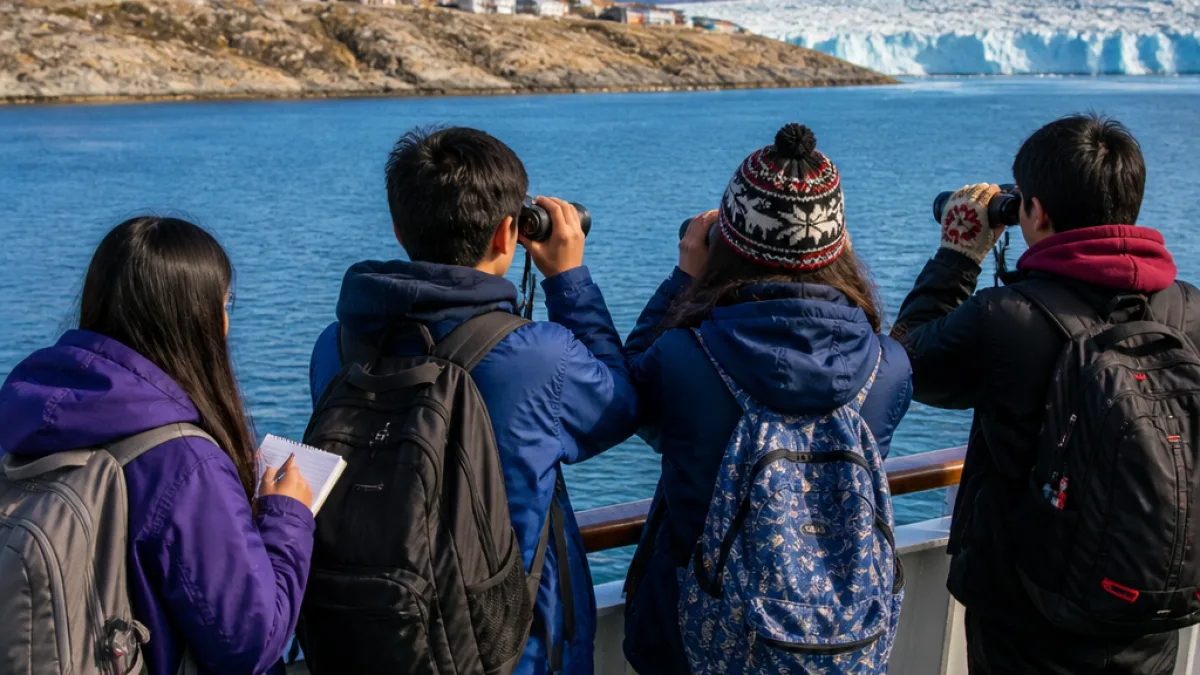
At 16, Grayson Maashi of Whale Cove is spending part of his summer at sea as one of 60 youth selected for a cross‑Arctic voyage that aims to expose young Northerners to careers in conservation, science and governance. The 12‑day leg from Nuuk to Iqaluit is the second section of the Students on Ice Foundation’s North‑to‑North expedition and brings together participants from Canada, Greenland and other Nordic countries.
Hands‑on learning across the Arctic
During stops in Greenland, participants visited glaciers, ancient ruins and natural hot springs while attending workshops led by scientists and educators. The organizers built the itinerary to combine practical fieldwork with cultural exchange, with roughly 60 per cent of the youth identifying as Indigenous.
“I got into it because I saw it as an opportunity to open my eyes more about the North,” Maashi said while the ship approached the Torngat Mountains.
Maashi said the trip has highlighted similarities in traditional hunting and the use of local knowledge between his home region and communities in Greenland. Last summer he worked as a conservation student — patrolling for polar bears, observing wildlife-management practices and monitoring mine sites — experience that helped lead to his application for the expedition.
Organizers’ aims and practical outcomes
Students on Ice, in partnership with the Arctic Council and the Nordic Council of Ministers, described the program as a way to broaden participants’ perspectives and introduce possible career paths. Craig McCallion, the foundation’s marketing and communications lead, said the goal is to spark interest and new possibilities among youth who may return home with ideas for future work in the North.
“If we can get the youth to walk away with this experience thinking of new opportunities and new possibilities, I think we’ve succeeded,” McCallion said.
The voyage runs from July 10 through 22. Onboard activities combine scientific instruction, cultural learning and guided observations intended to help young people understand Arctic governance and climate impacts in their own regions.
- Cross‑cultural exchanges with Greenlandic communities and elders
- Workshops and field lessons led by scientists and educators
- Opportunities to learn about conservation, wildlife management and Arctic governance
| Detail | Information |
|---|---|
| Expedition name | North‑to‑North (Students on Ice) |
| Dates | July 10–22 |
| Route (this leg) | Nuuk to Iqaluit |
| Participants | 60 youth from Canada, Greenland and Nordic countries (≈60% Indigenous) |
For communities in Nunavut, programs like this offer more than short‑term enrichment. They provide young Northerners with exposure to networks, mentors and subject‑matter that can translate into local jobs in environmental stewardship, wildlife management and research. Participants who return home may carry fresh ideas about community conservation or new connections with regional organisations.
Maashi’s experience illustrates how summer jobs and local conservation work can open doors to international learning opportunities. As the Ocean Nova navigates northern waters, the youths’ observations and conversations are intended to build mutual understanding and stimulate conversations about the North’s future — from cultural continuity to climate resilience.