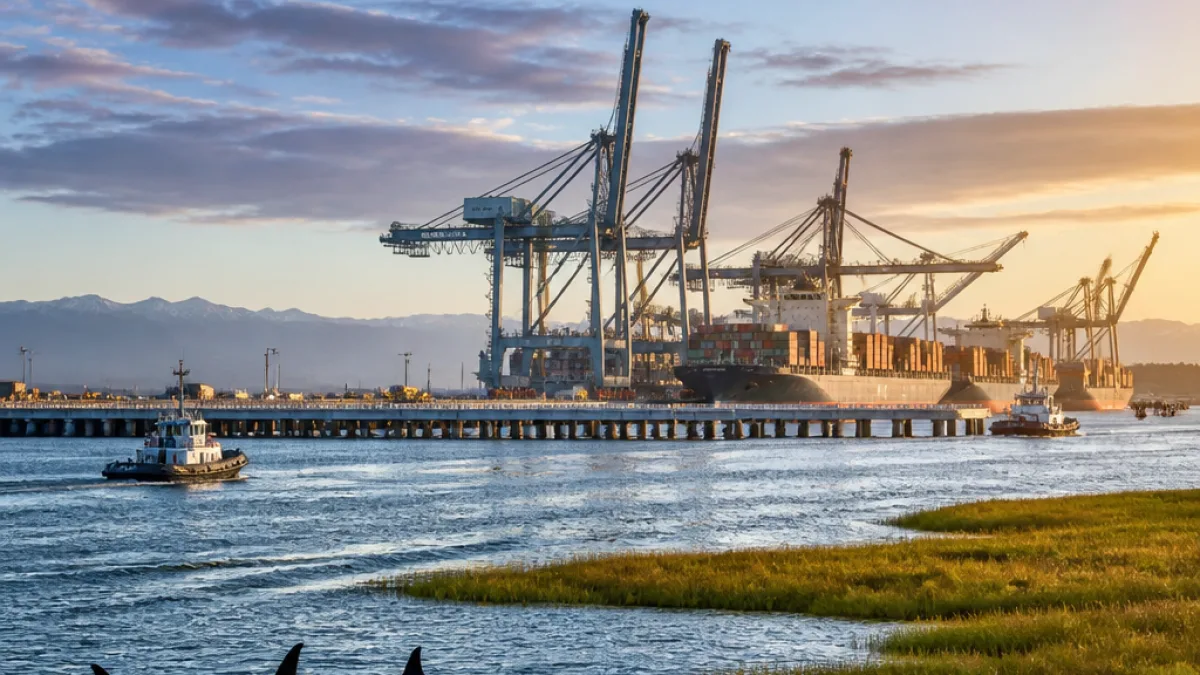
Federal move could accelerate Roberts Bank Terminal 2 amid fierce local opposition
The federal government has referred a proposed, large-scale expansion of the Port of Vancouver to Canada’s Major Projects Office, a step that could speed the review and approvals for the project known as Roberts Bank Terminal 2 (RBT2). The referral echoes Ottawa’s stated priority to bolster ports and supply chains, while reviving a long-running dispute between business leaders who back the plan and environmental groups that say the development threatens endangered species and sensitive estuarine habitat.
Federal Transport Minister framed the upgrade as part of a broader investment in ports and the transportation network, identifying four central pillars of the plan that include the three-berth RBT2 terminal. According to government figures cited with the announcement, the terminal would increase the port’s container capacity by about 50 per cent, potentially enabling around $100 billion in additional annual trade capacity and contributing approximately $3 billion to Canada’s gross domestic product each year.
Local business welcomes move; conservationists warn of environmental costs
The announcement was welcomed by the Vancouver Board of Trade, which called the decision a “big win for the British Columbia business community and the Canadian economy,” arguing the project is a strategic boost to trade and jobs.
Environmental organisations quickly criticised the referral to the Major Projects Office. Opponents point to longstanding scientific and community concerns about the project’s effects on the Fraser River estuary and on at-risk marine species, including the Southern Resident killer whale population, which they say is continuing to decline.
“Standing up against extinction, standing up against mega projects that threaten endangered species will never be for nothing,” said Lucero González of the Wilderness Committee, who added that the project is far from decided and that critics will continue to oppose it.
González also expressed alarm that the federal move could allow permitting and other environmental safeguards to be circumvented in order to advance construction, saying opponents have “more questions than answers” about the process.
Political and local consequences
Referral to the Major Projects Office typically signals an intent to streamline the regulatory timeline for a project deemed significant to national or regional infrastructure. For residents of Vancouver and neighbouring communities, the RBT2 debate raises immediate questions about the balance between economic growth and protection of habitat used by migrating birds and marine mammals, and about the role of federal oversight in local environmental governance.
- Project: Roberts Bank Terminal 2, three-berth container terminal
- Capacity impact: ~50% increase in container capacity
- Economic figures cited: up to $100 billion in new trade capacity annually; ~$3 billion added to GDP per year
| Item | Value |
|---|---|
| Berths | 3 |
| Container capacity increase | ~50% |
| Estimated new trade capacity | $100 billion (annual) |
| Estimated GDP contribution | $3 billion (annual) |
The dispute is likely to persist in public consultations, regulatory hearings and potential legal challenges. For Vancouver-area residents, the outcome will shape regional trade infrastructure, local employment prospects and the environmental health of the Fraser River estuary for years to come.