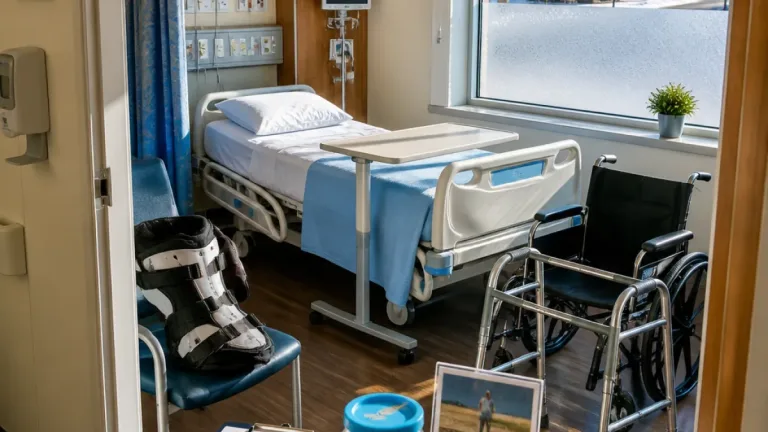
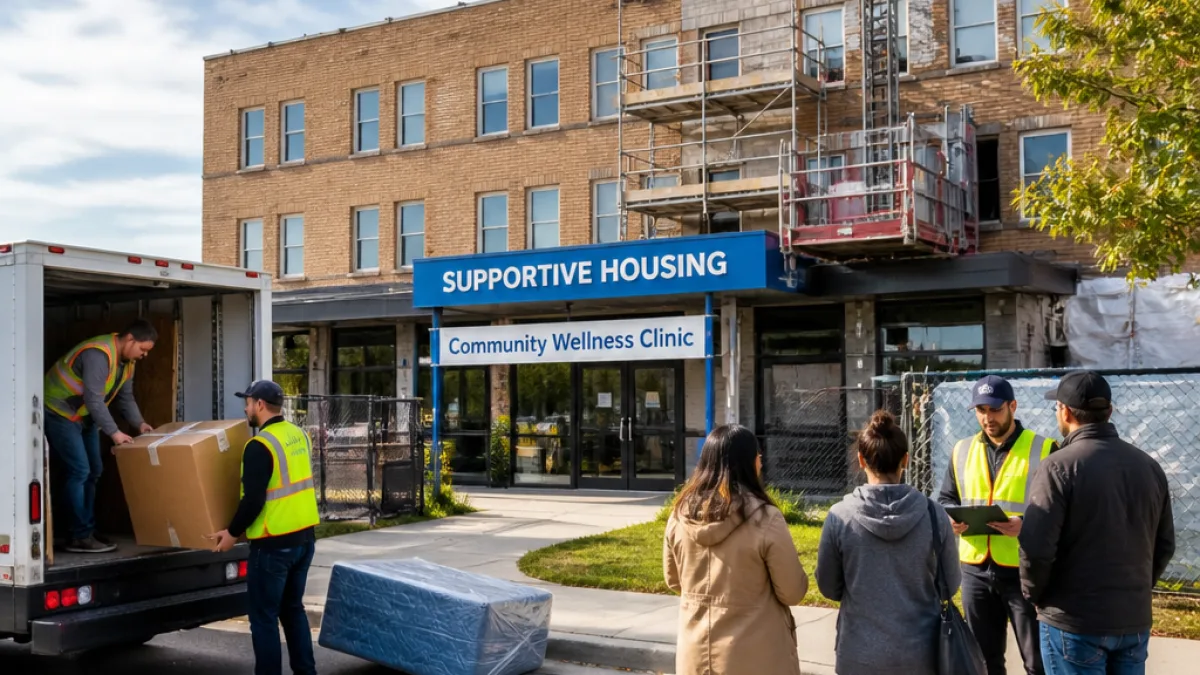
The second phase of a conversion project at 1635 Dundas Street East in Whitby is now underway, transforming the building’s second and third floors into 104 supportive, transitional housing units aimed at helping people move from homelessness into permanent homes.
What the new phase includes
The redevelopment adds residential units plus integrated on‑site services intended to provide wraparound supports. Planned amenities and services include:
- Addictions recovery programming
- Palliative care assistance for homeless seniors
- A medical clinic and administrative space
- Service spaces to support case management and transition planning
Officials say the site previously functioned as a long‑term care home and was repurposed earlier this year to offer supports for people experiencing homelessness, including services for those coping with alcohol and drug dependency.
Funding and capacity
The project’s second phase is supported by both federal and regional contributions. In January the federal government committed $40 million to the phase, while Durham Region has allocated $13.7 million toward the redevelopment.
| Funder | Amount |
|---|---|
| Federal government | $40,000,000 |
| Durham Region | $13,700,000 |
Durham Region officials report the facility has been operating near full occupancy since it began accepting residents earlier this year.
“the facility has been near capacity since inviting its first few occupants”
Community response and context
While regional authorities emphasise the role of on‑site supports in helping residents transition to permanent housing, the project has drawn criticism from some members of the public. Opponents circulated an online petition in 2023 that raised concerns about transparency related to Durham Region’s purchase of the building.
The conversion is part of broader regional and federal efforts to address homelessness and to provide targeted services to people with complex needs. For Whitby, the development will increase the local supply of supported housing and centralise several health and social services in one location, a change that is likely to affect neighbouring streets, service delivery coordination and municipal planning.
As construction progresses on the upper floors, officials have not announced a public timeline for completion or further details on occupancy criteria. Residents seeking information or wishing to raise concerns should contact Durham Region’s housing services for updates and opportunities for public input.