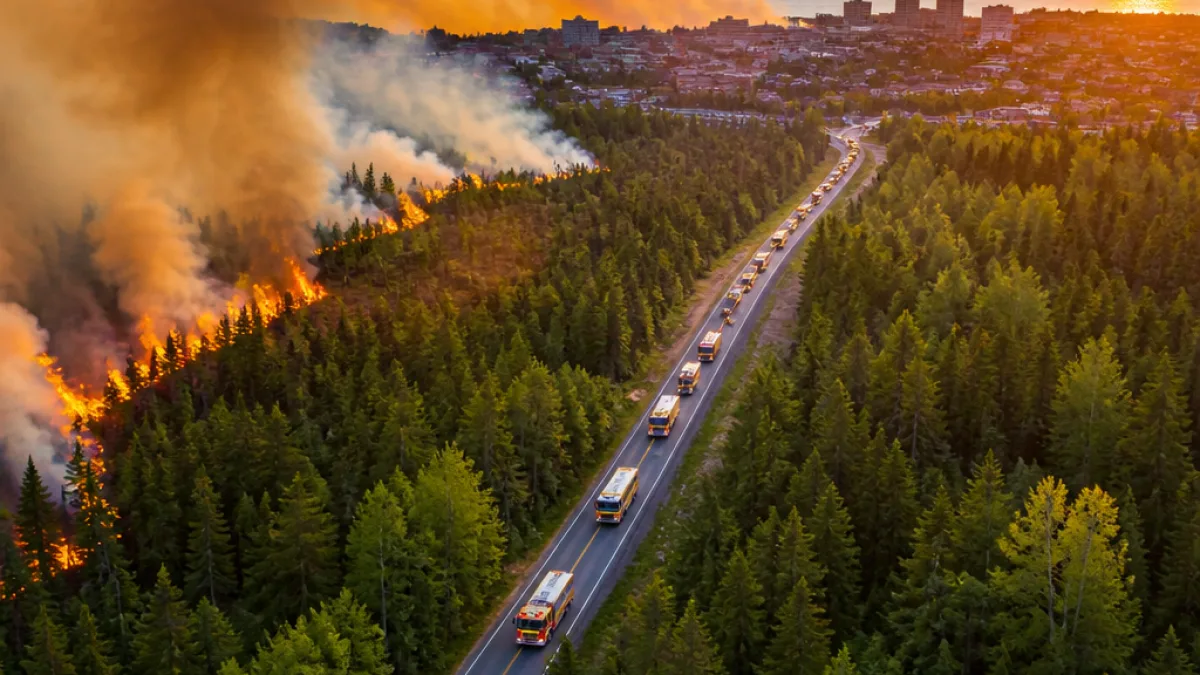
Hundreds of wildfires continue to burn across northern Ontario, producing widespread smoke and forcing emergency responses, evacuations and requests for federal support.
Scope of the fires and impacts
Provincial and federal officials report a large number of active fires in the region. Authorities say smoke has created hazy conditions across parts of Ontario, producing health concerns for residents and disrupting travel and tourism in some southern areas.
Across the northwest, officials report 136 active fires, of which 63 are listed as out of control. In the northeast there are an additional 44 active fires. Firefighting resources from other provinces have been mobilized to assist local crews.
| Region | Active fires | Out of control |
|---|---|---|
| Northwest | 136 | 63 |
| Northeast | 44 | N/A |
Communities and responses
Some communities have already been affected directly by the blazes. One First Nation north of Thunder Bay has seen homes and structures razed, prompting provincial leaders and the Assembly of First Nations to call on the federal government for immediate assistance. Other provinces, including Alberta, have deployed firefighters and aerial resources such as water bombers to support suppression efforts.
"is in close contact with its counterparts in Ontario and is ready to help as needed."
The federal government has indicated it is monitoring the situation and prepared to provide support. Local emergency management agencies continue to issue updates to residents in affected areas on evacuation orders, air quality warnings and service interruptions.
Health and travel considerations
Air quality can change quickly during multi-jurisdictional wildfire events. Environment Canada says some locations could see temporary improvement in smoky conditions, while others may experience lingering haze through the weekend. Health officials advise people with respiratory conditions, older adults and young children to limit outdoor exertion when smoke is present.
- Check local public health bulletins for air quality advisories and recommended precautions.
- Monitor municipal or First Nation emergency notices for evacuation orders or shelter locations.
- Be prepared for travel delays and altered tourism operations where smoke or wildfire activity affects visibility.
Fire behaviour remains dependent on weather, terrain and fuel conditions. Officials say crews are prioritizing protection of communities and critical infrastructure while attempting to contain outlying fires. Updates will continue as agencies on the ground assess conditions and coordinate resources.
— Reporting from northern Ontario