Board urges federal mandate after residents raise air-quality concerns
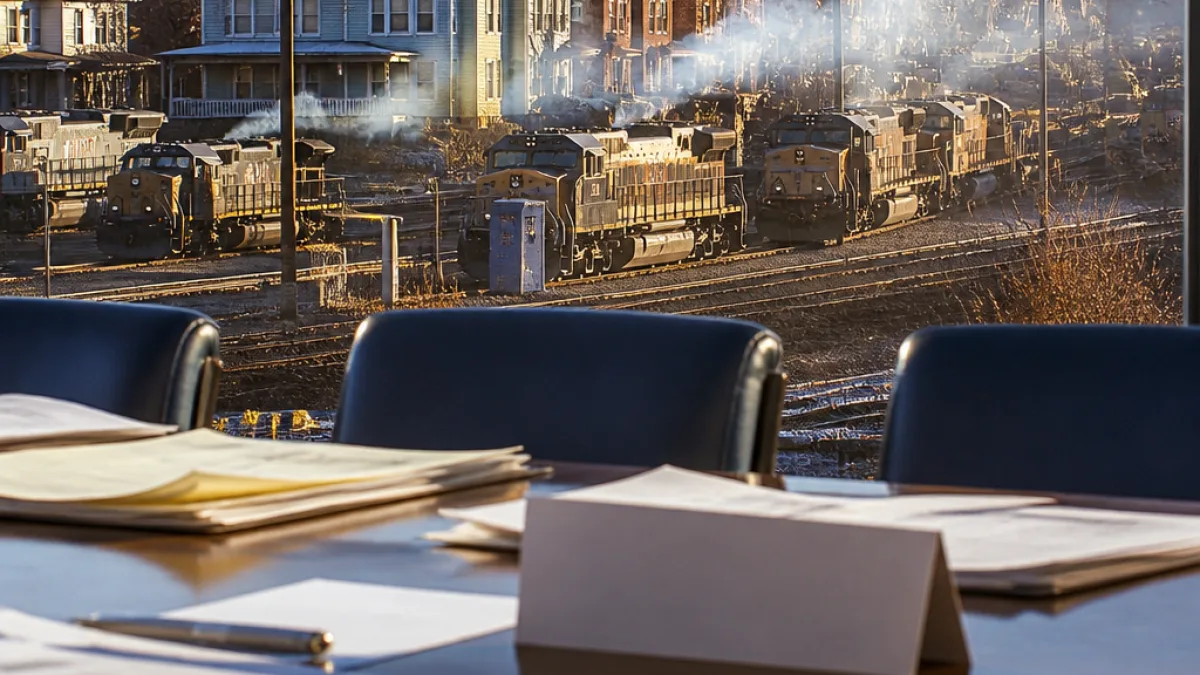
Hamilton's board of health has voted unanimously to petition the federal government to compel Canadian National Railway (CN) to electrify rail networks, beginning with yards that sit close to neighbourhoods such as the Stuart Street yard in the city's North End. The motion also asks that letters be sent to provincial and federal authorities outlining the board's concerns about diesel emissions and their impact on local health.
The motion passed 9-0 at Monday's board meeting. It was introduced by Ward 2 councillor Cameron Kroetsch and seconded by Ward 3 councillor Nrinder Nann. The call follows a sustained campaign from residents and local neighbourhood associations who say diesel fumes from locomotives and idling trains have harmed air quality in nearby residential areas.
"I don't know anyone that enjoys breathing the clouds of diesel smoke,"
Jon Davey, chair of the North End Neighbourhood Association's environment and climate committee, told the board residents have long felt the effects of emissions from the yard.
Local groups press for change
The North End Neighbourhood Association launched a petition urging electrification of the Stuart Street yard to improve air quality. The Beasley and Central neighbourhood associations have publicly backed the call. The petition argues that while comparable rail operators overseas have transitioned to electric power, CN's operations continue to rely heavily on diesel locomotives and idling activity close to homes.
- Public-health concern: Board of health framed the issue as an air-quality and health matter for nearby residents.
- Policy request: Petition requests federal compulsion for CN to electrify rail networks, starting with yards adjacent to residential areas.
- Local support: Multiple neighbourhood associations backed the motion and petition.
What passed at the board
The board's action is in the form of a petition and formal letters requesting government intervention; it does not itself have regulatory authority to force rail electrification. Board members framed the move as a way to elevate community concerns to provincial and federal decision-makers who regulate railway operations and infrastructure investments.
| Item | Details |
|---|---|
| Motion introduced by | Coun. Cameron Kroetsch (Ward 2) |
| Seconded by | Coun. Nrinder Nann (Ward 3) |
| Board vote | 9-0 in favour |
Board members emphasised the health implications raised by speakers from the neighbourhood association. While the board can transmit recommendations and pressure government, responsibility for regulating intercity rail operations and major infrastructure decisions lies with federal authorities and the rail companies themselves.
Practical and policy implications for Hamilton
Electrifying rail lines and yards is a complex and costly undertaking that would involve coordination among CN, federal regulators, provincial authorities and municipal stakeholders. Local residents and associations cited examples of other jurisdictions where rail electrification has been pursued as a means to reduce emissions and noise in residential areas; the board's petition seeks to bring those considerations into federal policy discussions.
For Hamilton, the board's move formalises a municipal-level health demand that could shape how provincial and federal officials assess mitigation and funding priorities for rail infrastructure. The immediate next steps are for the board's petition and letters to be forwarded to the appropriate provincial and federal ministries and for community groups to continue advocacy aimed at decision-makers.
City officials, CN representatives and federal regulators were not reported as providing new public comment at the time the board passed the motion. The board's action nevertheless highlights growing local pressure to address emissions from rail activity close to homes in the North End and other neighbourhoods.