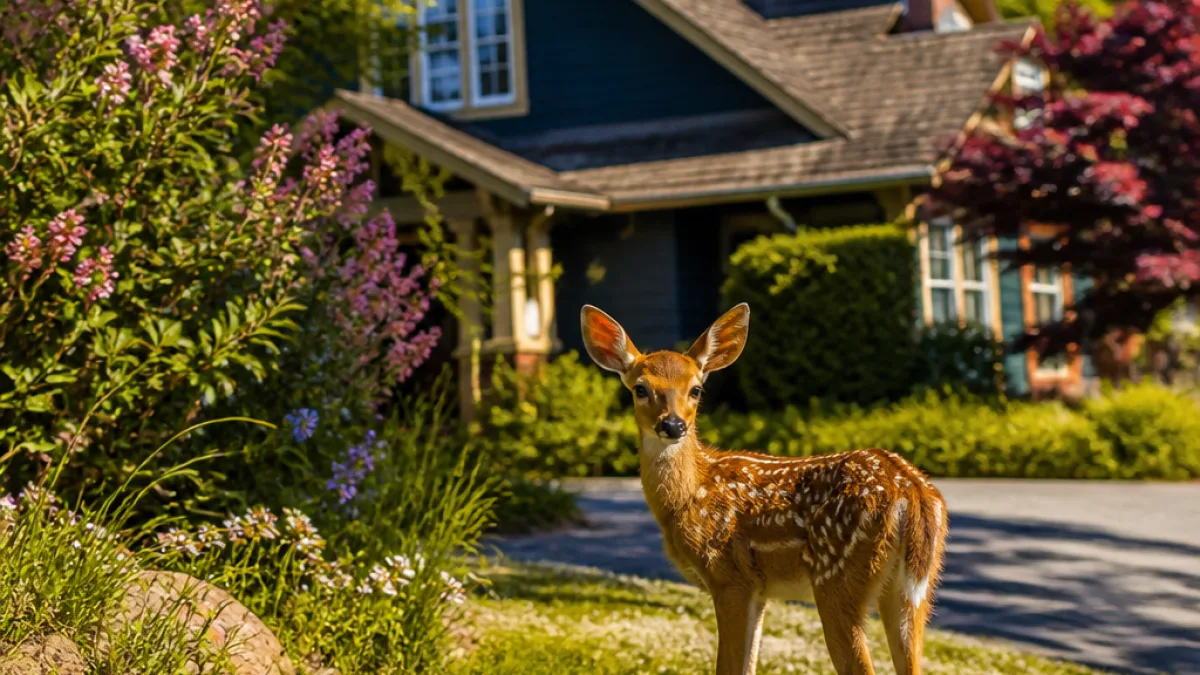
Seasonal spike in collisions and entanglements
With summer in full swing, Greater Victoria is seeing more deer on neighbourhood streets and in backyard corridors — and, with them, a rise in preventable harm. Wildlife advocates report increasing collisions involving speeding vehicles and a surge in entanglements in garden netting and fencing as mother deer move with their growing fawns throughout the region.
Experts say the patterns are predictable: fawns born in spring gain strength through the summer and begin to trail their mothers while foraging. That behaviour places them at particular risk on busier roads and at driveways where sightlines can be limited. Community groups and animal welfare professionals are calling on residents to slow down, scan ahead and treat yards as potential hazard zones for wildlife.
Drivers urged to anticipate fawns
Animal welfare advocates caution that a single deer crossing seldom tells the whole story. A doe may step out first, with fawns and other deer following seconds later. Dr. Andrea Wallace, who oversees wild animal welfare at the BC SPCA, warned that extra vigilance is essential during the summer months when many species are raising offspring.
“Often you’ll see a deer cross the road, but drivers may not realize there are fawns or other deer following behind,” Wallace said.
Wild Wise Society president Mollie Cameron added that a well-intentioned horn can backfire with young deer. According to Cameron, honking at a fawn may cause it to drop and freeze in the lane instead of moving to safety. The advice to motorists is simple: come to a stop and give the animals time and space to clear the roadway.
Backyard hazards under scrutiny
Beyond the curb, the season brings a different challenge. As more residents take to gardening, plastic netting and certain fencing styles are ensnaring deer at higher rates across multiple neighbourhoods. Cameron urged homeowners to conduct regular checks for potential snags and to consider wildlife‑friendly fencing alternatives where possible.
When deer become caught, they can carry netting for long periods without being noticed, causing injury. Attempts by well-meaning residents to free a trapped animal can also do harm. Advocates warn that the stress of capture can trigger a dangerous condition known as capture myopathy, which may be fatal.
Practical steps for Victoria residents
- Slow down on residential and rural roads, especially at dawn and dusk, and anticipate that more deer may follow the first animal you see.
- Avoid honking at fawns; instead, stop and wait until the animals have crossed.
- Inspect yards for netting, loose fencing, or other materials that can snag antlers or legs; remove or replace with wildlife‑safer options.
- Give space to does and fawns encountered in parks, trails and boulevards.
Who to call — and when to step back
Advocates emphasize that residents should not attempt rescues themselves. If you come across an injured or distressed deer, experts urge contacting the provincial Conservation Officer Service for guidance and response. In many cases, keeping distance and minimizing stress on the animal is the best immediate course of action until trained personnel arrive.
Cameron framed the issue as a shared responsibility in a region where people and wildlife frequently cross paths. “Deer have just as much right to be here as we do,” she said, encouraging households to make small, practical changes that can prevent suffering and reduce conflicts.
At a glance: risks and responses
| Seasonal risk | Why it happens | Recommended response |
|---|---|---|
| Road crossings with fawns | Fawns follow does, often a few seconds behind | Reduce speed, scan for trailing animals, stop and wait |
| Honking at young deer | Startle response can cause fawns to drop in place | Avoid honking; allow time to clear the road |
| Garden netting/fencing entanglements | Common yard materials snag legs, antlers and necks | Remove hazardous netting; use wildlife‑friendly fencing |
| DIY rescue attempts | Stress can lead to capture myopathy and injury | Keep distance; contact the Conservation Officer Service |
As Victoria navigates another summer of close contact with urban wildlife, the message from local experts is consistent: slow down, look twice, and treat yards and roadways with wildlife in mind. Small changes by residents can limit collisions and prevent the kinds of entanglements that too often turn routine movements by deer into medical emergencies.