Quiet physician-premier who steered a pivotal royalties deal dies at 88
Former Nova Scotia premier John Hamm, a small-town physician who entered politics after three decades in medicine and led the province from 1999 to 2006, has died at age 88. Colleagues across party lines are recalling his even-tempered style and a focus on practical outcomes that left a lasting imprint on the province’s finances.
Hamm practised as a family doctor for about 30 years before moving into public life in the early 1990s. As premier, he gained a reputation for being understated and direct, an approach allies say earned trust during complex negotiations and tough budget choices.
“He taught us to be true to ourselves and to put our province first, before politics,” said Rodney MacDonald, a minister in Hamm’s government who succeeded him as premier in 2006. “That’s what he did as premier. He was sincere. He was honest. He said if we said we were going to do something, then we should do it.”
Atlantic Accord revamp delivered billions and protected equalization
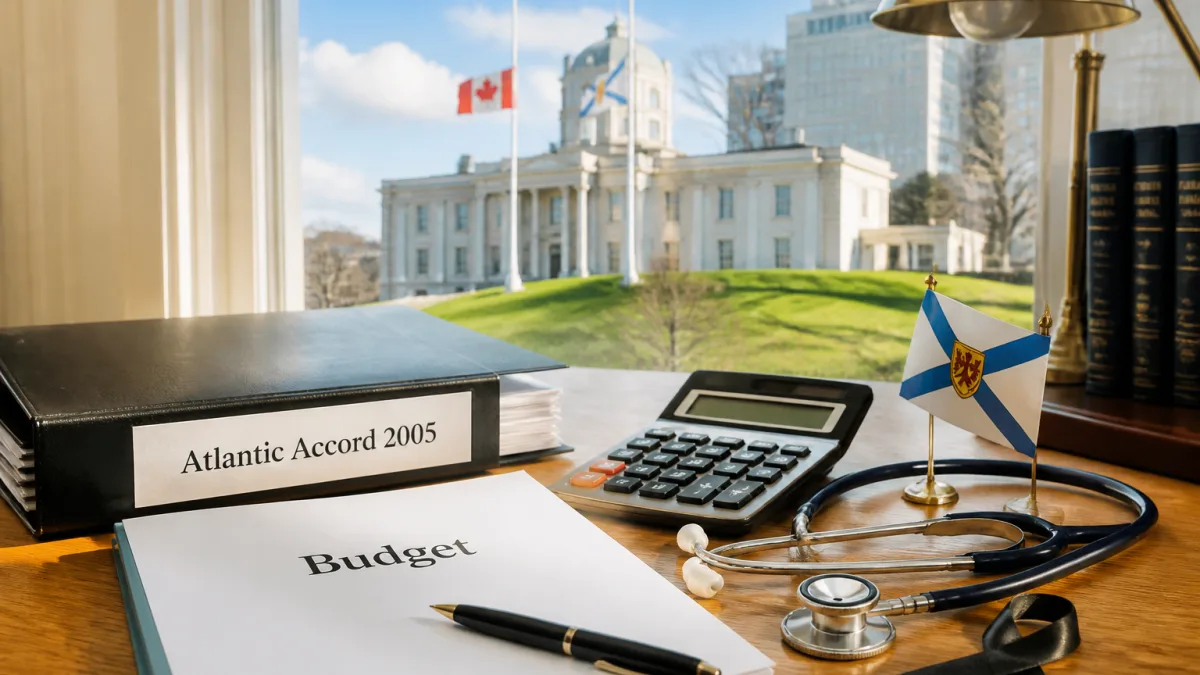
Hamm’s signature achievement came in 2005 when he pushed to update the Atlantic Accord, the framework that governs how Ottawa and Atlantic provinces share offshore energy revenues. The renegotiated terms gave Nova Scotia and Newfoundland and Labrador 100 per cent protection from equalization clawbacks tied to those royalties—an outcome credited with bringing Nova Scotia an estimated $1.1 billion over the following eight years.
His former communications director, Rob Batherson, recalled how Hamm’s low-key manner complemented the more combative style of then–Newfoundland and Labrador premier Danny Williams during those talks.
“The federal government kind of tried to split us up at the time,” Batherson said, adding that Hamm’s understated approach was often misread but remained firm during negotiations.
A leader defined by restraint, reliability and a personal touch
Hamm, sometimes labelled “dull as dishwater” by detractors early on, used that reputation to his advantage. Associates describe a premier who avoided theatrics, favoured preparation, and kept his word. Those who worked with him also recall small personal rituals and interests—a lifelong attachment to hockey, a fondness for Johnny Cash, and a well-known preference for milk. When MacDonald first arrived in the premier’s office, he found a handwritten note from Hamm beside a tall glass of milk—an emblem of the informal mentorship Hamm offered to successors.
Public tributes over the years reflected the respect he commanded beyond Nova Scotia. At a 2006 event in Halifax, Prime Minister Stephen Harper was photographed speaking with Hamm during a tribute at the provincial Progressive Conservative leadership convention.
From exam room to Executive Council: a concise timeline
| Role | Period |
|---|---|
| Family physician | ~30 years before early 1990s |
| Entry into provincial politics | Early 1990s |
| Premier of Nova Scotia | 1999–2006 |
| Renegotiated Atlantic Accord | 2005 |
How Hamm’s legacy shows up today
While fiscal policy has shifted under subsequent governments, the reworked Atlantic Accord remains a marker of how provincial leaders can leverage regional cooperation to secure resources and protect equalization room. For Nova Scotians, the agreement’s revenue stability helped support provincial priorities over the years that followed, shaping debates about energy development, federal‑provincial relations and long‑term budgeting.
Those who served alongside him emphasize that the substance of his tenure—steady messaging, predictable decision-making and a preference for cross‑provincial partnership—offers a template for current leaders navigating complex files with Ottawa.
- Steady leadership: Known for a calm, pragmatic style that emphasized follow‑through.
- Fiscal impact: The 2005 Accord update delivered an estimated $1.1 billion to Nova Scotia over eight years.
- Enduring influence: Set expectations for collaborative Atlantic advocacy on national files.
Hamm retired from politics in 2006. He is being remembered not for political theatre but for reshaping the fiscal ground under Nova Scotia with the same deliberate care he brought to his medical practice. Details about memorial arrangements were not immediately available.