
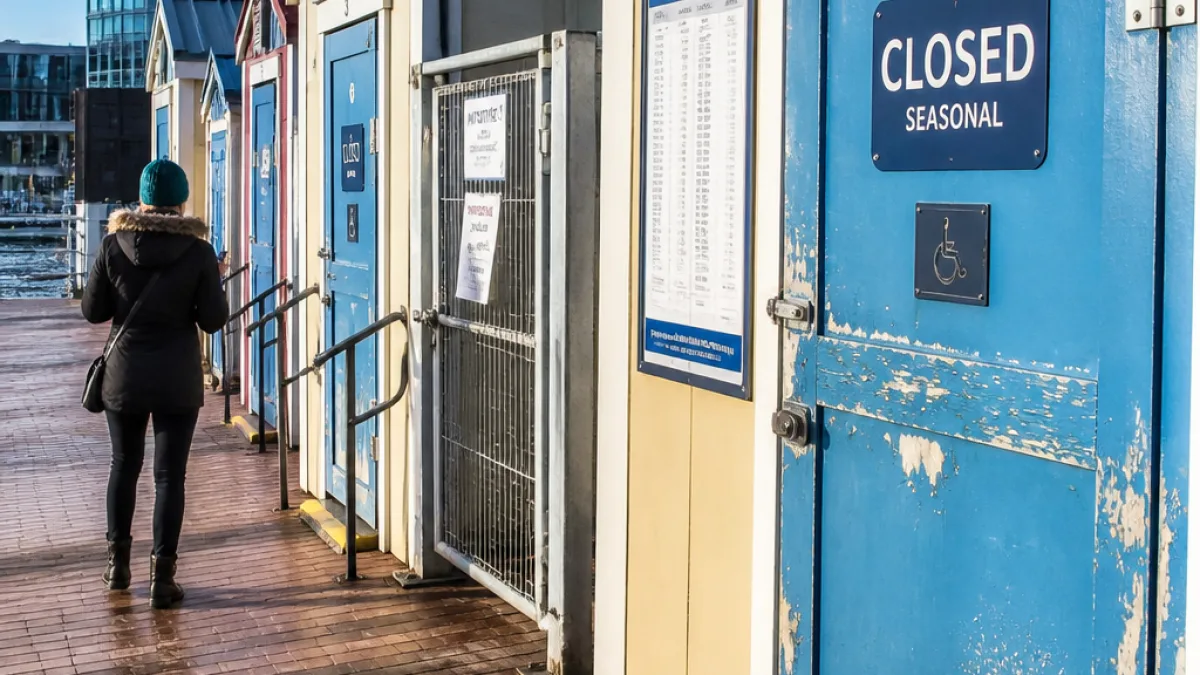
HALIFAX — Residents and health advocates are calling for more publicly accessible washrooms across the city, saying the current mix of seasonal closures, locked doors and unclean facilities creates real hardship for people with chronic health conditions and others who rely on predictable access.
Users describe planning days around bathrooms
Dalhousie University student Olivia LeBlanc, who lives with colitis and works with Crohn’s and Colitis Canada, said finding a washroom in Halifax is a daily exercise in planning. She told reporters the uncertainty about whether a facility exists, whether it is open and whether it is useable adds stress to ordinary activities.
“It's really stressful. You need to plan your day around where the bathroom is going to be … when you physically locate one, that doesn't always mean that it's available.”
Another resident, Julia Bedell, diagnosed with Crohn’s disease as a teenager, said the mental load of navigating the city would be eased by more reliable, clean public washrooms. Both advocates emphasised that lack of access is not merely inconvenient but can limit participation in work, school and public life.
What the municipality says
The Halifax Regional Municipality provided a brief response by email, saying it operates 29 outdoor public washrooms. Specifics on funding levels and any plans to increase the number or improve hours and cleanliness were not detailed in the statement provided to reporters.
Advocates point to several locations where access can be unpredictable:
- Halifax Public Gardens (Spring Garden Road) — washrooms close at sundown and are locked up for the season after summer, according to users.
- Halifax Common — facilities are described as seasonal and therefore not year-round supports for residents who need them.
- Fort Needham Park — pictured in coverage as one location with an outdoor public washroom, underscoring the uneven distribution across neighbourhoods.
For people with incontinence, inflammatory bowel disease or other conditions that require immediate access, seasonal closures and limited hours can amount to significant barriers. Advocates argue that accessible, well-maintained washrooms are an underrecognized element of inclusive public infrastructure.
Local consequences and next steps
Expanding reliable access would affect a wide range of Haligonians: students, older adults, parents with young children, visitors and people with health conditions. While the municipality already maintains dozens of outdoor facilities, advocates are pushing for clearer plans on funding, year-round access and hygiene standards.
| Item | Detail |
|---|---|
| Number of outdoor washrooms (municipality) | 29 |
| Examples of sites with limited access | Halifax Public Gardens (seasonal/sundown closure); Halifax Common (seasonal) |
Municipal leaders will face questions from constituents and advocacy groups about whether to invest in more permanent, year-round public washrooms, adjust hours, or partner with businesses and community organisations to increase available facilities. Any changes would involve budgeting and operational decisions that affect parks, downtown areas and neighbourhood hubs.
The push for more washrooms in Halifax frames a broader conversation about how cities build inclusive public spaces and provide services that allow all residents to move about the city with dignity and certainty.