Halifax to vote by phone and online only starting in 2028
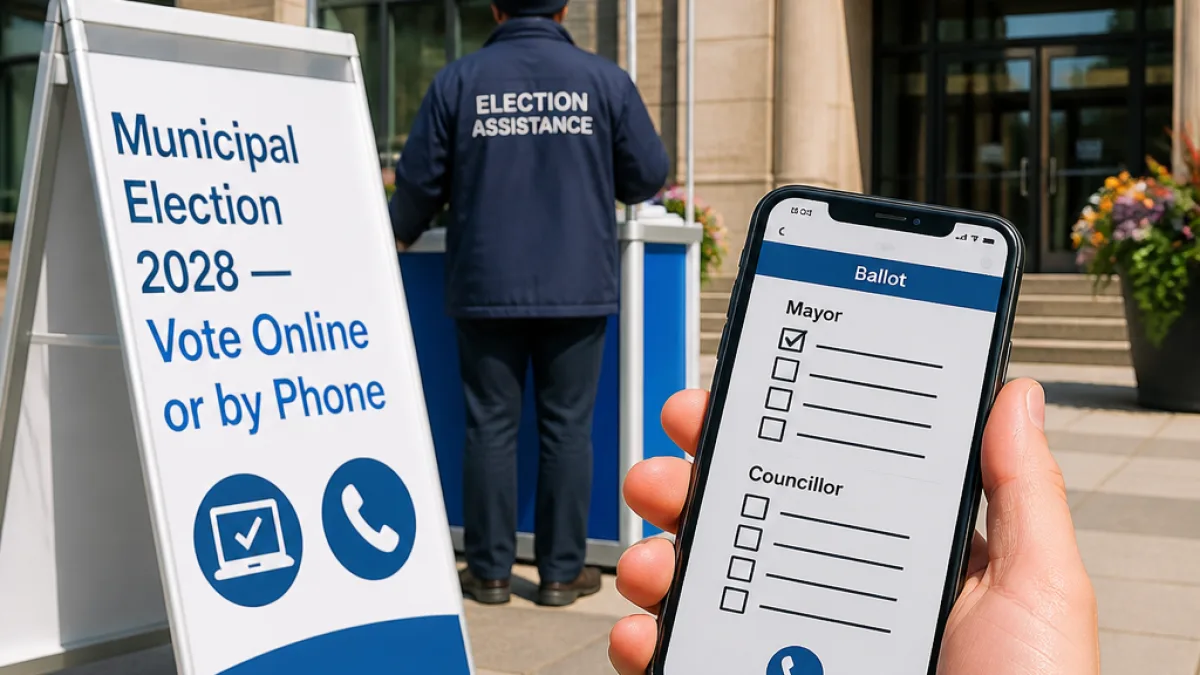
Halifax will become the first major Canadian city to run a municipal election without paper ballots after council voted unanimously to adopt electronic-only voting beginning in 2028. Residents will cast ballots online or by telephone around the clock for the duration of the voting period, with a small number of in-person help centres available for those who need assistance using the technology.
The decision marks a significant shift for local elections. The municipality has offered a mix of paper and electronic options since 2008. A report from the Halifax Election Office says removing paper will cut costs, reduce staffing needs and speed up the tally on election night.
What changes for voters
- Channels: Voting will be available online and by phone, 24 hours a day, during the official voting period.
- Support: Limited in-person stations will remain to help residents who need technological assistance.
- No paper: Traditional paper ballots and tabulators will be eliminated for municipal contests starting in 2028.
Council members backed the change this week without dissent. The move places Halifax at the leading edge of municipal election administration in Canada, where most large cities continue to rely on paper ballots and, in many cases, are restricted by provincial rules from adopting online voting.
Security, transparency and confidence debated nationally
While Halifax proceeds, officials in other major cities say they will not follow suit in the near term, citing legal barriers or doubts about the integrity of internet voting at large scale.
"We are not confident that internet voting can provide the same combination of security, transparency, scrutiny, auditability, and public confidence as voter-marked paper ballots for a city the size of Toronto," said City of Toronto spokesperson Mahreen Dasoo.
Several provinces require paper ballots and prohibit electronic voting in local elections, including Alberta, British Columbia, Manitoba and Quebec, according to municipal officials in those jurisdictions. Alberta tightened its rules in 2024, banning voting machines and mandating hand counts. In Edmonton, the city says it must comply with the provincial legislation.
"In compliance with the legislation, the City of Edmonton does not have plans to implement electronic voting or eliminate paper ballots," Edmonton spokesperson Carmen Wiggins said in an email.
Elsewhere, proposals have stalled. Montreal abandoned a planned test after no bidders met Quebec’s requirements; elections officials there said proponents lacked experience with large-scale online elections, and the idea has been set aside for now. In Vancouver, a request to allow online voting in 2021 was turned down by the province, a position that remains unchanged.
How Halifax plans to make it work
The Halifax Election Office’s analysis emphasizes operational gains: fewer temporary workers to recruit and train, less equipment to rent and deploy, and faster results without physical ballot transport and tabulation. The city has over a decade of experience running electronic options alongside paper, which local officials say informs the shift to an all-digital model.
Voter access is a central consideration. The city says help centres will be in place to support residents who lack internet access, devices or digital literacy. Telephone voting is expected to offer a lower-tech route for those without computers or smartphones, while 24/7 access during the voting window could aid shift workers, caregivers and residents with mobility barriers.
How Halifax compares across Canada
Halifax’s decision stands out in a patchwork of provincial rules and municipal practices. Here’s how some jurisdictions line up based on current public positions and provincial frameworks referenced by municipal officials:
| Jurisdiction | Status on electronic or paper ballots |
|---|---|
| Halifax (NS) | Electronic-only from 2028 (online and phone); limited in-person assistance |
| Toronto (ON) | Not considering eliminating paper; cites security, transparency and auditability concerns |
| Edmonton (AB) | Paper required under provincial law; no plans for electronic voting |
| Vancouver (BC) | Province declined to allow online voting; stance unchanged |
| Montreal (QC) | Pilot cancelled; no bidders met requirements; Elections Quebec paused the idea |
What to watch next in Halifax
With the framework cleared at council, the municipality will now turn to implementation, including vendor contracting, system testing, accessibility planning and public education. Details on the number and location of in-person assistance sites, identity verification protocols and the publication of security audits will be key for building voter confidence.
For residents, the change means preparing to cast a ballot online or by telephone in the next municipal election cycle. The city’s pitch is that the new model will be simpler, cheaper and faster. Halifax will also become a test case watched closely by other Canadian cities balancing convenience and cost against the demands of election security and public trust.