
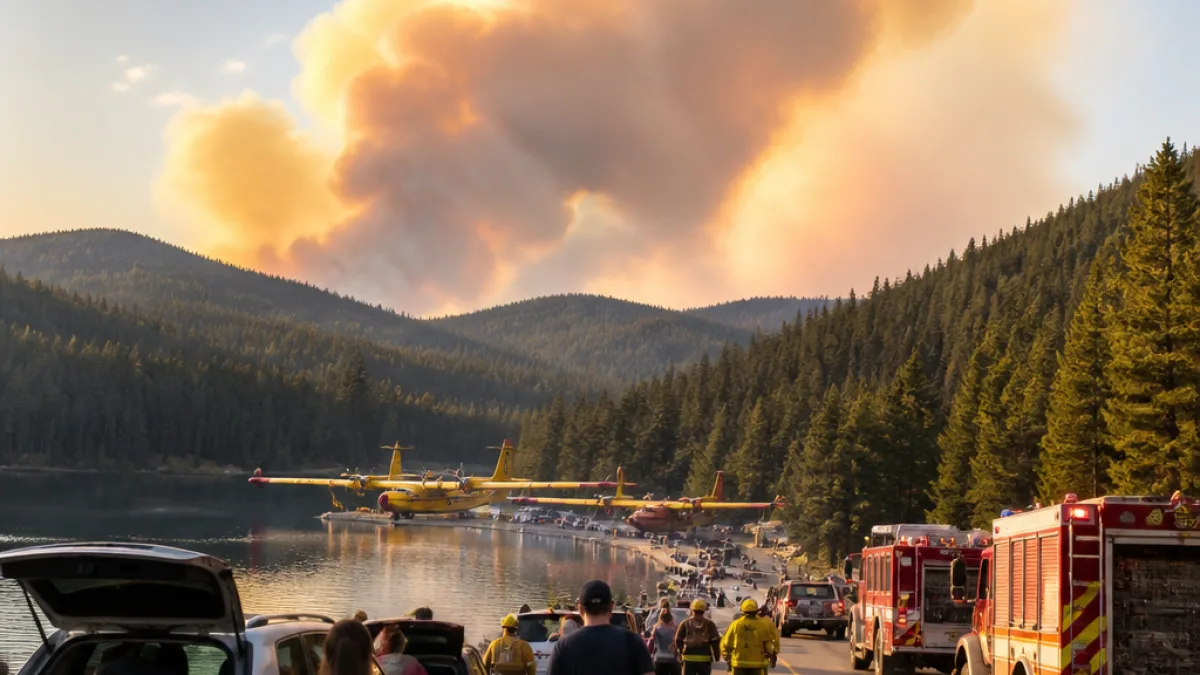
Nearly 100 new wildfires were reported across British Columbia over a 24-hour period after an intense lightning event, the BC Wildfire Service said, leading to expanded evacuation orders and alerts in interior communities.
Lightning event sparks rapid surge in starts
The wildfire service reported that more than 4,000 lightning strikes on Friday were blamed for the latest wave of fire starts. Roughly three-quarters of the province’s active fires were attributed to lightning, according to the agency.
The sudden increase in fire activity prompted authorities to widen evacuation measures in the Thompson–Nicola and Cariboo regions. The Thompson–Nicola Regional District said the Fiftynine Creek fire led to an expansion of the evacuation order for both the Big Bar Lake and Meadow Lake areas, and issued an evacuation alert for the Bonaparte Plateau. The Cariboo Regional District reported a new evacuation order for the Bowers Lake wildfire.
“As the weather system moves into Alberta, officials anticipate more lightning strikes and, in the coming days, more fire starts.”
Resources and response
Fire managers have moved quickly to respond. More than 500 firefighters have been deployed across the province to tackle the recent starts and protect communities and infrastructure.
- Thunderstorms produced a concentrated burst of lightning that ignited numerous new fires.
- Evacuation orders and alerts have been expanded in the Thompson–Nicola and Cariboo regions.
- Provincial firefighters continue to prepare for additional starts as the weather system shifts east.
Where evacuations and alerts have changed
| Fire | Action |
|---|---|
| Fiftynine Creek | Evacuation order expanded for Big Bar Lake and Meadow Lake; alert for Bonaparte Plateau |
| Bowers Lake | New evacuation order issued |
Officials had warned earlier in the week that a weather system would bring lightning and conditions favourable for both starting and spreading fires across an already dry landscape. With the storm system moving eastward, the wildfire service has warned of the risk of further lightning strikes and additional fire starts in the coming days.
Residents in affected districts should monitor local emergency bulletins and regional district notifications for changes to evacuation orders and alerts. Those in or near evacuation zones are advised to prepare to leave and follow instructions from local authorities.
The rapid increase in ignitions underscores the sensitivity of the province’s fire season to short-lived, high-energy weather events and the continuing need for readiness among communities and fire crews.