
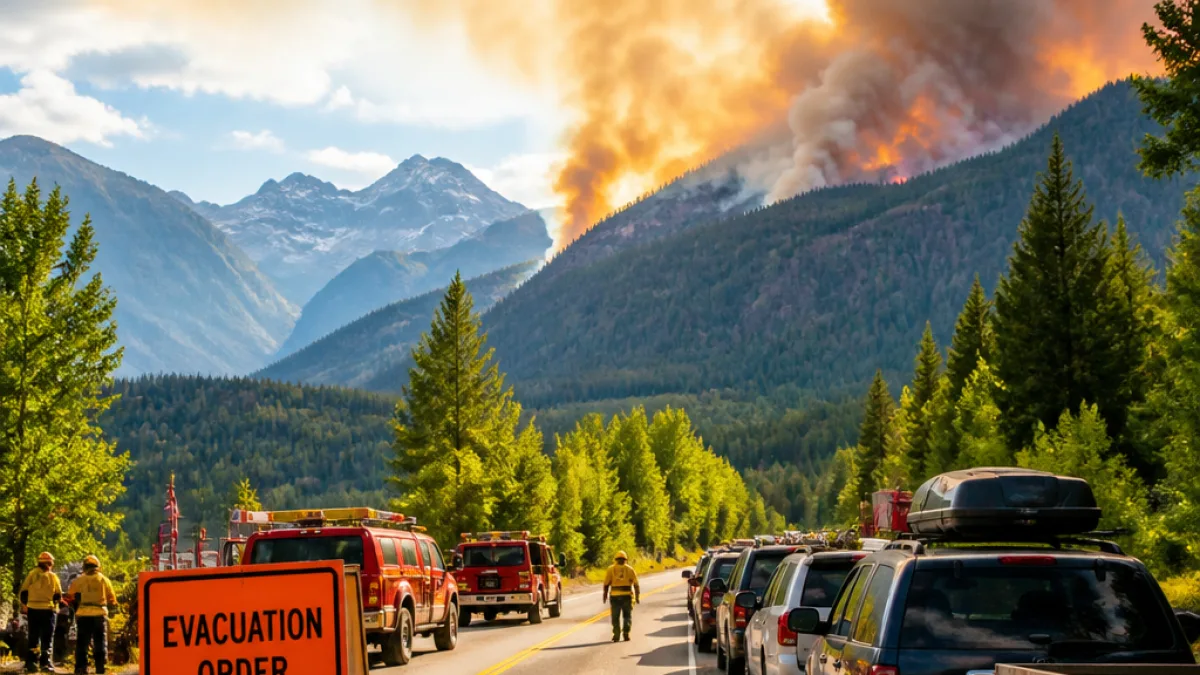
British Columbia wildfire authorities reported a sharp rise in activity after thunderstorms rolled through the region overnight, igniting new fires and prompting evacuation orders and alerts in several communities.
Lightning, dry conditions fuel spike in blazes
The BC Wildfire Service said the number of active wildfires in the province climbed to approximately 50, up from roughly 30 the day before, with around 27 new starts over a 24-hour period. The surge followed lightning strikes across Metro Vancouver, the southern Interior, Vancouver Island and the Kootenays.
Among the areas affected, the situation in Pemberton and Boston Bar drew particular concern. In Boston Bar, fires in the vicinity have expanded substantially, while crews near Pemberton worked through the night to contain a wind-driven blaze.
"Crews have made progress on the blaze near Pemberton and winds are not blowing flames toward the town,"
BC Wildfire Service spokeswoman Emily Fardad said no structures were currently at risk in Pemberton and that officials did not anticipate immediate changes to the existing evacuation orders and alerts, despite visible smoke and flames from the roughly 38-hectare fire near the village.
Evacuations and public impact
Officials said hundreds of homes across the province were under evacuation orders or alerts. In Pemberton, authorities issued an evacuation order for One Mile Lake Park and maintained alerts for other parts of the village and surrounding areas. Residents in affected zones have been advised to follow local emergency instructions and be prepared to move if orders change.
- Active wildfires: ~50 provincewide
- New starts (24 hrs): ~27
- Areas with notable activity: Boston Bar, Pemberton, Vancouver Island, southern Interior, Kootenays
| Metric | Value |
|---|---|
| Active fires (approx.) | 50 |
| Active fires previous day | 30 |
| New fires in last 24 hrs | 27 |
Fire officials had warned earlier in the week that lightning combined with warm, dry weather could produce a spike in wildfire starts. Those conditions remain a concern as crews prioritise holding lines, protecting communities and assessing shifting winds that can change fire behaviour quickly.
Residents in or near evacuation zones should monitor local government channels and the BC Wildfire Service for updates, and follow guidance from local emergency management offices regarding sheltering and road closures.
Reporting from multiple locations across the province continues as fire behaviour evolves and authorities update the status of evacuation orders and containment efforts.