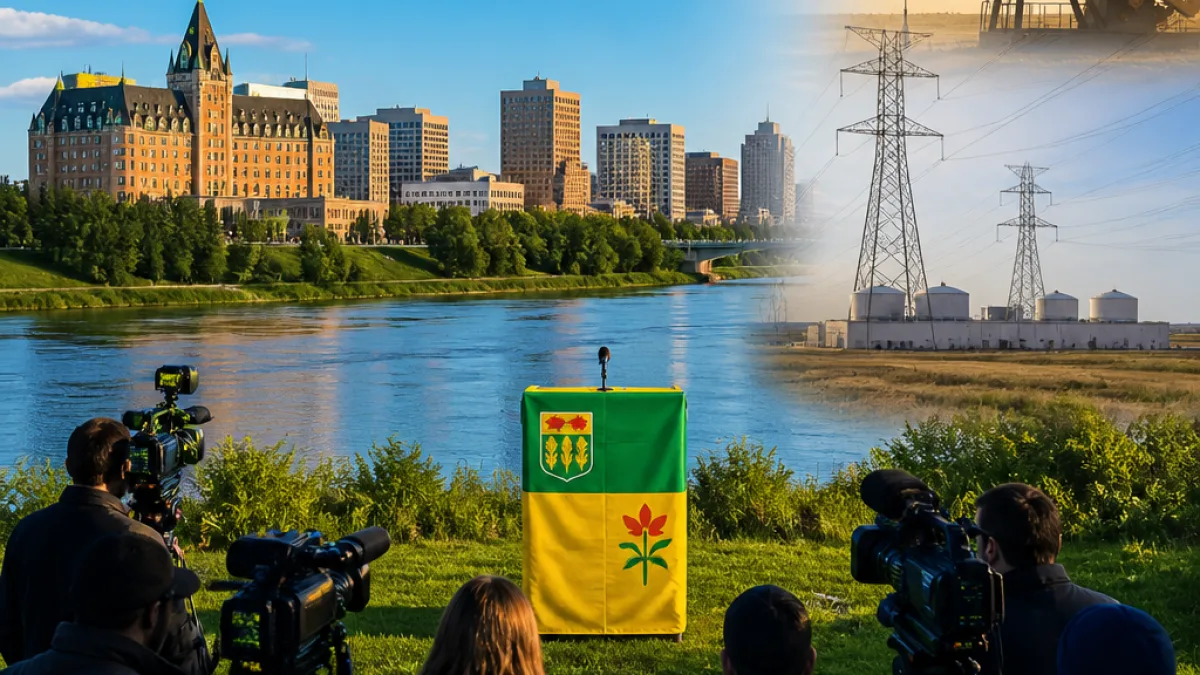
SASKATOON — Saskatchewan will pursue a diversified energy strategy that combines continued oil and gas development, expanded electricity infrastructure and the pursuit of nuclear power, Premier Scott Moe said Wednesday as premiers prepare to meet with the prime minister.
Province pressing federal government for alignment
Moe told reporters the province is keen to hear details of the federal electricity plan and to coordinate provincially on how to meet future demand while keeping Canadian industries competitive. He said discussions with Prime Minister Mark Carney ahead of the Council of the Federation meeting in Charlottetown next week will centre on electricity policy, trade and infrastructure.
"The electricity strategy that the administration put out a short time ago is, I think, of great interest to several provinces, including Saskatchewan," Moe said, adding that a significant nuclear build in the province makes interprovincial discussions important.
He framed infrastructure such as pipelines, ports and stronger transmission links as integral to giving Saskatchewan and other provinces the ability to access domestic and international markets. The provincial government has been engaging with Ottawa on regulatory issues it says will be required before any nuclear facility could be built.
Operational and regulatory hurdles remain
Moe acknowledged the practical challenges that accompany any move toward nuclear generation, including licensing, safety oversight and grid integration. He did not provide a timeline or project-specific details, but said the premiers’ meetings are an opportunity to discuss how provinces can work together and what federal collaboration might look like.
The 2026 Summer Meeting of the Council of the Federation runs from July 21 to July 23 in Charlottetown and will be hosted by Prince Edward Island Premier Rob Lantz. Premiers will meet with the federal administration to discuss co-operation on strengthening Canada’s economy and energy security.
What this means for Saskatchewan residents
For residents, the province's stated approach signals that fossil-fuel industries will remain a part of Saskatchewan's energy mix even as officials explore low-emission electricity options. Expanding transmission and port or pipeline capacity, if realised, could affect local employment, regional supply chains and export routes, while any nuclear project would involve lengthy regulatory review and community consultations.
- Continued oil and gas development alongside new generation sources
- Interest in nuclear power as a means to meet future electricity demand
- Infrastructure focus on pipelines, ports and electricity transmission to support market access
| Area | Province position |
|---|---|
| Oil and gas | Continued development |
| Nuclear energy | Planned development; regulatory work with federal government |
| Infrastructure | Expanded transmission, pipelines, ports |
As premiers converge in Charlottetown, Saskatchewan officials will be watching for commitments from the federal administration on electricity strategy and regulatory frameworks that would affect provincial plans. Any movement toward nuclear generation would require detailed environmental assessments, licensing and public engagement before construction could begin.
Coverage of federal-provincial discussions will be important in the coming weeks as officials clarify how jurisdictional responsibilities and funding could shape the province’s energy transition.