Diocese asks city to lift protection on North Park landmark
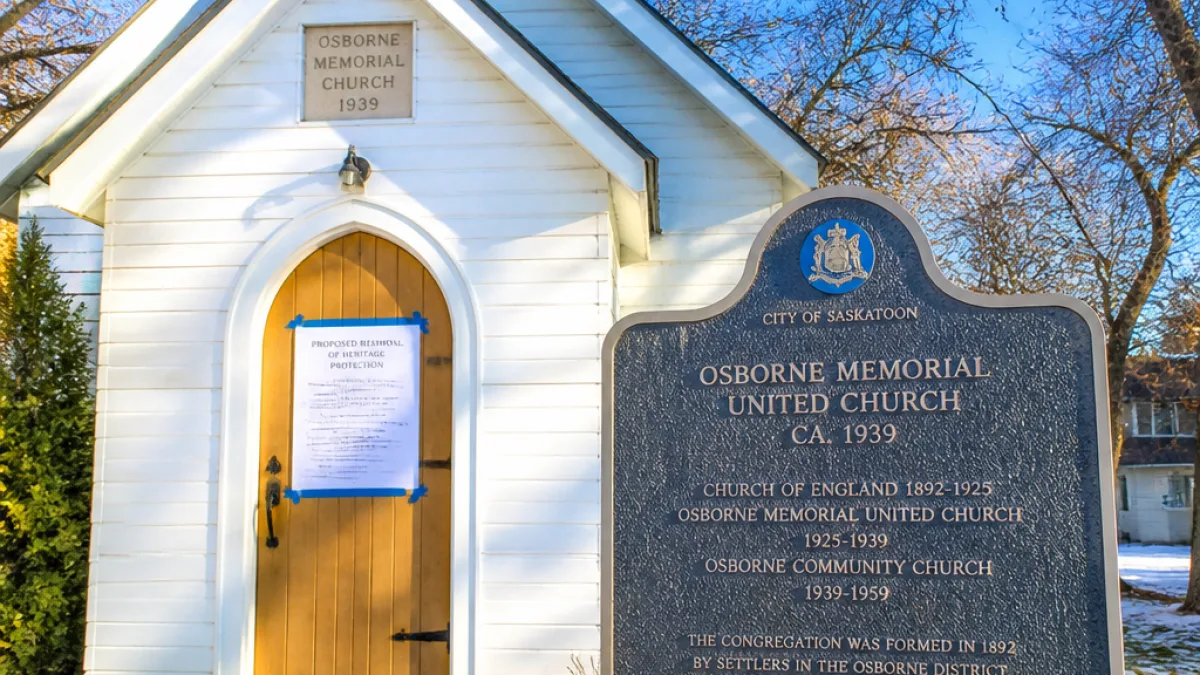
A request by the Anglican Diocese of Saskatoon to remove heritage protection from St. Mark’s Anglican Church has put a spotlight on the future of one of North Park’s most recognizable buildings and the process the city uses to safeguard historic properties. The small, white-clad chapel at Osborne Street and Eighth Avenue North dates to 1939, the product of determined local fundraising. The diocese now says it lacks the resources to continue caring for the structure and has asked a city committee to repeal its protection.
In remarks to a city council committee last month, Bishop Chad McCharles said the diocese can no longer sustain the property. He characterized the situation as difficult but necessary to address, noting the obligation to determine the site’s best path forward.
“This is not a property we have the resources to look after anymore,” Bishop Chad McCharles told a city council committee. “And it’s very sad. And it’s incumbent on us to do what’s best for this property.”
A chapel with deep neighbourhood roots
St. Mark’s traces its roots to the early days of Saskatoon’s growth along the South Saskatchewan River. According to the City of Saskatoon, parishioners first gathered in a repurposed stable as early as 1911. That structure was later relocated to North Park, where the current chapel was constructed. Contemporary accounts described the church as the product of community resolve; it was built for about $2,500, a figure that underscores the modest scale of both project and congregation at the time.
The opening drew press attention during the Second World War. A StarPhoenix story from December 1939 referenced the congregation’s humble beginnings in vivid terms. The comparison, while dramatic, captured the pride and symbolism attached to St. Mark’s among early worshippers and neighbours in the district.
“The congregation … which, like the Founder of Christianity, made a stable as its first home, will witness formal opening of its splendid new church on Sunday,” the StarPhoenix reported on Dec. 15, 1939.
What the holding bylaw means
The church is presently covered by a municipal holding bylaw. That mechanism does not permanently designate a site but creates a pause if demolition is contemplated. Under the bylaw:
- A 60-day holding period applies if a demolition permit for the property is submitted.
- During that time, city council has the opportunity to consider whether to formally designate the building as a heritage resource.
In effect, the holding bylaw functions as a safeguard, ensuring there is time for public officials to weigh a property’s heritage value before irreversible decisions are made. The diocese’s request to remove protection would change the status quo, though any subsequent steps would still follow established municipal procedures.
Historic value versus stewardship capacity
The submission places a long-standing community landmark at the juncture of two competing realities: the historical significance that buildings like St. Mark’s carry for Saskatoon’s neighbourhoods, and the financial and operational demands of maintaining aging structures. The diocese’s position is that it lacks the capacity to continue stewardship. Multiple messages seeking further comment from Bishop McCharles were not returned.
For residents of North Park and those who track Saskatoon’s civic heritage files, the question now becomes how council interprets the building’s value against present-day constraints. While no outcome has been decided, the file will test the city’s approach to balancing preservation with property owners’ challenges.
At a glance: St. Mark’s Anglican Church
| Detail | Information |
|---|---|
| Neighbourhood | North Park, Saskatoon |
| Location | Osborne St. & Eighth Ave. N. |
| Year built | 1939 |
| Early parish activity | Met in a stable as early as 1911 |
| Reported construction cost | About $2,500 |
| Current status | Subject to holding bylaw; diocese seeks removal of protection |
As the file progresses, neighbours and heritage observers will be watching how the city uses its tools — including any pause triggered by the holding bylaw — to determine whether the chapel’s past will continue to shape its future. The next steps, and any decision on the property’s status, will rest with committee and council under Saskatoon’s existing processes.