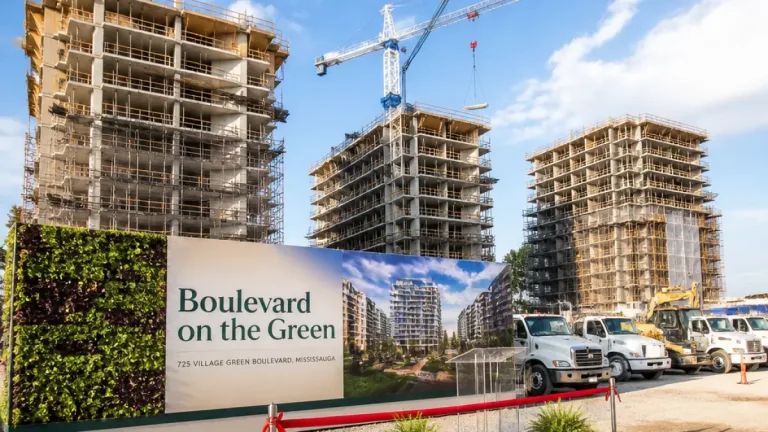
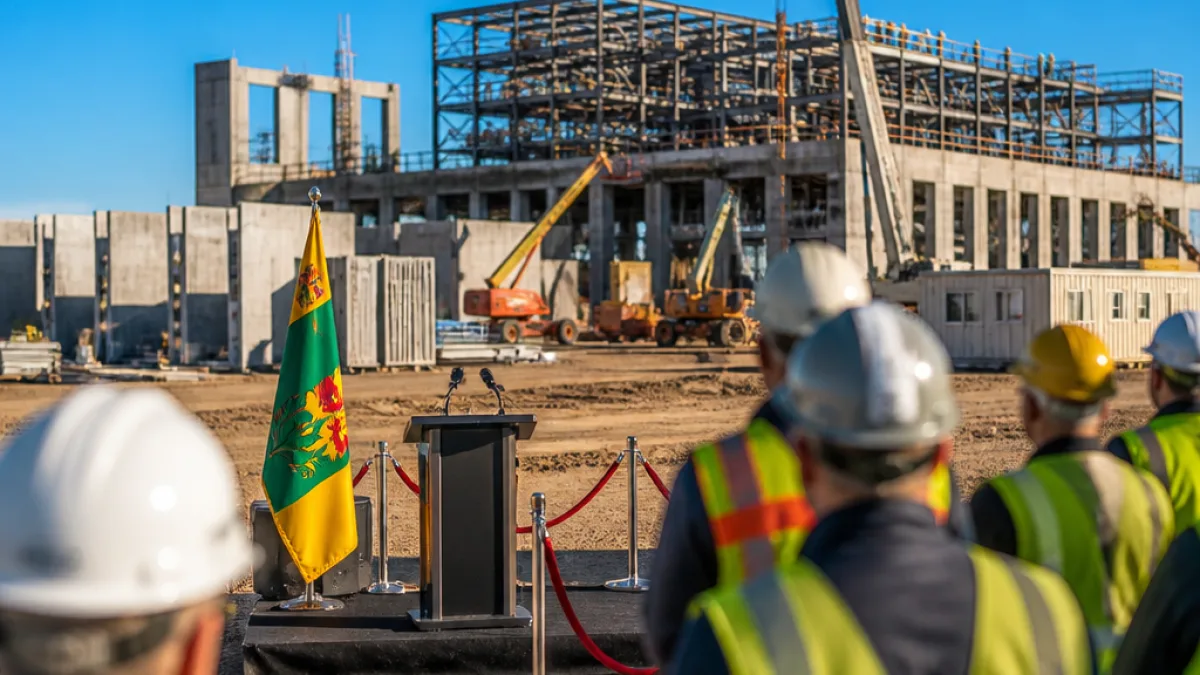
Southeast of Regina, a vast skeleton of steel and concrete is taking shape as contractors move toward completing the first phase of Bell Canada’s artificial intelligence data centre.
Site activity and timeline
At a news conference held at the company’s 65‑hectare property, Saskatchewan’s Crown investments minister described the project as a major undertaking and highlighted visible progress: framing is complete for three of the four data halls, and panel work on one wall is nearing completion. Heavy equipment and temporary site infrastructure — trailers, pipe stacks and security systems — surround the structures as crews remain on site.
“We have just an amazing thing going on here behind us,”
Minister Jeremy Harrison was joined by Bell executives at the site while construction continued. Bell says the complex will be a substantial installation: the initial build is a $1.7‑billion, 300‑megawatt facility that the company expects to be among the largest data centres in Canada. Bell executives said the first two halls are scheduled to begin operating in the first half of next year.
Tenants, jobs and projected growth
Bell identified CoreWeave and Cerebras as anchor tenants for the project. The company also outlined an ambitious potential expansion plan: a future build‑out to 1.2 gigawatts that Bell estimates could cost about $50 billion and would require a dedicated natural gas generating plant to supply the power needs. Executives said there is no firm timeline for that expansion.
- Site footprint: 65 hectares
- Initial capacity: 300 megawatts
- Initial cost: $1.7 billion
- Potential expansion: 1.2 gigawatts at an estimated $50 billion
- Workers on site: about 500 at peak construction
The provincial government and Bell suggested the development could generate ongoing local economic benefits. Minister Harrison said the completed facility could support about 500 permanent jobs at the site, plus as many as 3,000 off‑site and community jobs. Bell also indicated it intends to relocate its AI fabric headquarters to Regina, adding roughly 100 management positions.
Local response and implications
Regina’s mayor welcomed the project, saying it could help retain young talent and attract new residents. For municipal planners and utility providers, however, the eventual scale of operations poses questions about long‑term power supply, local infrastructure and community impacts should the larger expansion proceed.
| Item | Initial figure | Expansion estimate |
|---|---|---|
| Capacity | 300 megawatts | 1,200 megawatts (1.2 GW) |
| Cost | $1.7 billion | $50 billion (estimated) |
| Permanent jobs (on site) | ~500 | — |
Bell representatives said there are currently around 500 workers on site during construction. Company officials described future expansion as contingent on demand and other factors, noting the enlarged build would likely be located near the current campus.
As the facility moves from steel framing toward operation, municipal and provincial authorities will monitor local impacts on workforce, housing demand and utilities. The project underscores a growing trend in the Prairies and across Canada of large‑scale data infrastructure investments that combine technology, energy planning and regional economic development.