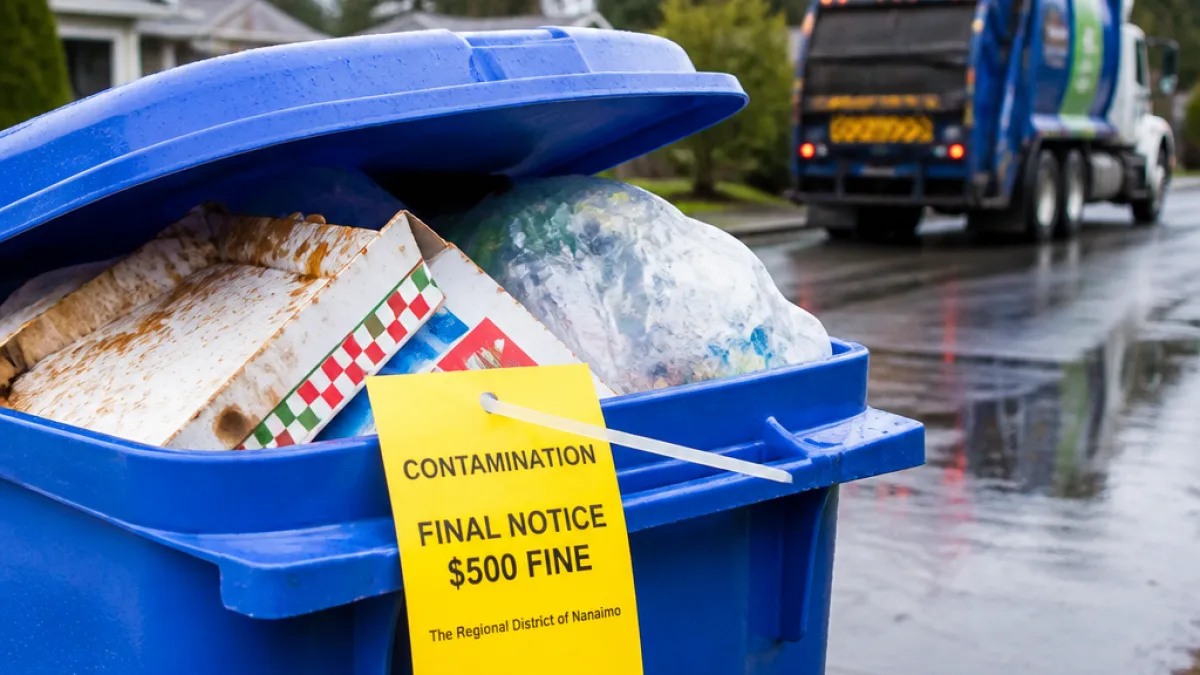
RDN shifts from education to enforcement
The Regional District of Nanaimo is moving to enforce curbside recycling rules after extended periods of elevated contamination, warning that repeat non-compliance could lead to $500 fines per occurrence and possible suspension of service. The district says it has stepped up public education and outreach, but contamination levels across the region were above acceptable thresholds through 2025 and remain too high.
In a notice to residents, the RDN cautioned that if contamination continues to exceed program limits, Recycle BC could levy penalties against the district. The potential annual exposure is $120,000, costs the RDN says would raise operating expenses and could drive up future utility fees for all curbside customers.
“Should contamination rates continue to exceed the maximum threshold, Recycle BC may fine the RDN. Fines could total $120,000 per year, increasing operating costs and future utility fees for all RDN curbside customers.”
What the district will do — and when
The enforcement program takes effect immediately. The RDN outlines a progressive approach that starts with warnings and escalates to fines and potential service suspension for persistent violations. The district says the aim is to balance education with enforcement while meeting program requirements and contractual obligations.
| Offence | Consequence |
|---|---|
| First | Cart tag identifying non-compliant materials |
| Second | Cart tag and formal written notice with corrective steps |
| Third | Final written warning |
| Subsequent | $500 penalty per occurrence; possible suspension of curbside recycling service |
'Wish-cycling' and operational impacts
The RDN points to so-called “wish-cycling”—placing items in the blue cart in the hope they are recyclable—as a major driver of contamination. The district characterizes ongoing disregard for material guidelines and misuse of recycling carts as behaviour that must end to avoid penalties. Problem items, it notes, can damage sorting equipment and compromise the recovery of otherwise recyclable materials, forcing more to landfill.
Officials stress that achieving a low contamination rate is “operationally critical.” Elevated contamination threatens the integrity of the curbside program, and any fines from Recycle BC would be borne system-wide, affecting households that follow the rules as well as those that do not.
What this means for Nanaimo households
For residents served by the RDN’s curbside program, the message is clear: improper items in the recycling cart can now bring financial penalties after a sequence of warnings. The district says that while many households have improved, others continue to place non-recyclable materials in their carts, putting the entire program at financial risk.
- Repeat contamination can lead to $500 fines and service suspension.
- Persistent region-wide contamination could trigger Recycle BC fines up to $120,000 per year, which the RDN warns would increase operating costs and future utility fees for all curbside customers.
- The RDN says the enforcement approach is meant to support behaviour change and ensure compliance with program and contractual requirements.
A pivot aimed at compliance
The RDN frames the shift as a necessary step after extended periods of contamination above allowable limits. The district says prior outreach has helped many households, but lingering non-compliance has forced an enforcement component. The goal, it says, is to prevent broader cost impacts and keep more material out of the landfill by protecting sorting equipment and maintaining the quality of recyclables.
In outlining the escalation process, the district underscores that the program’s sustainability depends on reducing contamination quickly. As the new rules are enforced at the curb, households are being warned that adherence is now tied not only to environmental outcomes but to the stability of utility costs across the region.