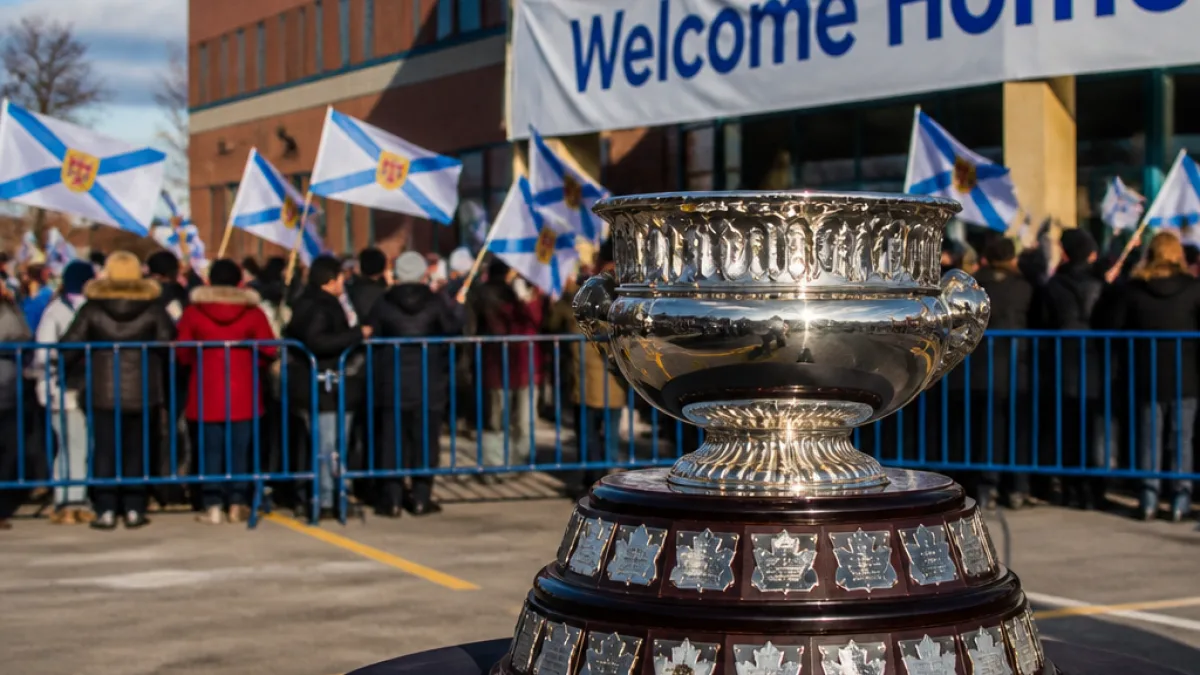
Walter Cup homecoming draws crowd in New Glasgow
Residents of New Glasgow, N.S., lined streets and filled gathering spots on Friday as hometown coach Kori Cheverie brought the Walter Cup back to Pictou County following a championship run with the Montréal Victoire. The occasion marked a local celebration of a national milestone in women’s professional hockey, with community members turning out to greet Cheverie and see the trophy up close.
Cheverie, who guided Montréal to the PWHL title, said sharing the win at home was central to the victory tour. In her words:
“I’m just so happy that we could bring the cup to Pictou County and bring it to New Glasgow and just share it with all the families, the community that supported me growing up and playing here. It’s just such a special moment.”
According to Cheverie, the path to this season’s championship involved patience and persistence. She emphasized the long build and the depth of collaboration needed to secure a playoff run.
“It was years in the making. Three years of putting a team together and going back to the drawing board and just trying to get as many pieces to the puzzle as we needed to push us over the top to win games in the playoffs when it matters.”
Firsts on the national stage
Cheverie is the first female coach to win the Walter Cup. The Montréal Victoire are the first Canadian team to claim the PWHL championship. In reflecting on that achievement, Cheverie underscored the significance of keeping the league’s top prize in Canada for the coming year.
“This is where we want the biggest trophy in hockey on the women’s side. We want it in Canada and for us, we get it here for the next 365 days until there is another winner and for us, we are always looking to win.”
For supporters in Pictou County, those firsts resonated close to home. The homecoming offered fans—especially young players in local rinks—a rare chance to see the championship trophy and meet a coach who began her hockey journey in the same community.
Family roots and local pride
Cheverie’s mother, Janice Rehill, worked with the Town of New Glasgow to organize a parade and a community meet-and-greet. She said the outpouring reflected both the town’s pride and the team’s bond.
“It’s a huge deal. It’s been her goal since she started with the PWHL and, you know, if you work hard, you just have to keep working and it will pay off. The players are amazing, the staff is amazing, they become like your family.”
The celebration was as much about acknowledging the collective effort as it was about the championship. Cheverie repeatedly pointed to the team-first approach that carried Montréal through the post-season, noting that no one wins titles alone.
Why it matters for Nova Scotia
For a province that has steadily built its presence in national sport, Friday’s event doubled as a reminder of what local pathways can produce. A championship coach returning with the league’s top hardware provides a concrete example to young athletes across northern Nova Scotia that elite ambitions can begin on community ice. It also highlights the growing visibility of women’s professional sports, where fan interest and hometown support are becoming central to the game-day experience.
Community milestones like this can have a ripple effect:
- They galvanize youth participation by offering a close-to-home success story.
- They strengthen ties between local clubs, families, and schools around shared achievements.
- They illustrate how support systems—from minor hockey coaches to town organizers—help talent progress.
At a glance
| What | Walter Cup celebration |
|---|---|
| Who | Kori Cheverie, head coach, Montréal Victoire |
| Where | New Glasgow, Pictou County, N.S. |
| When | Friday, July 17, 2026 |
| Why it matters | First female coach to win the Walter Cup; Montréal is first Canadian team to win the PWHL championship |
As the Walter Cup made its rounds in New Glasgow, the message from Cheverie remained consistent: the championship was a shared victory built over multiple seasons and supported by a network of people at home and on the bench. For the community that helped shape her, seeing the trophy in town underscored the connection between local support and national success.