
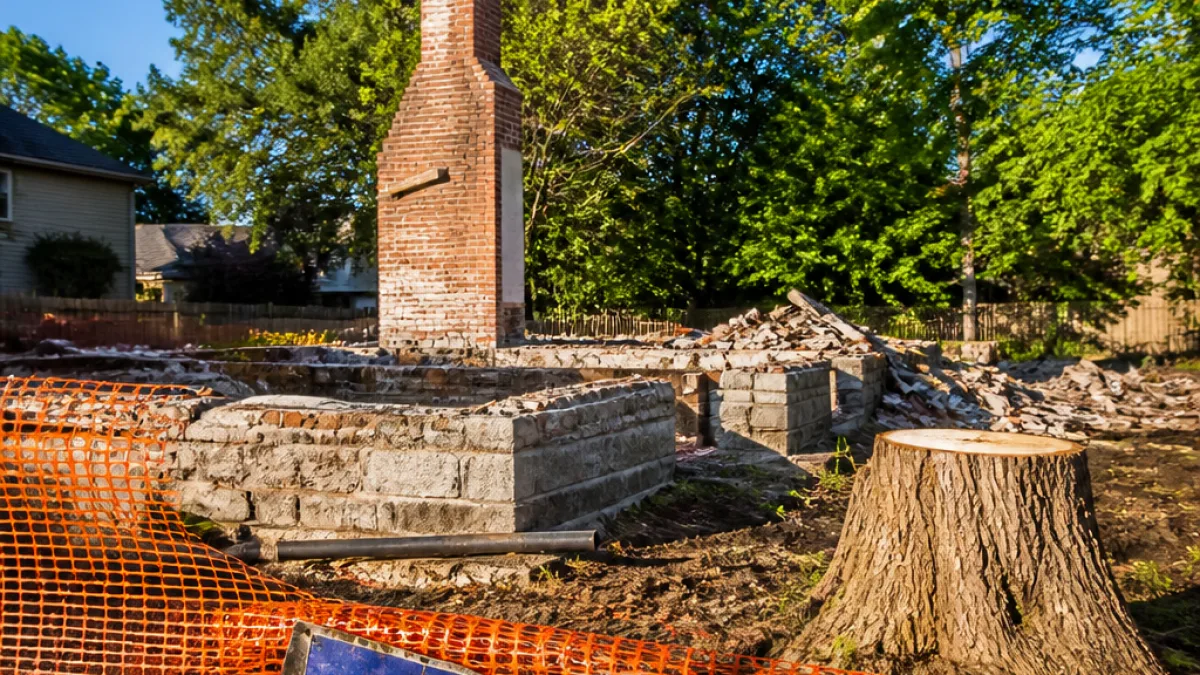
Court hands down large penalties for demolition of historic Oakville inn
The Town of Oakville says a provincial court ruling that ordered a company to pay $822,000 in penalties for the unauthorised demolition of a designated heritage home and for removing a mature private tree underscores the municipality’s commitment to protecting its heritage and urban forest.
On July 8, Halton Court Services Provincial Offences Court in Burlington accepted the guilty plea of 1475 Lakeshore Rd. East Inc. to three offences arising from demolition activity at 1475 Lakeshore Rd. E. The company has been ordered to pay the full amount within 30 days.
"This decision reinforces the importance of protecting heritage resources and the urban forest while ensuring compliance with provincial legislation and municipal regulations."
The property involved — known locally as the Griggs House or Halfway House — dates to about 1828 and was designated under the Ontario Heritage Act for its historic and architectural significance. Historically it served as one of the earliest roadside inns on the route between Toronto and Hamilton.
- Company pleaded guilty to three provincial and municipal offences arising from demolition work in July 2025.
- Town staff issued a stop-work order and launched an investigation after learning of the unauthorised demolition.
- The case resulted in charges under the Ontario Heritage Act, the Building Code Act and Oakville’s private tree protection by-law.
The fines and penalties were broken down by the court as follows:
| Offence | Penalty |
|---|---|
| Demolishing a designated heritage building (Ontario Heritage Act) | $700,000 |
| Demolishing a building without a permit (Building Code Act) | $50,000 |
| Removal of a mature private tree without a permit (Town tree by-law) | $72,000 to the Town’s reforestation fund |
Town officials say the enforcement action followed demolition work in July 2025. Staff responded after becoming aware of the activity, issued a stop-work order and then proceeded with an investigation that led to the charges and prosecution in provincial offences court.
Local reaction to the demolition had been strong when the work occurred, prompting the town to pursue legal action against the development company. The court’s decision places a financial responsibility on the company and includes a directed payment to the municipality’s reforestation fund tied to the unauthorised tree removal.
The ruling highlights the legal consequences developers and property owners face under provincial legislation and municipal bylaws when heritage designations and tree protections are not respected. Oakville’s statement framed the outcome as a reminder of the requirements that apply to designated heritage properties and to the protection of the urban forest.