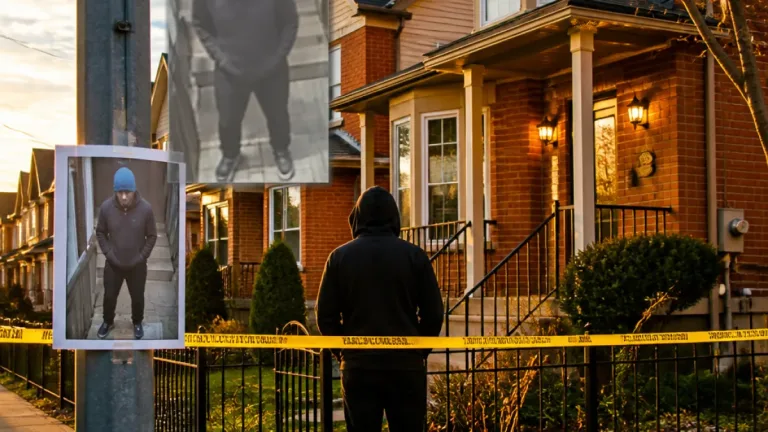

An Ontario Superior Court judge has imposed the statutory maximum youth sentence of 10 years for a boy who pleaded guilty to the first-degree murder of an elderly Pickering woman last year.
Sentence breakdown and legal limits
The defendant, who was 14 at the time of the offence and is legally unnamed under the Youth Criminal Justice Act, received a sentence that the court said reflects both the gravity of the crime and the legal framework governing youth sentences.
| Component | Length |
|---|---|
| Custody | 5 years |
| Community supervision | 4 years |
| Credit for pretrial custody | 1 year |
Court findings and background
The boy, who pleaded guilty in April, had previously apologised in court for the death of Eleanor Doney, 83, a retired kindergarten teacher who was found with stab wounds outside a home near Lynn Heights Drive and Fairport Road in May 2025.
- The offence occurred in May 2025; the accused was 14 at that time.
- He pleaded guilty to first-degree murder in April 2026.
- The sentence imposes five years custody, followed by four years of community supervision; one year was credited for time already spent in pretrial custody.
In handing down the sentence, Justice Lisa Wannamaker acknowledged the limits of punishment for such loss. The judge told the court there is "no sentence" that will restore what the victim's family has lost, and she urged the young offender to use the victim impact testimony as motivation to pursue rehabilitation.
"There is no sentence that will make Ms. Doney's loved ones feel whole again," Justice Lisa Wannamaker told the court.
Mental-health assessment and school history
The judge referenced a medical report submitted in the sentencing process. That report described the youth as having a low-to-moderate risk of reoffending provided he receives appropriate mental-health treatment, but also noted an ongoing preoccupation with violence and serial killers and persistent disordered thoughts.
Court materials noted the youth had previously been undiagnosed with autism and a learning disability. The judge said he had shown responsiveness to treatment while in pretrial custody but continued to struggle with delusional and disordered thinking. The youth was suspended from school the day before the murder after he was found carrying a knife; he later told authorities he had the knife for his protection.
Family reaction
Outside court, the victim's son-in-law, Peter Kirwin, expressed frustration with the outcome and with what he views as missed opportunities to prevent the killing. He told reporters he had expected the court to allow less than a year’s credit for time served given the nature of the offence and said he believes Doney’s death was preventable.
"I expected the court to grant the boy less than a year's credit for time served, because of the viciousness of the crime," Peter Kirwin said outside court.
The sentence and the judge’s comments highlight the intersection of youth justice law, mental-health findings and community safety concerns in Pickering. The Youth Criminal Justice Act restricts public identification of youth offenders and sets limits on sentencing, which courts must balance against the severity of violent crimes and the interests of victims’ families.