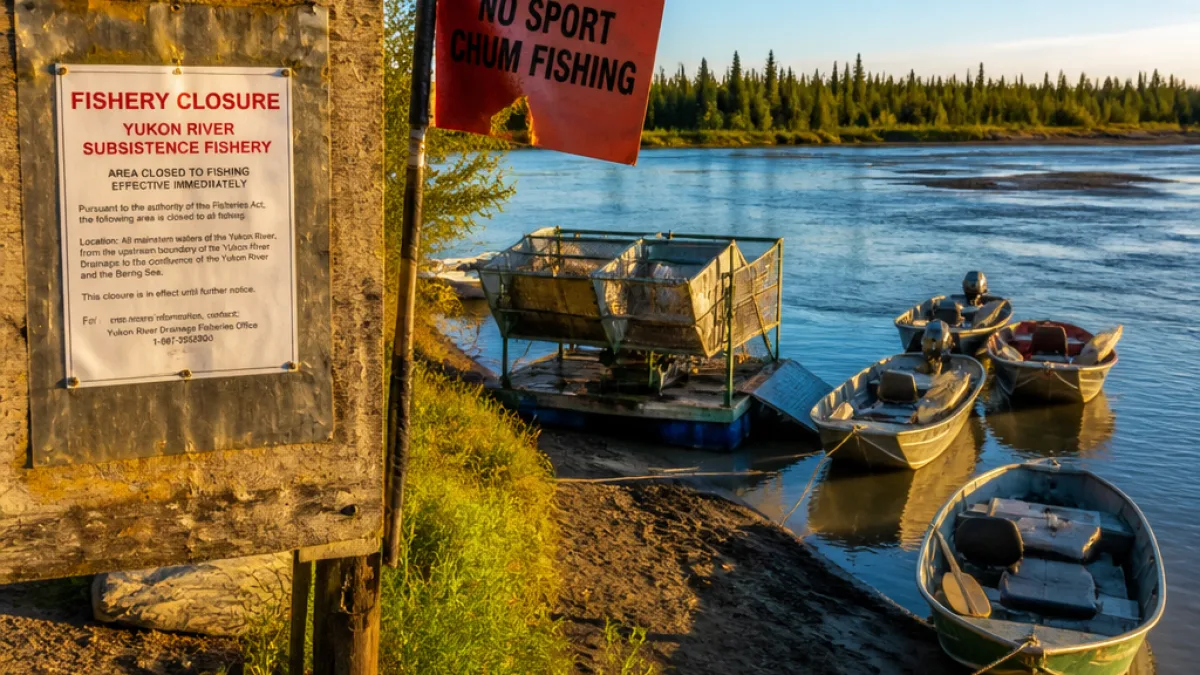
The Alaska Department of Fish and Game has announced a closure of state waters within the Yukon River drainage to sport fishing for chum salmon, effective 12:01 a.m. Wednesday, July 22, 2026. The measure, which excludes the Tanana River drainage, is intended to safeguard a projected small run of fall chum salmon and to help ensure spawning escapement and compliance with international obligations.
Why the closure matters to Yukon communities
Fall chum salmon begin entering the lower Yukon River in mid-to-late July. Fisheries managers say the anticipated 2026 fall chum return is weak, and because approximately 15–20 per cent of Yukon River fall chum spawn in Canada, the run is managed cooperatively under the Pacific Salmon Treaty. The treaty sets a minimum number of fish that must cross into Canadian waters; managers expect the anticipated run to fall short of those treaty obligations without restrictions.
As a precaution, state authorities in Alaska have closed sport fishing for chum salmon — including catch-and-release — and require that any chum salmon caught incidentally while fishing for other species be released immediately without being removed from the water. The United States Fish and Wildlife Service federal inseason manager has also issued special actions for salmon harvests in federal public waters of the Yukon River.
What could change during the season
Officials have indicated that restrictions are not necessarily fixed for the entire season. If inseason assessments show escapement goals will be met and subsistence opportunities for Yukon River users can be provided, sport fishing limitations may be eased in line with run strength and subsistence needs.
- Closure begins: 12:01 a.m., Wednesday, July 22, 2026 (state waters of the Yukon River drainage, excluding Tanana River).
- Scope: All sport fishing for chum salmon prohibited, including catch-and-release.
- Incidental catches: Chum salmon caught while targeting other species must be released immediately and may not be removed from the water.
For Yukon residents and river communities, the closure underscores continuing concerns about salmon abundance and the cross-border nature of Yukon River management. Subsistence fishers, who rely on predictable returns for food and culture, are a central consideration in both U.S. and Canadian management decisions.
Contacts and further information
Fishery managers have provided contacts for users seeking details or clarification:
| Name | Role | Contact |
|---|---|---|
| Holly Carroll | USFWS Federal Yukon River Subsistence Fishery Manager | holly_carroll@fws.gov | (907) 351-3029 |
| Keith Herron | USFWS Assistant Manager | keith_herron@fws.gov | (907) 334-5391 |
| Lisa Stuby | Yukon Area Management Biologist (Alaska) | lisa.stuby@alaska.gov | (907) 459-7202 |
Yukon residents planning to fish the river this summer should review federal special actions and stay in contact with regional fishery managers for updates. Information on U.S. federal special actions for the Yukon River is available through the U.S. Department of the Interior’s Fisheries Special Actions pages.
The closure illustrates how low returns in one season trigger coordinated measures across jurisdictions to protect salmon stocks that sustain communities and ecosystems on both sides of the border.