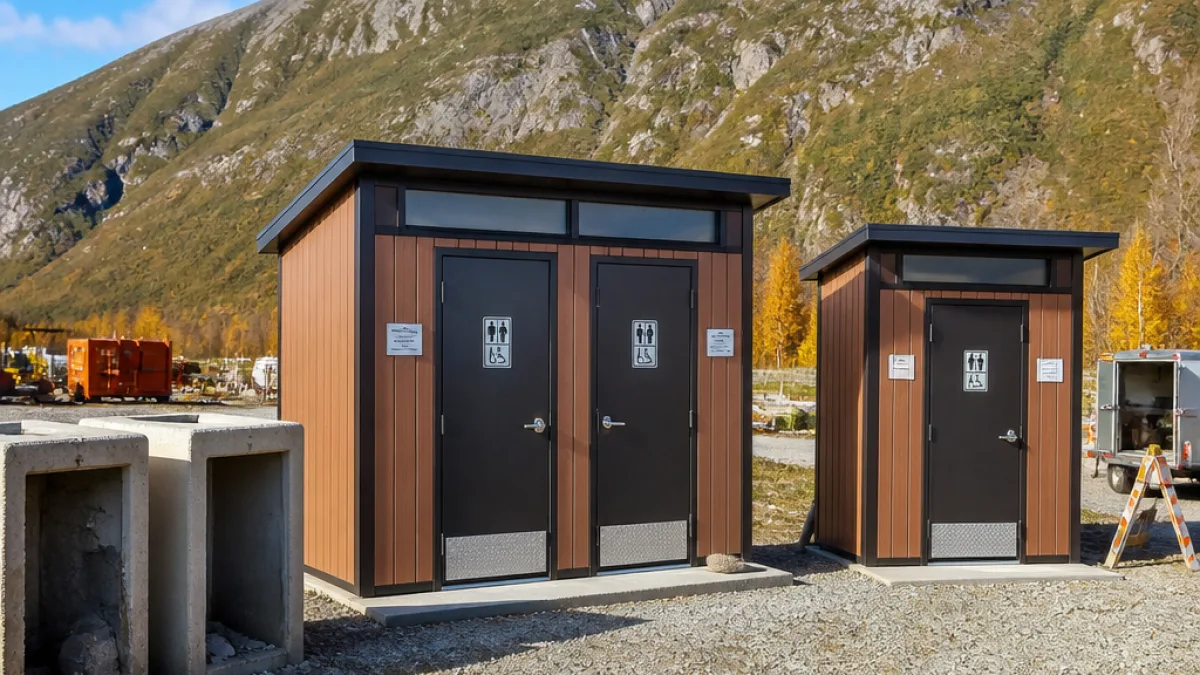
Months after travellers and locals first noticed structural problems, two new metal-framed outhouses now stand at the Stewart Crossing rest stop, replacing the aging concrete facilities that had been in poor condition.
Replacement follows visible deterioration
The north-end concrete structure had been closed since last autumn after tilting on its foundation and collapsing onto its rear. The remaining concrete unit showed signs of leaning and long-term wear. By early July a work crew was on site, and by Friday, July 10, visitors found two new metal-framed toilet buildings where the old structures had stood.
One new unit is noticeably larger than the other, indicating improved access for people with mobility challenges. A sign on each new door explains that the interior fake wood panelling is manufactured from recycled plastic. The sign describes the feedstock used to make the boards and notes that when the outhouse reaches the end of its life the material can be recycled again.
“The durable plastic boards are manufactured entirely from waste plastic including: milk jugs, yogurt tubs, plastic toys, ketchup bottles, drinking straws, shopping bags, medicine containers, motor oil containers, household cleaner bottles, juice bottles, and more.”
What’s new — and what remains to be seen
The metal-frame buildings are an aesthetic and functional change from the heavy concrete vault toilets that had occupied the site. They are described as attractive additions on site, but their long-term success will depend on regular maintenance, cleaning and restocking of supplies such as toilet paper — areas where the older concrete facilities were criticised.
Visitors and those who use the rest stop for brief breaks on the highway will likely welcome the improved accessibility. The larger unit appears intended to accommodate people using mobility aids; however, the site signage and visible features do not provide details about certified accessible dimensions or fixtures.
- Two new metal-framed outhouses installed by July 10.
- One structure is larger, presumably to improve accessibility.
- Interior panels made from recycled plastic material listed on-site.
| Feature | Old (concrete) | New (metal-framed) |
|---|---|---|
| Condition | Leaning, one unit collapsed | New; upright |
| Material (walls) | Concrete | Metal frame with recycled plastic panelling |
| Accessibility | Limited | Larger unit likely better for mobility needs |
Long-time Yukoner and contributor Dan Davidson, who reported on the replacement, noted both the practical improvement and the lingering hope that the new facilities will be better maintained than the old ones were.
The recycled-plastic panelling is marketed as being manufactured from a wide range of post-consumer and household plastics, and the sign emphasises the material's recyclability at end of life. Examples listed on the sign include everyday items such as milk jugs, yogurt tubs and shopping bags — materials that suggest an attempt to incorporate sustainable products into roadside infrastructure.
For travellers using the Stewart Crossing rest stop, the immediate change is clear: functioning, modern-looking toilet buildings have replaced deteriorating, potentially unsafe concrete vaults. Whether the new units will remain clean, stocked and accessible will be apparent only after use over the coming season.
Reporters will continue to monitor maintenance and accessibility details as they become available from territorial highway authorities or site managers.