Landmark on the South Klondike Highway gains protected status
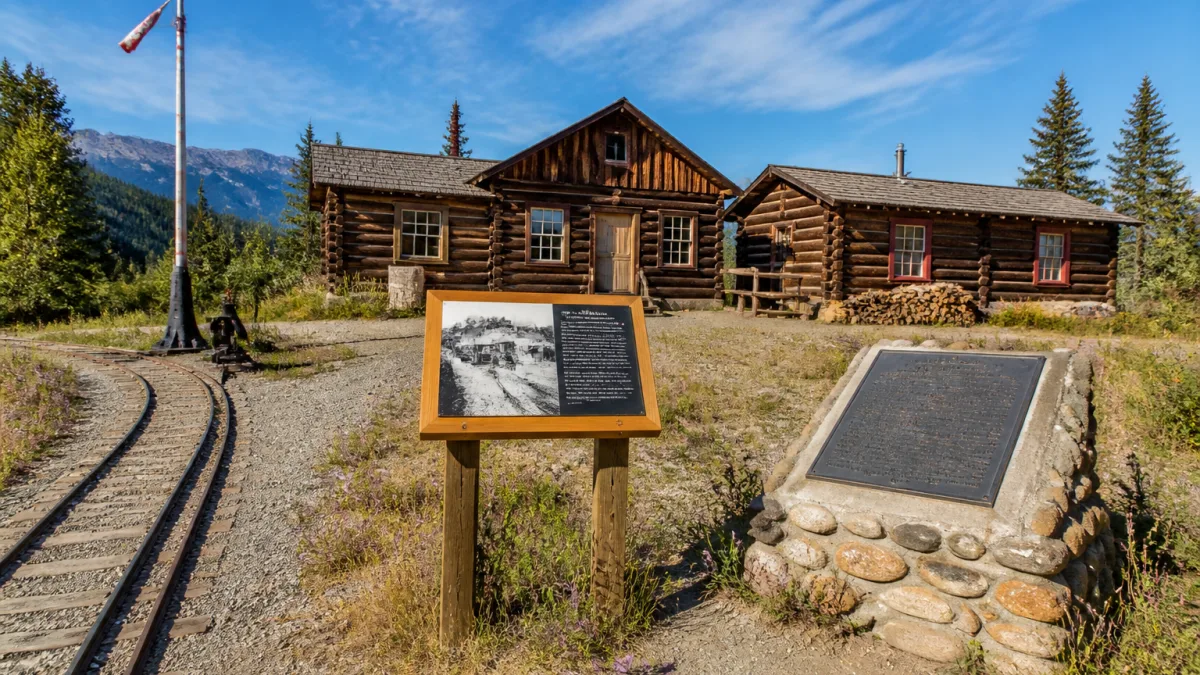
The Robinson Roadhouse, a rare, largely intact early 1900s roadhouse complex south of Whitehorse, has been officially recognized as Yukon’s 13th historic site. The designation was celebrated during a weekend ceremony at the property, which sits near Annie Lake Road on the South Klondike Highway.
According to the territorial government, the site has been under Yukon management since the 1980s. Its formal listing was prioritized because of its proximity to Carcross and Whitehorse, the completeness of the surviving structures relative to other period roadhouses, and its layered historical significance.
“Robinson’s unique in that it has a diverse history or a unique history,” said Lee Whalen, senior historic sites planner with the Government of Yukon. “It all kind of culminates at this site.”
From flag station to wartime waypoint
In the early decades of the 20th century, Robinson served as a flag station on the White Pass & Yukon Route Railway, welcoming travellers and handling freight. It was a logistical node for shipments into the Wheaton Mining District, supporting quartz mining activity. During the 1940s, the complex also saw a military presence during the construction of the Alaska Highway, underscoring its strategic location along a key transportation corridor.
The site lies within the traditional territories of the Carcross/Tagish First Nation and the Kwanlin Dün First Nation. Community members describe the area as a place long used for seasonal harvesting, hunting and trapping. During Saturday’s gathering, a Carcross/Tagish First Nation Elder spoke about family ties to the roadhouse area and the use of nearby grounds for trapping ground squirrels for winter stores.
A rare survivor of Yukon’s roadhouse era
Roadhouses once dotted overland routes across the territory, offering rest, meals and freight handling as people and supplies moved by stage, rail and, later, motor vehicle. Many of those structures have since deteriorated or disappeared. Officials say Robinson Roadhouse stands out for its completeness, offering insight into the architecture and daily function of an early highway and railway stopover.
Territorial planners highlight three main reasons for the site’s heightened priority:
- Location: Close to Carcross and Whitehorse, enhancing public access and interpretive potential.
- Integrity: A more complete complex than many surviving contemporaries.
- Historic depth: A convergence of railway, mining and wartime stories on Indigenous land.
What the designation means
Historic site status formally recognizes the property’s cultural value and supports continued stewardship by the territory. The government has overseen the roadhouse for decades and says the designation helps protect its character while acknowledging its role in Yukon’s transportation and resource history, and its connections to First Nations use of the land.
Visitors travelling the South Klondike Highway often stop at roadside heritage points between Whitehorse and Carcross. Officials emphasize the importance of approaching such places with care, remaining on established paths as directed by on-site signage, and respecting any guidance from property managers or interpretive panels that may be present.
Snapshot of the site
| Era | Early 20th century |
| Location | South Klondike Highway near Annie Lake Road |
| Historic roles | White Pass & Yukon Route flag station; waypoint for mining shipments; military activity in 1940s |
| Stewardship | Under Government of Yukon management since the 1980s |
| Traditional territories | Carcross/Tagish First Nation; Kwanlin Dün First Nation |
A living link for nearby communities
For communities along the corridor, Robinson is not only an architectural relic but also a living reference point: a place where rail, road and river histories intersect with longstanding harvesting and travel routes. The recognition as a historic site codifies what many locals and knowledge holders have long known — that the Robinson complex is a keystone in understanding how people and goods moved through the Southern Lakes region across the last century.
As the territory continues to recognize and conserve notable sites, the addition of Robinson Roadhouse to the roster of protected places creates new opportunities for interpretation and education. Its position near the junctions leading to Carcross and the Southern Lakes makes it well placed for those tracing the past along one of Yukon’s most travelled scenic highways.