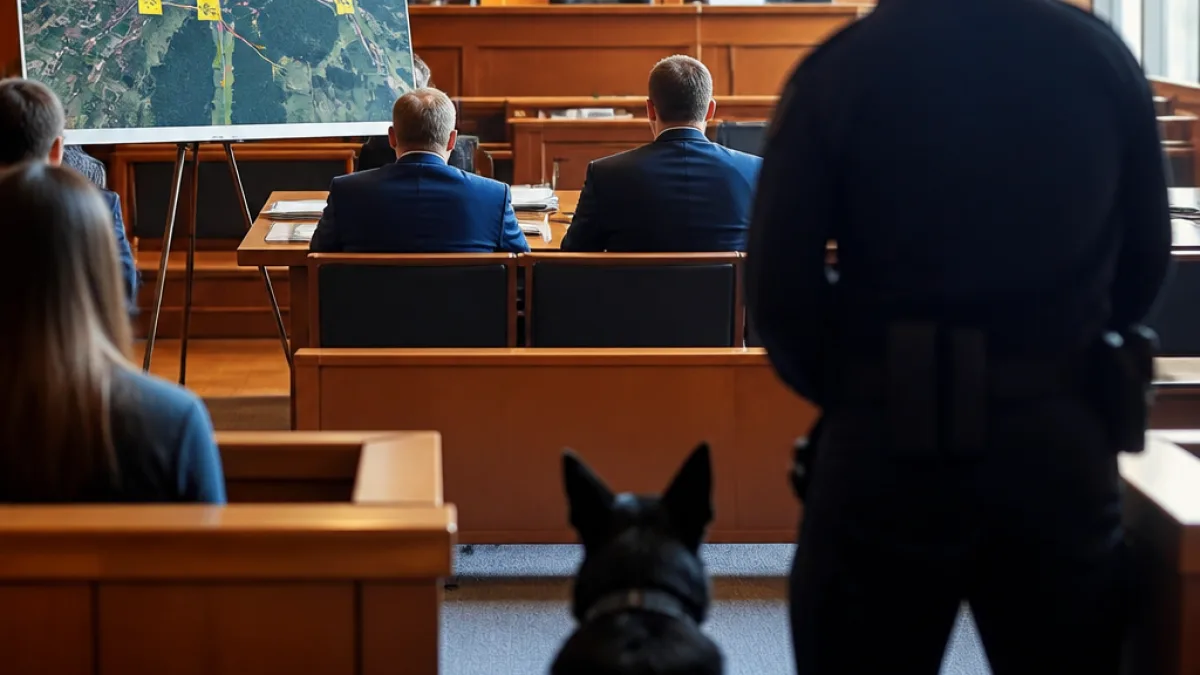
Attorneys for Stacey Wondra have asked an Idaho court to exclude or subject to a preliminary hearing the testimony of cadaver and scent-tracking dogs deployed during the investigation into the disappearance of boy Michael Vaughan, citing concerns about the scientific reliability of the K-9 evidence.
Defence challenges consistency and verifiability of alerts
The motion, filed in Caldwell, argues the K-9 teams used across nearly five years of searching produced conflicting results and that handlers rely on subjective interpretations of a dog’s behaviour rather than objective measurements. Defence counsel says those factors render the evidence unreliable under Idaho law and warrant exclusion or an evidentiary hearing under the state’s rules.
- Timeframe: Dozens of K-9 searches were conducted between July 2021 and early 2025 across southwest Idaho.
- Inconsistencies cited: A 2021 cadaver-dog search of Wondra’s Fruitland property reportedly found no indication of human remains, while later searches in 2022 produced alerts.
- Vehicle searches: Separate K-9 teams gave conflicting results searching a white Lexus in 2025.
"The K-9 evidence the state intends to present does not meet Idaho's standards for reliable scientific evidence," the defence motion says.
What the defence argues
The motion sets out several core complaints:
- K-9 alerts were inconsistent across different searches and teams.
- There is no independent way to verify many alerts because Michael Vaughan has not been located.
- Handlers interpret changes in a dog’s behaviour rather than relying on objective scientific measurements, creating potential for error and bias.
Procedural posture
Several K-9 handlers testified during a five-day probable-cause hearing earlier this year. That hearing resulted in a finding of sufficient probable cause to bind the case over for trial. The current defence filing asks the court to hold a hearing under Idaho Rule of Evidence 702 before trial to determine whether the K-9 testimony meets admissibility standards.
| Item | Detail |
|---|---|
| Search period | July 2021–early 2025 |
| Noted inconsistencies | Different results from separate K-9 teams; 2021 no-alert vs. 2022 alerts |
| Legal request | Exclude K-9 testimony or hold Rule 702 hearing |
The motion also cites Idaho case law and court decisions from other states that have questioned admissibility of certain dog-scent evidence. Defence lawyers contend that because many alerts cannot be cross-checked against a recovered body or other conclusive evidence, the risk of error is heightened.
The prosecution has previously relied on K-9 testimony in the court record; several handlers testified at the probable-cause stage. How the judge rules on the motion could affect what the jury is permitted to hear at trial and may set a precedent for how scent and cadaver-detection evidence is handled in later phases of the case.
This development underscores ongoing legal scrutiny over forensic techniques that blend animal behaviour and human interpretation, and it leaves open questions about how courts assess such evidence when independent verification is unavailable.