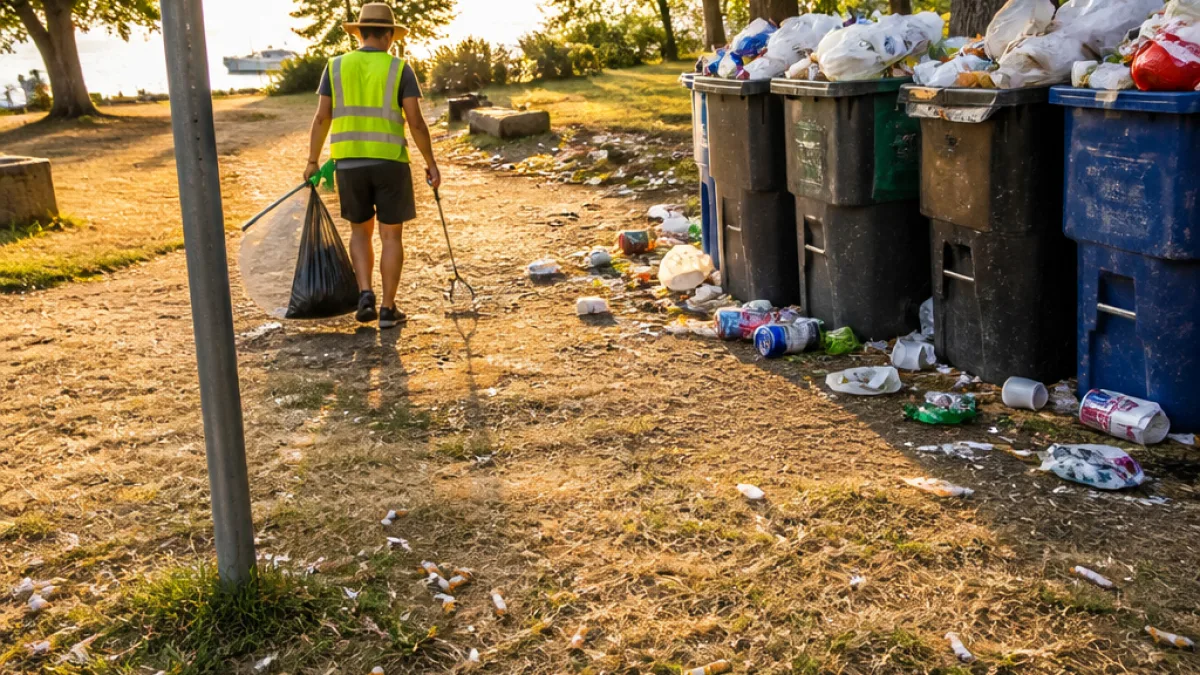
A resident of West Vancouver is urging municipal action after weeks of finding bottle litter, used condoms and toilet paper in a popular park that has become an “Instagrammable” destination, raising alarm about public safety, sanitation and wildfire risk.
Neighbourhood volunteer efforts insufficient, writer says
In a letter submitted to a local newspaper, the resident details routine discoveries of discarded beer cans, plastic rose petals, confetti and toilet paper strewn through woodland areas. They say the volume and nature of the waste — and what they describe as groups who ignore smoking bans — have left them collecting debris regularly and concerned about the ability of volunteers and current services to keep the park safe and clean.
“I pick up used condoms, beer cans, plastic rose petals, confetti, garbage and, in more recent years, toilet paper in the woods.”
The letter identifies four immediate problems: garbage and recycling mis-sorting, public urination near vehicles, cigarette butts left on dry grass and small groups ignoring signage. The writer calls for a stronger municipal presence in the busiest parks, proposing that rangers patrol at least on summer weekends and after dark to prevent bonfires and enforce no-smoking rules during a heightened fire season.
- Litter types: bottles, cans, plastics, toilet paper, used condoms
- Behavioural issues: smoking on dry grass, improper use of bins, public urination
- Requested actions: more rangers, evening patrols, better education and enforcement
Context and municipal responsibilities
West Vancouver operates parks and open spaces under regional bylaws and municipal policy that balance public access with conservation and safety. The issues raised in the letter touch on enforcement, waste-management infrastructure and public education — areas typically addressed by a combination of municipal staff, bylaw enforcement officers and community volunteers.
City officials have previously cited resource constraints when explaining the extent of routine patrols and enforcement in parks, particularly during peak summer months when demand rises. Any change in patrol frequency or resource allocation would require council consideration of budgets and operational priorities.
Possible next steps for residents and council
Options available to the municipality and community include:
| Issue | Potential response |
|---|---|
| Litter and recycling | Increase bin capacity, clearer signage, targeted collection schedules |
| Smoking and fire risk | Enhanced patrols, targeted fines, summer information campaigns |
| Sanitation (public urination) | Temporary portable toilets at peak times, improved signage |
The writer also addressed the social reaction to their language, saying the word “horde” accurately described what they see as a large, unorganized group and arguing that the term is not inherently derogatory if not applied to a particular ethnicity.
Residents concerned about similar problems can raise them directly with the municipality through West Vancouver’s customer service and bylaw reporting channels, or bring them to council and community association meetings where policy and resource decisions are made. The conversation reflects wider tensions between preserving public access to attractive green spaces and preventing degradation through increased use.