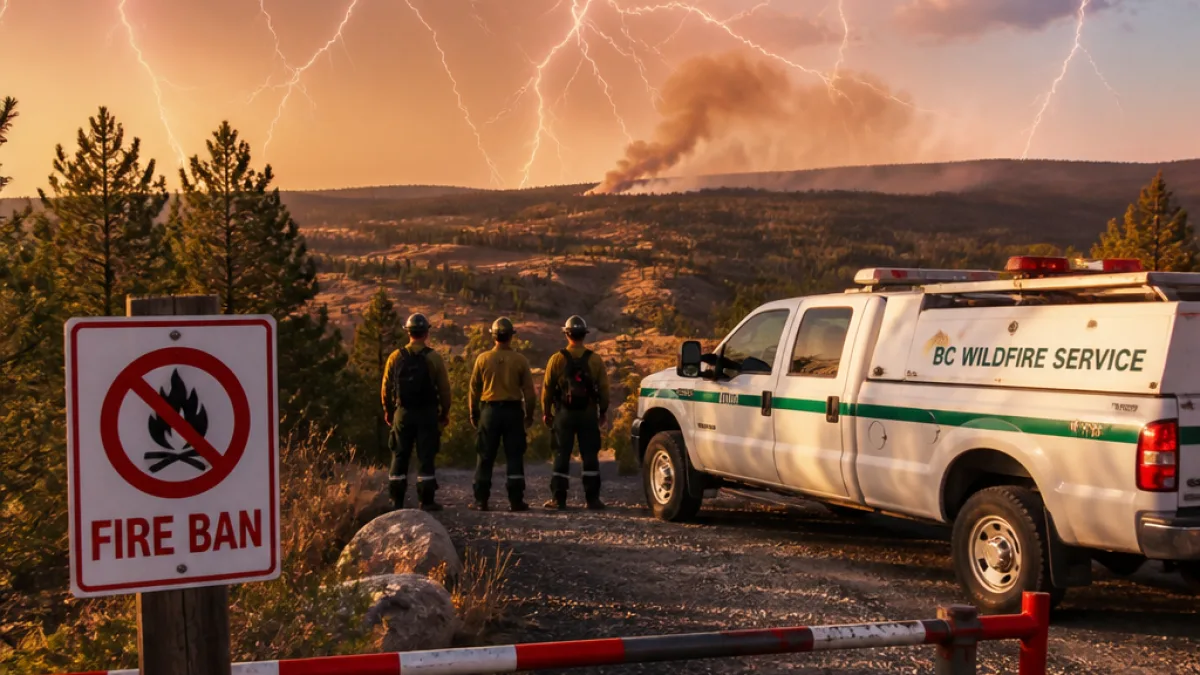
British Columbia officials are stepping up readiness as a surge in dry lightning and parched conditions raise the risk of numerous new wildfires across the southern Interior.
What officials are watching
Environment Canada meteorologist Colin Fong said atmospheric conditions have been unusually dry, with precipitation often evaporating before it reaches the ground. The provincial wildfire agency and municipal responders are monitoring recent lightning activity that investigators list as the likely cause of several fresh fire starts.
“It’s been so dry that any falling rain typically evaporates before hitting the ground.”
The BC Wildfire Service said that while the season to date has been moderate, the recent uptick in lightning strikes could lead to as many as 150 fire starts in a single day. That projection has prompted pre-emptive steps in several regional fire centres.
Restrictions and operational changes
Parched fuels have already led to restrictions on open burning. The Northwest Fire Centre has imposed a ban on all fires except small campfires. The Coastal Fire Centre is scheduled to implement a ban on all fires later in the day.
- Northwest Fire Centre: ban on all fires except small campfires.
- Coastal Fire Centre: ban on all fires to take effect later today.
- Southern Interior: heightened monitoring for lightning-caused starts.
Aircraft and ground crews remain staged in areas currently threatened. A photograph taken in Boston Bar on July 9 shows a helicopter reloading water to fight the Brunswick Creek wildfire, with smoke from the Ainslie Creek wildfire visible in the distance — a visual reminder of how quickly conditions can change.
Local impact and what residents should know
Residents and visitors in affected zones should be prepared for stricter fire-safety rules and the potential for new fire activity originating from lightning strikes. Authorities commonly restrict open burning, industrial activities that may produce sparks, and public access to some backcountry areas during heightened risk.
Practical steps for people in threatened areas include:
- Obey all fire bans and provincial advisories.
- Keep a watch on local emergency-alert systems and the BC Wildfire Service website for updates.
- Prepare an evacuation plan and have important documents and emergency supplies ready.
While the BC Wildfire Service maintains a regional readiness posture, the scale and location of any new fires will depend on the timing and concentration of lightning activity and whether any lightning is accompanied by sufficient rainfall to extinguish ignitions on contact.
| Region | Current restriction |
|---|---|
| Northwest Fire Centre | Ban on all fires except small campfires |
| Coastal Fire Centre | Ban on all fires coming into effect later today |
The situation remains fluid. Weather forecasts and ongoing lightning counts will determine whether the recent pattern of dry strikes intensifies into a larger public-safety emergency. Provincial agencies are urging vigilance and compliance with restrictions to reduce the chance that a lightning-caused start becomes a large, difficult-to-control wildfire.
This article will be updated as officials release new information or adjust restrictions.