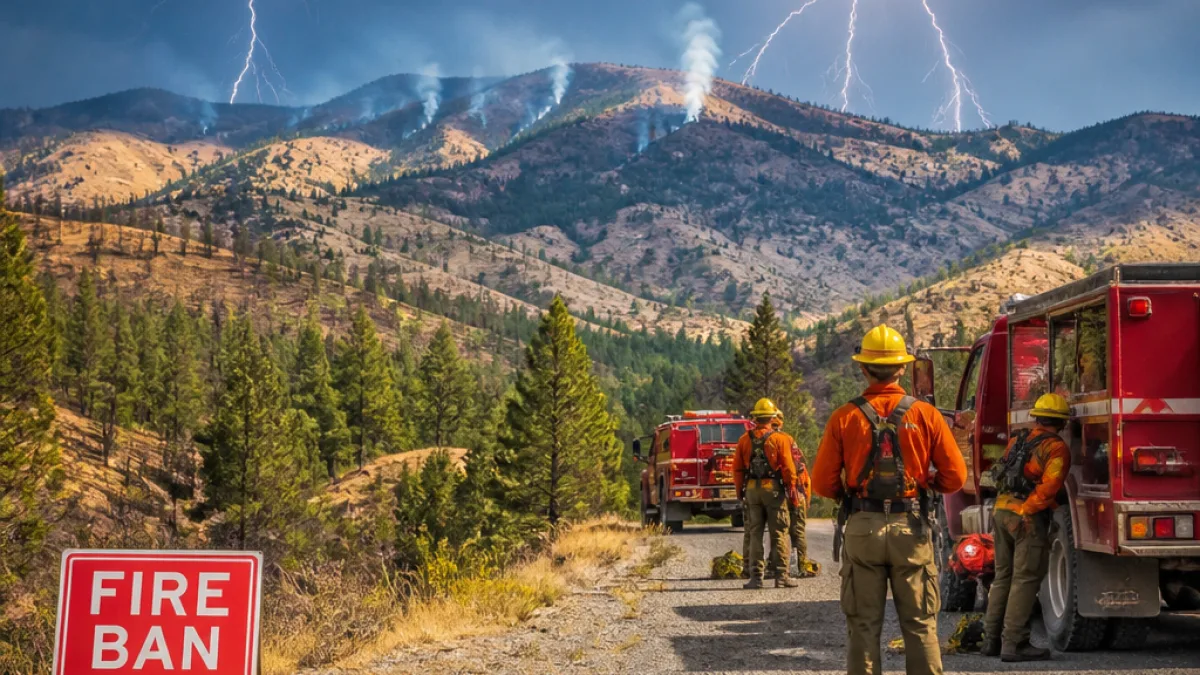
British Columbia officials are preparing for a surge in wildfire starts as a forecast for dry lightning coincides with extremely dry fuels and ongoing fires in the southern Interior.
Dry lightning, parched conditions heighten risk
An Environment Canada meteorologist described rainfall so scarce that drops often evaporate before reaching the ground, a phenomenon known as virga that leaves lightning capable of igniting fires without meaningful precipitation.
"It’s been so dry that any falling rain typically evaporates before hitting the ground."
The BC Wildfire Service has warned that the current lightning surge could result in as many as 150 new fire starts in a single day, a scale of ignition that would substantially increase pressure on firefighting resources already deployed to existing incidents.
Fire restrictions expanding across regions
As a preventative measure, officials have tightened public restrictions. The province has enacted a ban on most fires in parts of northern and coastal B.C., with specific measures including:
- Northwest Fire Centre: ban on all fires except small campfires
- Coastal Fire Centre: ban on all fires set to come into effect later today
These steps come while crews continue to battle the Brunswick complex of fires, which increased in activity earlier this week. Wildfire managers say elevated fire behaviour is expected to persist through the dry-lightning forecast window.
What this means for residents and travellers
Residents in affected areas should be alert to updated restrictions from local fire centres and municipal authorities. Measures likely to be used if the situation escalates include expanded fire bans, evacuation alerts and the reallocation of firefighting resources from other parts of the province.
| Region | Current restriction | Reason |
|---|---|---|
| Northwest Fire Centre | Ban on all fires except small campfires | Parched fuels; heightened lightning risk |
| Coastal Fire Centre | Ban on all fires (effective later today) | Forecasted dry lightning |
Officials urge the public to avoid any activity that could produce sparks, to properly extinguish small campfires where permitted, and to follow guidance from the BC Wildfire Service and local authorities. With the potential for numerous simultaneous ignitions, early detection and rapid response will be crucial to limit growth and protect communities.
Provincial fire managers say they are monitoring lightning activity and adjusting preparedness levels accordingly, including mobilizing crews and equipment where forecasts indicate the greatest risk.
As the situation develops, travellers and residents should consult official channels for the latest information and comply promptly with any evacuation orders or alerts.