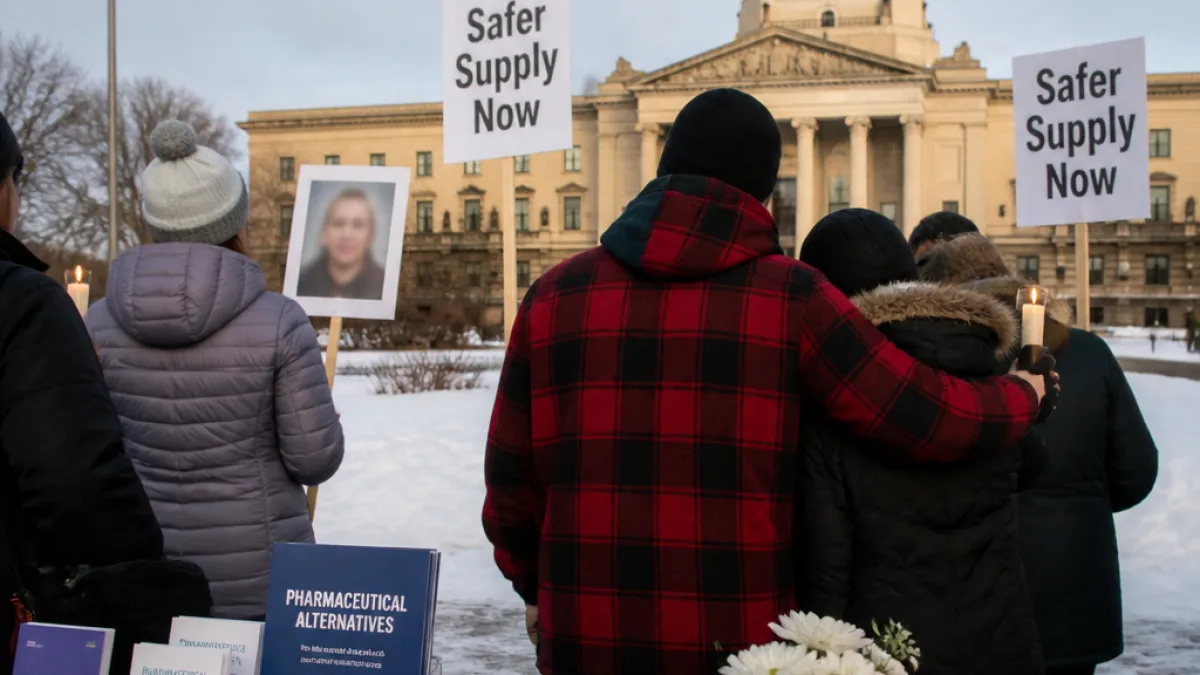
Two Manitoba families who lost loved ones to fentanyl overdoses are pressing provincial authorities to expand access to a regulated, pharmaceutical-grade safer supply as an immediate intervention against the province's worsening drug toxicity.
Bereaved relatives call for alternatives to unregulated supply
Tammy Taillieu said her niece, Destiny, was a 22-year-old university student who combined intelligence and compassion with occasional substance use. Destiny died in 2018 after consuming what she and her boyfriend believed to be heroin but which contained fentanyl, Taillieu said. The death has prompted Taillieu, a public-health researcher who studies substance use, to advocate for programs that give people who use drugs access to pharmaceutical-grade options.
"I think that the whole fact that she died of a fentanyl poisoning was a shock to my family 'cause that's not what she intended on purchasing,"
Arlene Last-Kolb, who lost her son Jessie to a fentanyl overdose in July 2014, told InfoRadar that measures such as supervised consumption sites and expanding treatment beds, while important, will not alter the toxicity of street drugs. Last-Kolb said the urgency of the current supply demands direct alternatives.
"We are in a public health emergency that is not getting a public health response,"
Scope of the problem
Preliminary figures from Manitoba's office of the chief medical examiner indicate a sharp toll from substance-related deaths: 388 suspected deaths in 2025, and 37 in January 2026 alone. Advocates argue these numbers reflect a toxic illicit supply that increasingly contains potent opioids and animal tranquilizers.
| Year / Month | Suspected substance-related deaths |
|---|---|
| 2025 (preliminary) | 388 |
| January 2026 | 37 |
Family members argue that only by offering safer, regulated alternatives can the province reduce fatalities while other supports — treatment, supervised consumption sites, and increased capacity — continue to be developed or expanded.
Calls for policy change
Taillieu and Last-Kolb have joined other advocates urging Manitoba to implement safer-supply programs that would allow people who use drugs to choose pharmaceutical-grade substances over the unpredictable street market. They say such programs are a necessary public-health response to an evolving and deadly drug supply.
- What families want: Access to pharmaceutical-grade alternatives to illicit drugs.
- Why they say it’s needed: The unregulated supply is increasingly toxic, containing fentanyl and other powerful substances.
- Current data: 388 suspected deaths in 2025; 37 in January 2026.
The debate over safer supply is part of a broader national conversation on how best to reduce overdose deaths while expanding treatment and harm-reduction services. Families of victims in Manitoba continue to press for immediate steps they say could prevent more fatalities as the province monitors the scale and makeup of substance-related harms.