Green candidate takes PEI seat in community also named Cornwall
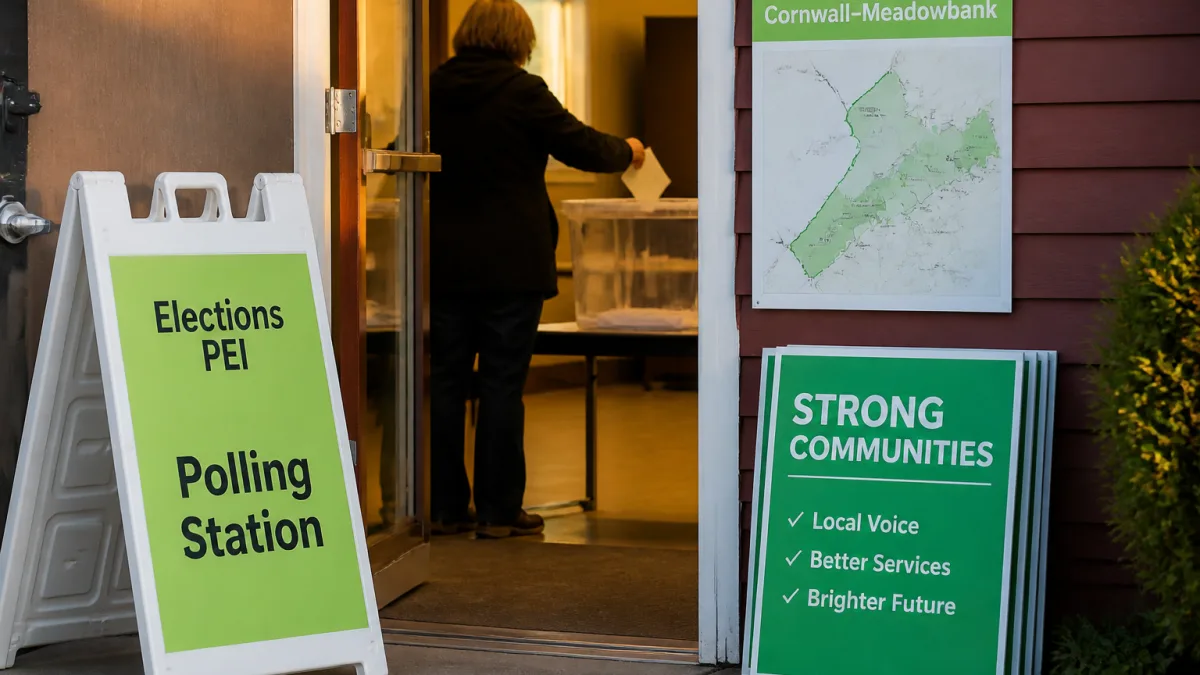
Tayte Willows has won the Cornwall–Meadowbank byelection in Prince Edward Island, securing the legislative seat left vacant after the March death of former Progressive Conservative MLA and health minister Mark McLane. While the contest unfolded in PEI’s Town of Cornwall — not Cornwall, Ontario — the result offers a look at shifting voter preferences in a community that shares our city’s name and underscores how byelections can alter local political dynamics between general votes.
According to reported figures, Willows received 1,184 votes, equal to 39.65% of ballots cast. Liberal candidate Robert Mitchell finished second with 955 votes, while Progressive Conservative candidate Caley McDonald placed third at 823. The New Democratic Party’s Craig Nash received 24 votes. The outcome returns representation to District 16 and gives the Green Party a fresh foothold ahead of the next provincial campaign in PEI.
| Candidate | Party | Votes | Share |
|---|---|---|---|
| Tayte Willows | Green | 1,184 | 39.65% |
| Robert Mitchell | Liberal | 955 | — |
| Caley McDonald | Progressive Conservative | 823 | — |
| Craig Nash | NDP | 24 | — |
In remarks reported following the count, Willows credited local voters for the win and pointed to broader momentum for the party during a period between general elections. The candidate emphasized the trust placed by residents in both the Green Party and their new MLA.
“I do not think there are words for the feeling I am having right now. This is wild to feel like so many people here in Cornwall-Meadbank are putting their trust in us as the Green Party, putting their trust in me as their MLA.”
The seat opened after McLane’s death earlier this year, prompting a byelection to restore full representation for the district. Byelections are called to fill vacancies that occur outside the regular provincial election cycle, returning an MLA to the legislature to represent local concerns on budgets, services and policy debates.
How the result fits into the wider Canadian picture
For readers in Cornwall, Ontario, the development is not a change in this city’s representation, but it offers insight into how voters in another Canadian Cornwall weighed candidates this summer. The Green Party characterized the outcome as a boost heading toward the next provincial contest, framing it as evidence of voter openness to alternatives to the traditional party duopoly at the local level.
Mitchell, who finished second, thanked supporters and acknowledged the disappointment among campaign volunteers as the final numbers came in. He indicated he would reflect on his next steps following the result.
“It’s not the result we were hoping for and obviously not the result all of you worked for on my behalf.”
For residents here following provincial politics beyond Ontario, the PEI result highlights how close margins and turnout can shape the composition of a legislature ahead of a province-wide vote. With a vacancy triggered by a death, local campaigns often become as much about continuity of service as they are about policy differences. The presence of four parties on the ballot in District 16 underlines the range of options that voters considered in a relatively compact electoral contest.
Why this matters to local readers
- Shared name, different province: The PEI Town of Cornwall is distinct from Cornwall, Ontario, but the vote offers a comparative view of community decision-making elsewhere in Canada.
- Public services lens: Byelections restore representation after a vacancy, affecting how residents access advocacy on issues such as health, education and local infrastructure in their legislature.
- Party signals: The result signals organizational strength and voter interest that parties may carry into the next provincial election cycle.
As the new MLA, Willows will represent District 16 in the PEI legislature, with attention now turning to how the party translates a byelection win into legislative work and constituent service. For observers in Eastern Ontario, the outcome serves as a reminder that local races, even outside our province, can hint at broader themes in Canadian politics — including the space smaller parties can find between general elections.