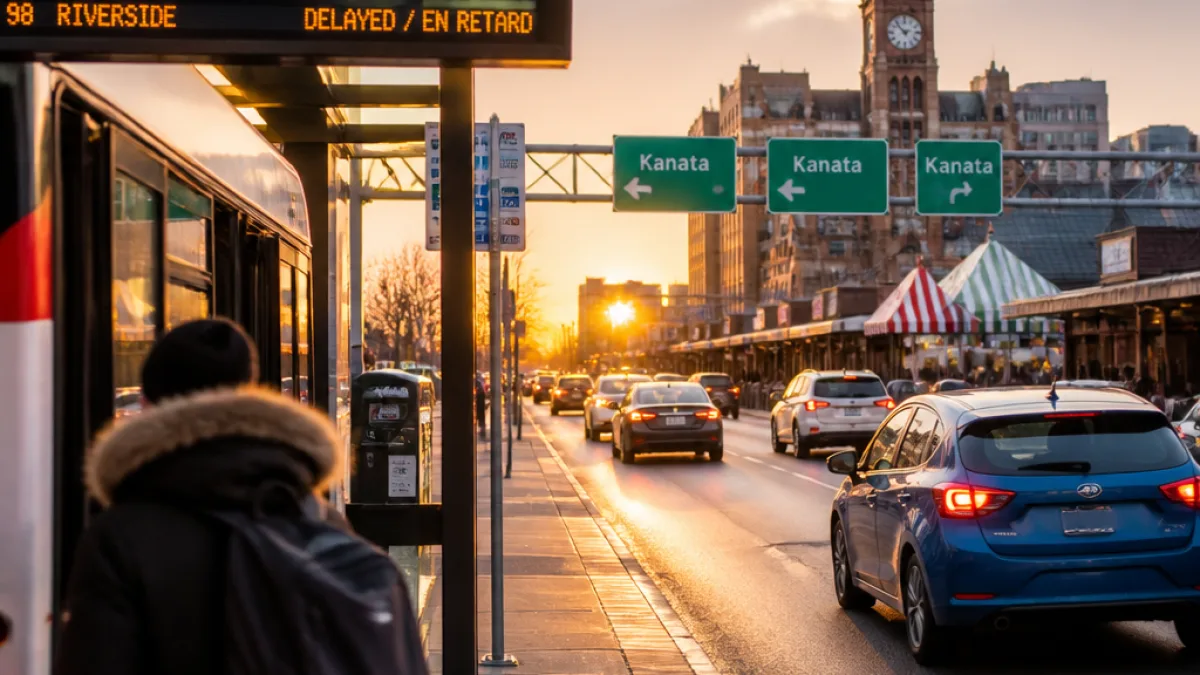
A recent head-to-head test of travel from the ByWard Market to Kanata during the evening rush hour found that driving beat public transit on that particular trip. The simple experiment underlines broader challenges for Ottawa residents who make regular cross-city commutes to the west end.
What the test tested — and what it showed
The trial began at the height of the evening peak and compared a private vehicle to the available transit options between downtown and Kanata. For this run, the car arrived first, giving what the tester described as
"gives car commuters a small win"on timing for that specific route and time.
The result is not a universal verdict on transit versus driving; rather, it highlights how transfers, schedule gaps and route timing can add significant time and unpredictability to longer cross-city transit trips. For Kanata riders, that unpredictability can translate into missed connections, longer door-to-door travel times and the need to build extra buffer into plans.
Local implications for Kanata residents
For people living or working in Kanata, the test provides practical information for trip planning. While transit remains the preferred option for many shorter or mid-distance trips, commuters covering the long haul from downtown may find driving faster on some days and at some times.
Key considerations for Kanata travellers include:
- Reliability: transit journey times can vary when transfers and scheduling gaps are involved.
- Predictability: cars may offer a more consistent travel time during peak periods, depending on traffic conditions.
- Planning: checking real-time transit updates and allowing extra time can reduce stress for those choosing buses.
Practical tips and a snapshot comparison
Commuters can take small steps to make the ByWard Market–Kanata trip smoother regardless of mode:
- Check live transit updates before leaving to avoid long waits at transfer points.
- Consider travelling outside peak hours when possible.
- Allow additional buffer time for longer cross-city trips.
- For drivers, review traffic reports along the corridor before departing.
| Mode | Main advantages | Main drawbacks |
|---|---|---|
| Driving | Generally more predictable on the tested trip; door-to-door speed | Subject to corridor traffic; parking costs and congestion |
| Transit | Cost-effective for many trips; avoids driving stress | Transfers, scheduling gaps and route timing can increase travel time |
The outcome of a single rush-hour comparison should be taken as a practical data point rather than definitive proof that one mode always wins. For Kanata residents, the test underscores the value of checking conditions ahead of travel and choosing the option that best matches priorities for time, cost and predictability.