Community planting days return with tools, training and native species
Guelph residents will have multiple chances this fall to help expand the city’s urban canopy. Trees for Guelph is organizing three public planting sessions, supplying native trees and shrubs, tools and on-site demonstrations so volunteers of all ages can take part. The schedule offers weekend morning opportunities and emphasizes practical support so new plantings can take root and endure seasonal dry spells.
The initiative aligns with guidance promoted by Tree Canada and the Green Municipal Fund, which share toolkits for communities seeking to strengthen neighbourhood green spaces. Their advice focuses on putting trees where they will serve people and wildlife, selecting species for the site, and committing to tending saplings after planting.
“Aftercare is everything.”
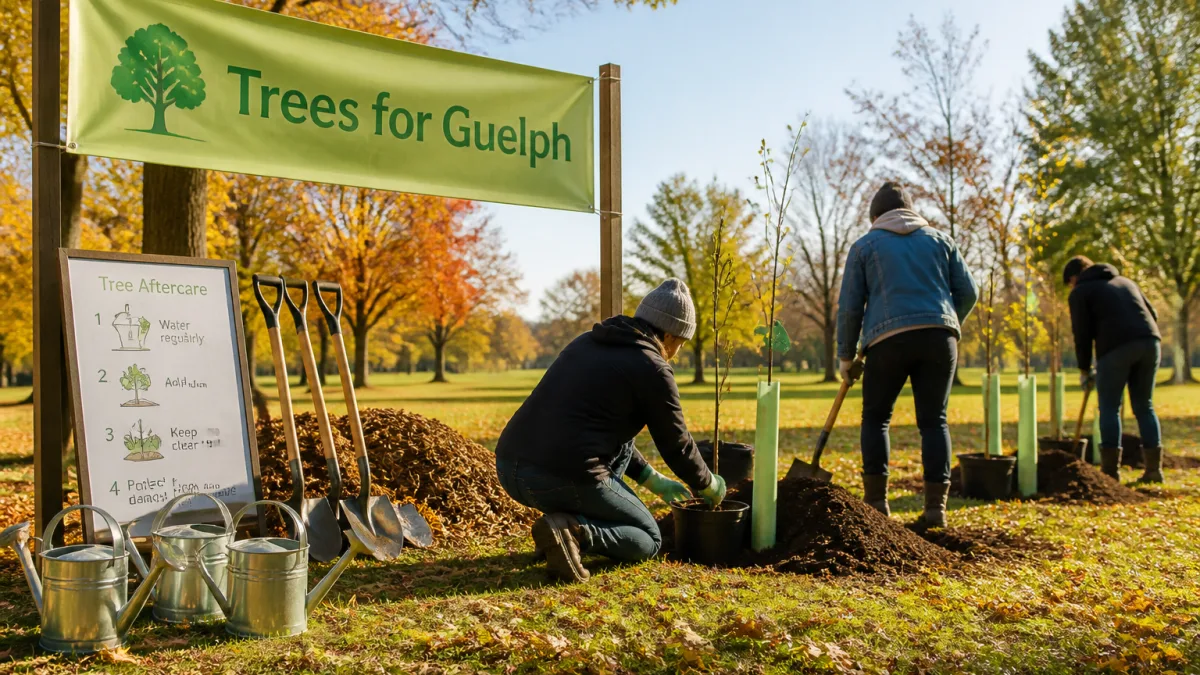
That reminder underpins this year’s local effort. Organizers encourage residents to think beyond planting day and plan for watering, weeding and monitoring during the critical first weeks after trees go in the ground. Volunteers at the events will see those best practices demonstrated and can carry them back to their blocks, schoolyards and shared spaces.
Three dates set for public participation
All sessions are scheduled on Saturday mornings and are designed as no-experience-required events. According to Trees for Guelph, the program will mark National Forest Week and close with a late-October wrap-up session. Details are as follows:
| Date | Time | Focus |
|---|---|---|
| Saturday, September 26 | 9:30 a.m.–12:30 p.m. | Event in recognition of National Forest Week |
| Saturday, October 3 | 9:30 a.m.–12:30 p.m. | Neighbourhood “baby forest” planting |
| Saturday, October 17 | 9:30 a.m.–12:30 p.m. | Final autumn community session |
Maps, specific locations and further opportunities to add greenery at home are available through the organization’s website. The group notes that native stock will be provided on-site, along with shovels and other essentials, to lower barriers for first-time volunteers and families attending together.
What experts recommend for successful plantings
Toolkits from Tree Canada and the Green Municipal Fund outline practical steps that neighbourhood groups and individual residents can apply during and after the fall events:
- Choose shared spaces. Focus on places where shade, habitat and canopy will support everyday use and comfort for nearby residents.
- Value fit over volume. Pick fewer trees that match the site’s soil and conditions, with a clear, realistic plan to keep them healthy.
- Plan for follow-up care. Establish simple routines for watering, weeding and watching saplings, especially in the first weeks and during dry periods.
These measures are intended to increase survival and growth rates so community effort translates into lasting canopy cover. Volunteers will see those principles in action during planting demonstrations at each Guelph event.
Momentum from recent community action
The call for local participation follows a recent example of hands-on tree work by members and staff of the Canadian Real Estate Association (CREA) in Ottawa, where teams planted trees and refreshed a public space. While that effort took place outside the city, it illustrates the type of volunteer-driven approach that organizers hope to replicate at scale in Guelph’s parks, pathways and gathering places.
Residents who want to contribute can mark the dates, gather neighbours, and head out to one or more of the sessions. With tools and materials supplied and instruction available on-site, the events are structured to welcome both newcomers and experienced green-thumbed volunteers. For information on locations and how to participate, visit the Trees for Guelph website.