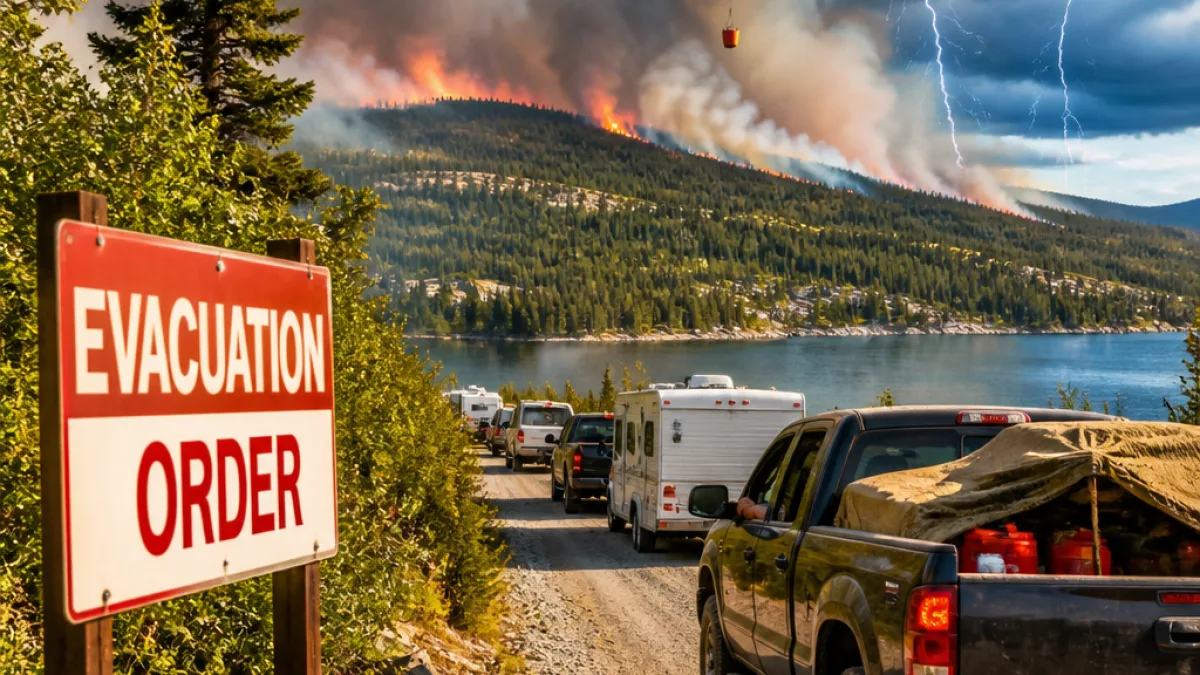
Evacuation orders widen as Interior faces fast-moving fire starts
A burst of convective storms has translated into a sharp escalation of wildfire activity across British Columbia, with almost 100 new ignitions reported in the last 24 hours. The BC Wildfire Service attributes the spike primarily to a volley of more than 4,000 lightning strikes recorded on Friday, driving fresh threats in the Interior and prompting emergency actions by local governments.
Authorities in the Thompson-Nicola Regional District (TNRD) expanded an evacuation order tied to the Fiftynine Creek wildfire, covering additional properties in the Big Bar Lake and Meadow Lake areas. At the same time, the district issued an evacuation alert for the Bonaparte Plateau, advising residents to be packed and prepared to leave if conditions deteriorate.
To the north, the Cariboo Regional District (CRD) enacted a new evacuation order because of the Bowers Lake wildfire, adding to the tally of communities facing immediate displacement as lightning-caused fires emerge and grow in dry fuels.
Where orders and alerts stand
Regional authorities say the evolving situation requires vigilance and rapid compliance with instructions from emergency officials. Based on Friday’s updates, here is a snapshot of key areas:
| Area | Incident | Status |
|---|---|---|
| Big Bar Lake & Meadow Lake | Fiftynine Creek wildfire | Evacuation order expanded |
| Bonaparte Plateau | Lightning-driven fire activity | Evacuation alert issued |
| Bowers Lake | Bowers Lake wildfire | New evacuation order |
Why lightning changed the risk picture
Lightning outbreaks can ignite dozens of fires simultaneously, often in remote terrain, stretching initial attack crews and aviation assets. Many of these starts smoulder before flaring as winds shift or temperatures rise, creating unpredictable growth patterns. Friday’s surge in lightning has compounded that risk profile, adding fresh starts on a landscape already primed by summer heat.
A recent image from the Fraser Canyon underscored the intensity of the fight: a helicopter bucketing during the Brunswick Creek response while smoke from the Ainslie Creek fire hovered in the distance. That scene, captured earlier this month, has become emblematic of what crews are encountering as new cells pop up across ridges and plateaus.
What residents in affected zones should do now
Authorities stress that residents under order must leave immediately, while those under alert should act as though departure could be called at any time. Practical steps include:
- Assemble a grab-and-go kit with essentials such as medications, identification, water, and chargers.
- Prepare to evacuate pets and livestock; load carriers, leashes, and feed.
- Fuel vehicles, map primary and alternate routes, and keep phones fully charged.
- Monitor official channels from your regional district and the BC Wildfire Service for the most current orders, alerts, and road conditions.
Up-to-date information is available through the BC Wildfire Service and emergency notifications posted by the TNRD and CRD. Travellers should also check routes with provincial road advisories before heading toward affected areas.
Capacity, containment and the path ahead
With numerous new starts arriving in quick succession, incident command will prioritize fires that pose the greatest risk to life and property. That can mean visible smoke plumes in higher elevations are monitored while ground crews focus on fires encroaching on communities, critical infrastructure, or evacuation corridors. Aircraft assignments are similarly triaged based on threat and weather windows.
Wildfire managers caution that even when rain accompanies thunderstorms, it is often patchy and short-lived. Lightning can travel far from storm cores and strike dry duff, leaving sleeper fires that surface hours or days later. As a result, wildfire counts may continue to shift throughout the weekend as previously undetected ignitions are located and actioned.
Residents in the Big Bar Lake, Meadow Lake, Bonaparte Plateau and Bowers Lake areas should remain alert to changing conditions. Adhering to evacuation orders and being prepared under alerts are the most effective ways to reduce risk to families and support fire operations in the field.