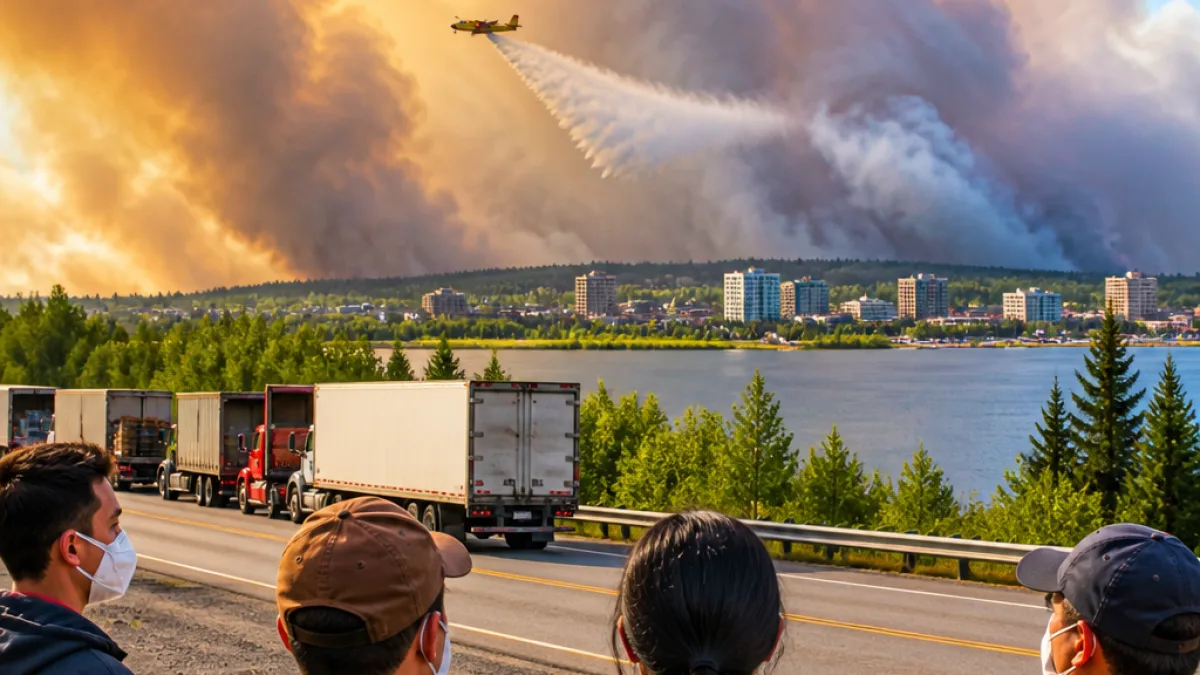
Smoke from a string of wildfires in northern Ontario continued to affect air quality south of the lakes on Friday, with Environment Canada cautioning that hazy conditions may temporarily improve in some places but could persist into the weekend for others.
Fires still burning in the north
Provincial and federal officials say the region remains active with forest fires. Authorities reported a total of 136 active fires in the northwest, of which 63 were classified as out of control, and another 44 active fires in the northeast.
| Region | Active fires | Out of control |
|---|---|---|
| Northwest | 136 | 63 |
| Northeast | 44 | Not specified |
Among the communities affected is Namaygoosisagagun First Nation — also known as Collins First Nation — north of Thunder Bay, where flames have already damaged or destroyed property. The scale of the blazes has prompted public appeals for assistance and coordination between governments and agencies.
Jurisdictional response and assistance
The Ontario government and the Assembly of First Nations have sought immediate federal support. Other provinces have also contributed resources: Alberta has deployed firefighters and aerial firefighting assets, including water bombers, to help combat the blazes.
Federal officials say they are in close communication with provincial counterparts and are prepared to provide help as required. The ongoing movement of personnel and equipment reflects the multi-jurisdictional nature of wildfire response in Canada.
Health and public-safety implications
Air-quality impacts have been evident well away from the fire zones. In southern Ontario cities, residents reported smoky skies and the smell of smoke. Environment Canada meteorologists warned that while some locations could see temporary improvement on Friday, others might continue to experience smoky or hazy conditions into the weekend, depending on wind shifts and fire behaviour.
- Those with respiratory conditions, children and older adults should limit strenuous outdoor activity when visible smoke is present.
- People can check local air-quality indexes and advisories from Environment Canada and municipal public-health units for up-to-date guidance.
- Travel may be affected by reduced visibility near and downwind of active fires; monitor local transportation reports.
Emergency-management officials continue to monitor the situation, prioritizing protection of communities and coordinating evacuations where necessary. The deployment of interprovincial crews and aircraft aims to contain fires and limit further smoke production that affects distant population centres.
As conditions evolve, residents are urged to follow public-safety instructions from local authorities and to consult official air-quality resources before planning outdoor activities.