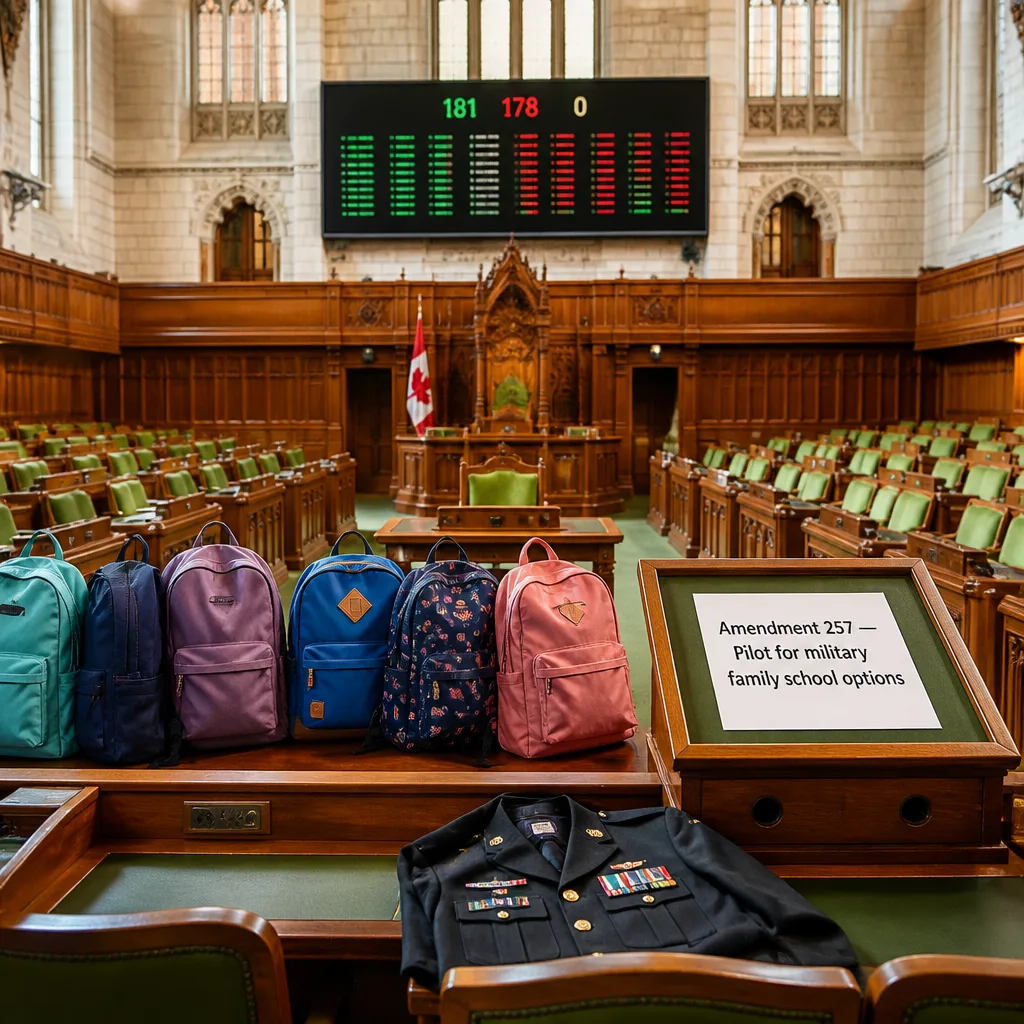
A bid to give United States military families direct financial support to pursue alternatives to their assigned public schools failed by a slim margin as lawmakers considered the 2027 National Defense Authorization Act.
What lawmakers voted on
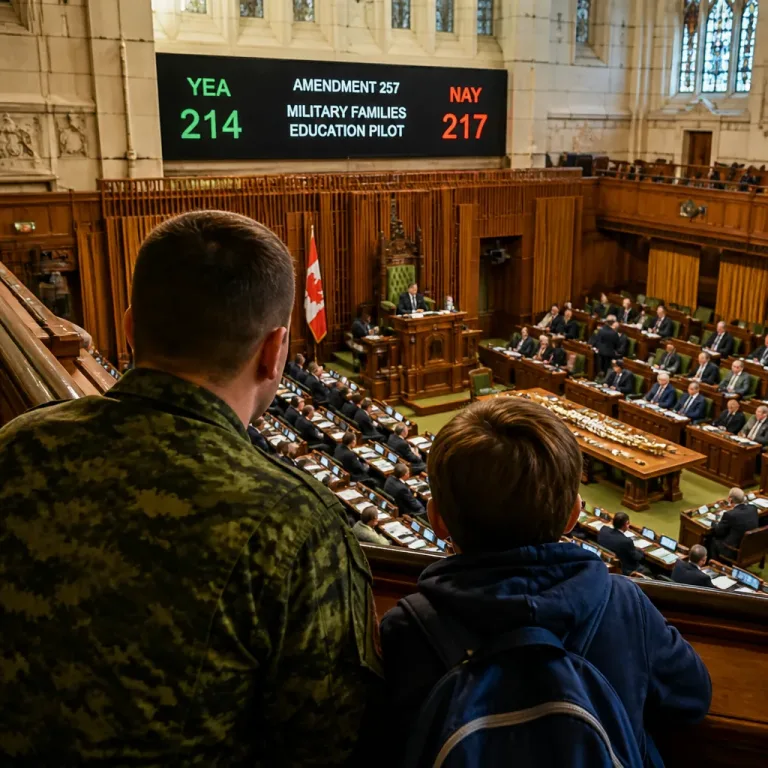
Representatives considered Amendment 257, a plan put forward by Rep. Addison McDowell, R‑N.C., that would have established a pilot program providing funds to servicemembers who choose private schools, charter schools, homeschooling or other educational options for their children.
The amendment received the backing of 214 House members but ultimately fell three votes short of passage.
Scope and context
Proponents framed the measure as a way to address a persistent challenge for military families: frequent relocations, deployments and reassignments that can disrupt children’s schooling. Supporters argue that offering portable education funding would help families find stable, appropriate learning environments regardless of where they are stationed.
While the proposed pilot stopped short of establishing a full Education Savings Account (ESA)—which would permit unused funds to be rolled over for future needs such as college tuition or workforce training—it was described by advocates as a historic opportunity to broaden educational choice for military households.
Public and political signals
The proposal follows an executive endorsement: President Donald Trump signed an executive order last year backing the idea of extending greater educational choice to military families.
Polling cited by supporters indicated substantial approval within the military community: 74 percent of military parents expressed support for ESAs, and many also favour charter schools and open‑enrolment policies. Advocates note that a majority of military parents report using tutoring for their children, a cost ESAs could potentially offset.
Immediate consequences and next steps
With the amendment failing narrowly, the specific pilot envisioned by Amendment 257 will not be included in the NDAA as voted. That leaves the issue to future legislative attempts, separate bills or administrative action. Supporters may seek to reintroduce similar measures or press for broader policy changes in forthcoming sessions.
The debate highlights a policy trade‑off: whether Congress should create federally funded, portable education options targeted at a specific population, and how such programs would interact with existing school funding and military family supports.
- Measure: Amendment 257 to the 2027 NDAA
- Sponsor: Rep. Addison McDowell (R‑N.C.)
- House support: 214 votes in favour; failed by three votes
- Public support cited: 74% of military parents favour ESAs
| Item | Figure |
|---|---|
| Children with access to some form of school choice (U.S.) | ~22 million (about 40% of K‑12 students) |
| House supporters of Amendment 257 | 214 |
For parents and guardians in military families, the vote means current access to alternative educational funding remains unchanged at the federal level, though the policy debate is likely to continue. Those tracking developments should watch for renewed legislative efforts, potential departmental guidance, or state‑level action that could affect how military children access schooling while their families move or deploy.