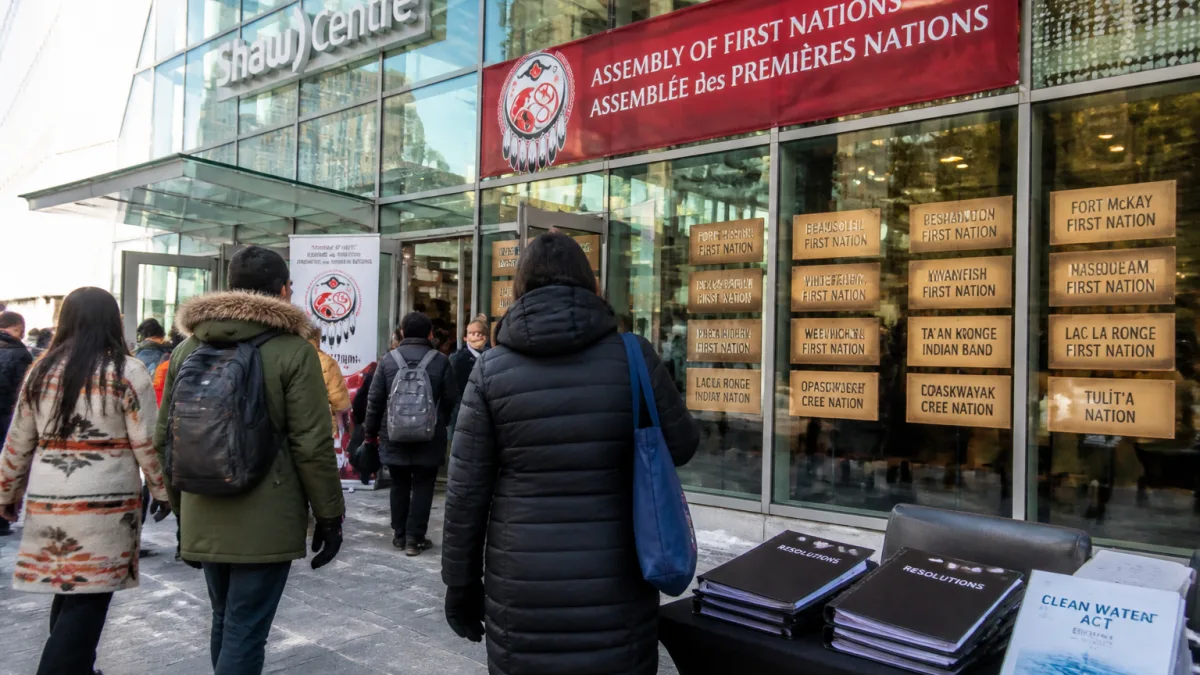
Chiefs convene in Ottawa to set direction on national Indigenous priorities
Hundreds of First Nations leaders are meeting in Ottawa this week for the Assembly of First Nations’ annual gathering, where delegates are set to debate 53 resolutions over three days. The agenda spans federal major projects, the state of child welfare, reforms to Indian Act status, and calls urging the Vatican to rescind historic papal decrees, among other items.
Presentations will focus on the federal government’s recently tabled First Nations Clean Water Act, ongoing consultations tied to major project development, child welfare reform, and preparations for an upcoming First Nations meeting with provincial premiers and Prime Minister Mark Carney. The event has drawn heightened attention from Ottawa-based ministries as well as private sector and environmental organizations.
“First Nations are leading the way in all walks of life and in all regions of this country,” National Chief Cindy Woodhouse Nepinak said Monday. “We have to make a stronger Canada from all of us by working together more closely.”
Federal ministers expected as legislation and policy come under scrutiny
Several federal ministers are slated to attend, reflecting the breadth of files under discussion. The Assembly of First Nations (AFN) is a national advocacy organization that takes its direction from approximately 630 First Nations chiefs through its assemblies. While it is not itself a rights-holding institution, it represents rights-holding chiefs and conveys their positions to governments and stakeholders.
| Minister | Portfolio |
|---|---|
| Mandy Gull-Masty | Indigenous Services |
| Rebecca Alty | Crown-Indigenous Relations |
| Tim Hodgson | Natural Resources |
| Evan Solomon | Artificial Intelligence |
| Gary Anandasangaree | Public Safety |
The meeting provides an Ottawa-stage for direct exchanges on federal priorities that intersect with First Nations jurisdiction and community infrastructure. With parliamentary and departmental officials nearby, delegates will press for clarity on timelines, regulatory approaches and fiscal support across multiple files.
Clean water rights and project approvals in focus
Indigenous Services Minister Mandy Gull-Masty reintroduced legislation this summer aimed at ensuring reliable access to clean drinking water in First Nations communities. The bill follows a previous effort that did not pass under the former government of Prime Minister Justin Trudeau. While much of the framework aligns with that earlier proposal, the new text removes language that would have immediately recognized a right to clean drinking water, instead committing to the “progressive realization” of that right.
That shift is expected to feature prominently in floor debate. A resolution proposed by Chief Roderick Gould Jr. of Abegweit First Nation calls on chiefs to press for the explicit recognition of the right to clean water in the new legislation. For communities that have lived with long-standing advisories and infrastructure gaps, the distinction between immediate recognition and a gradual approach could shape how obligations are interpreted, prioritized and funded over time.
Local implications for residents and institutions in Ottawa
For Ottawa residents, the outcomes of this week’s discussions matter on several levels. Federal departments headquartered in the capital will be responsible for interpreting and implementing any policy shifts on major projects, water, and child welfare. As the centre of federal decision-making, Ottawa is where changes to regulatory processes and program delivery are designed and monitored, affecting how quickly communities see results.
Major projects policy is also on the agenda. Chiefs will hear about consultations tied to federal approvals and oversight of large developments. The balance between economic participation, environmental protection and Indigenous rights continues to drive negotiations over project timelines and conditions. Any signals from Ottawa about coordination among departments, or adjustments to consultation frameworks, could affect both regional economies and national infrastructure plans.
What chiefs will weigh
Delegates are expected to consider positions across a broad set of themes. Items flagged on the agenda include:
- Major projects and consultations: Direction on engagement, environmental reviews and benefit agreements.
- Child welfare reform: Oversight, jurisdictional issues and long-term supports for children and families.
- Indian Act status: Proposed changes affecting registration, identity and community membership.
- Clean drinking water: Standards, funding models and recognition of rights within federal law.
- Historical redress: Calls related to Vatican-era papal decrees and their contemporary implications.
Federal representatives, industry and environmental groups have signalled strong interest in the proceedings. That engagement underscores how AFN resolutions can influence federal priorities, departmental mandates and the terms of future negotiations, even as the organization emphasizes it is guided by the collective direction of rights-holding chiefs.
With 53 resolutions before the assembly and multiple ministers in attendance, this Ottawa meeting is poised to set markers on files that have been sources of litigation, policy change and infrastructure investment for years. The deliberations will help frame upcoming talks with premiers and the prime minister, while shaping how federal departments in the capital plan and execute programs that reach into communities across the country.