Quebec and Ottawa commit to new builds amid housing strain
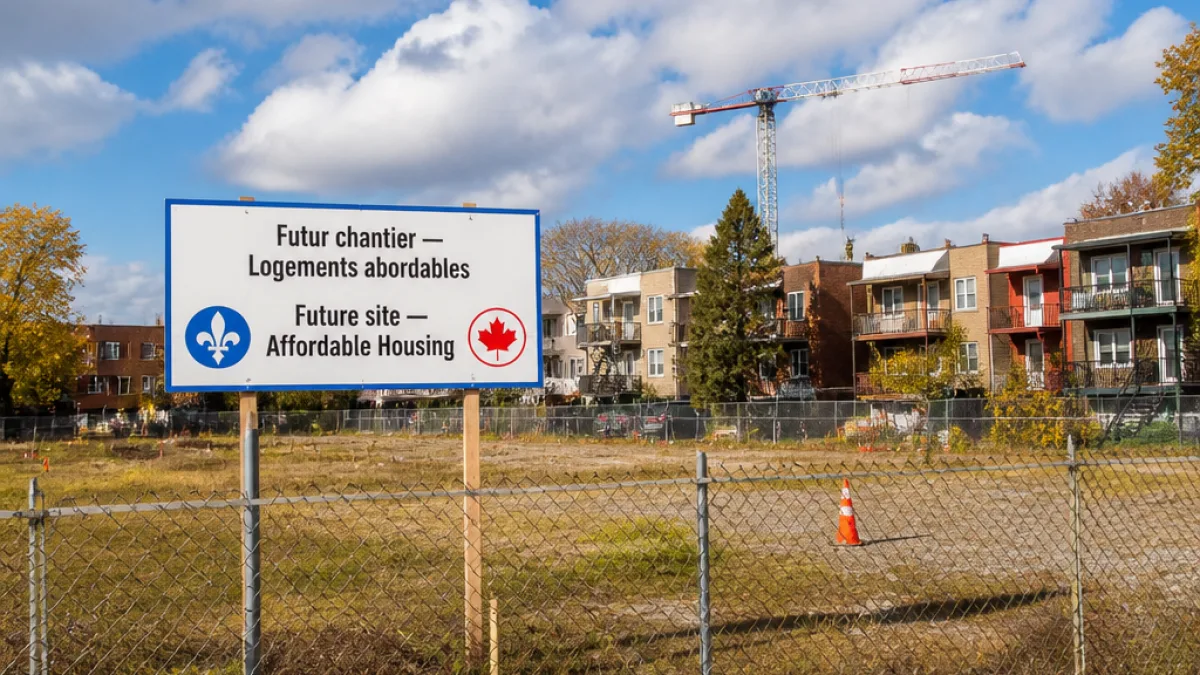
Quebec and the federal government say construction on 1,650 affordable housing units in Montreal could move ahead in the coming year, signalling one of the most substantial additions to the city’s lower-cost stock in recent memory.
Quebec’s Minister Responsible for Housing, Karine Boivin Roy, confirmed the plan on Saturday. On hand for the announcement were federal representatives Rachel Bendayan, Parliamentary Secretary to the Prime Minister, and Caroline Desrochers, Parliamentary Secretary to Canada’s Minister of Housing and Infrastructure, underscoring the joint nature of the funding.
What’s known — and what isn’t yet
Officials presented the figure as a target within Montreal, with the expectation that shovels could be in the ground within the next year. Precise details on project locations, delivery timelines for each site, and the mix of units (such as family-sized or supportive housing) were not immediately released. Information on per‑project funding envelopes, delivery partners, and operating arrangements was also not provided at the announcement.
Even with those outstanding specifics, the scale matters: adding more than a thousand lower‑rent apartments would provide measurable relief in a market where vacancy remains tight and rents have risen faster than many households’ budgets. For municipal and community housing providers, it represents near‑term construction opportunities that could be sequenced with existing approved plans, provided zoning and permitting align.
Why this matters for Montrealers
Montreal’s housing pressures have built over several years, driven by population growth, aging stock, and construction costs that have complicated non‑profit and municipal builds. Affordable projects typically require layered financing to close gaps between construction costs and the rents low‑ and moderate‑income tenants can afford. A coordinated provincial–federal commitment is therefore a practical lever to push projects from planning into active construction.
Community groups and housing providers have long argued that predictability — not just headline figures — determines whether units get delivered on time. The announcement suggests a window during which organizations can align land, approvals, and contractors, but delivery will hinge on how quickly agreements are finalized and sites prepared. For tenants facing rising rents or long wait lists, the timing of first occupancies will be the metric that matters most.
Coordination across governments
The presence of senior federal parliamentary secretaries alongside Quebec’s housing lead points to a coordinated approach. Such projects often braid together provincial programs with federal streams to cover both capital and, in some cases, ongoing affordability supports. Aligning criteria — for example, definitions of affordability, rent thresholds, and eligibility of non‑profit partners — is typically the gating factor between announcement and groundbreaking.
City involvement will also be pivotal. Municipalities control zoning, density, and certain fee structures, and can expedite approvals for non‑market housing. While Montreal’s specific role in this tranche of units has not yet been outlined publicly, local planning decisions will influence how quickly sites can progress through design review, permitting, and tendering.
What to watch next
- Site disclosure: Identification of project addresses, delivery partners, and the sequence of builds.
- Affordability terms: Clarity on rent levels, income targets, and duration of affordability.
- Construction schedules: Timelines for procurement, groundbreaking, and phased occupancy.
Residents and housing providers should watch for formal program details to appear through provincial and federal housing channels, as well as municipal notices once specific parcels are confirmed. Non‑profit and co‑operative developers typically move quickly after funding frameworks are set, but construction market capacity and materials costs can still affect start dates.
Who was at the announcement
| Official | Role | Involvement |
|---|---|---|
| Karine Boivin Roy | Quebec Minister Responsible for Housing | Announced the planned 1,650 affordable units in Montreal |
| Rachel Bendayan | Parliamentary Secretary to the Prime Minister | Represented the federal government at the event |
| Caroline Desrochers | Parliamentary Secretary to the Minister of Housing and Infrastructure | Joined the federal announcement in Montreal |
Local impact and next steps
If delivered as described, the additional 1,650 units would represent new options for households priced out of the private market, including seniors, families, and workers in lower‑income brackets. The ultimate reach depends on how many apartments are deeply affordable versus modestly discounted. Clear, accessible application processes and partnerships with community agencies will be essential to connecting eligible tenants with new homes once they near completion.
For Montreal’s planning apparatus, the commitment offers a chance to bundle infrastructure and transit considerations with housing supply. Coordinating supportive services, such as nearby childcare and transit access, can help ensure projects succeed over the long term.
While the latest commitment is not a singular fix to a complex market, it is a material step that, if translated quickly into foundation work and framing on multiple sites, could make a visible difference. The test now is speed and execution — moving from podium announcements to occupied homes.