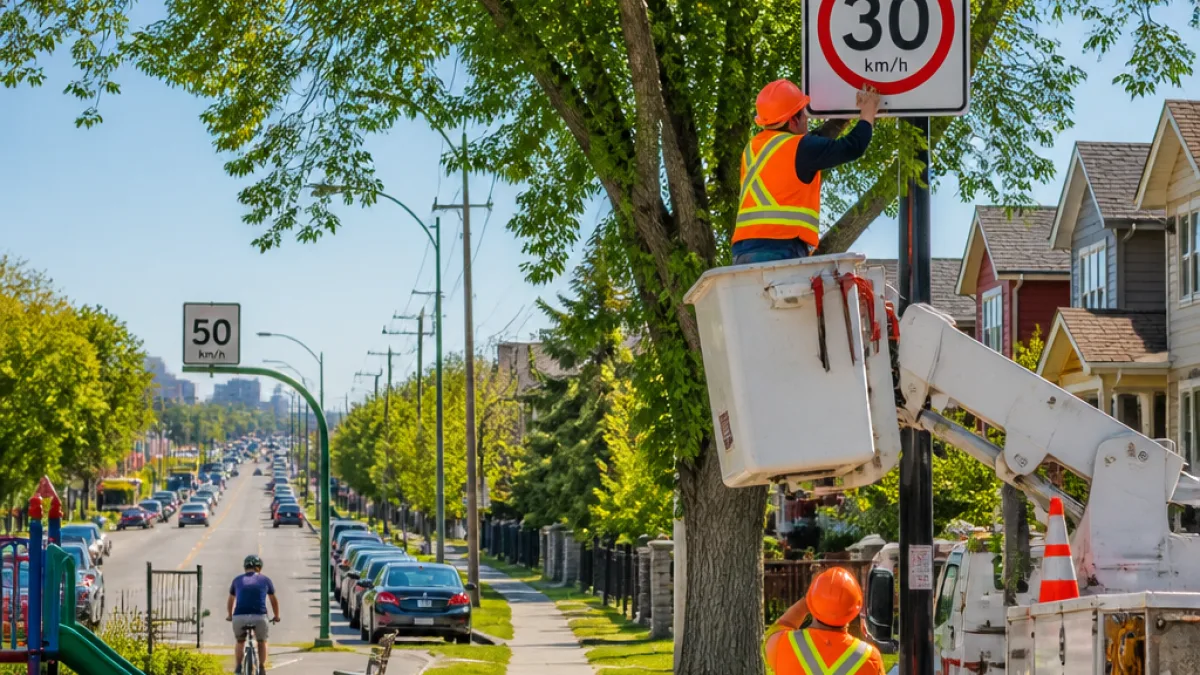
New 30 km/h limit targets calmer, safer neighbourhood streets
The City of Richmond has begun installing signs to implement a new 30 km/h speed limit on local residential roads across the municipality, council confirmed in a statement. The change follows the formal adoption of Amendment Bylaw No. 10750 on June 8, 2026, which sets the lower limit for nearly all local streets within residential neighbourhoods.
City officials say the measure is intended to create "safer, calmer and more livable neighbourhood streets" for people who walk, cycle and make short trips to schools, parks and nearby destinations. Installation of the signage is underway and the city expects the work to take approximately three months. Until signs are in place in a given area, the existing speed limits remain in effect and are enforceable.
“We’re asking drivers to slow down and follow the lower speed limits in residential neighbourhoods. It’s an important step to help support those daily trips and the quality of life in our communities.” — Mayor Malcolm Brodie
Scope, exceptions and precedent
The rollout covers nearly 50 neighbourhoods and about 500 kilometres of roadway. The municipality notes that some arterial and perimeter roads will remain at 50 km/h, including Westminster Highway, Granville Avenue and River Road. The law change relies on municipal authority: in British Columbia the default speed on municipal roads is 50 km/h unless a local bylaw establishes otherwise.
- Areas already using 30 km/h include Hamilton, Steveston, Burkeville, Barnes/Flury and Princess/London.
- The new citywide phase builds on prior neighbourhood slow zones.
- Sign installation completion marks the moment the new limit becomes enforceable.
Local context and likely consequences
Lower speed limits on local streets are part of the city’s broader transportation safety goals and mirror similar municipal programs elsewhere, such as Vancouver’s Neighbourhood Slow Zone initiative. For residents, the bylaw change could affect commuting patterns, courier and delivery services, and enforcement resources. The city did not announce a detailed enforcement plan alongside the rollout; until signs are erected, existing limits and enforcement remain unchanged.
Transport and public-safety advocates generally cite reduced speeds as a way to lower the severity and likelihood of collisions, particularly for vulnerable road users. For drivers, the distinction between local roads and arterial routes will be a practical guide; arterial and perimeter streets designated by the city will continue to carry higher limits to support traffic flow.
Where to find more information
The City of Richmond directs residents to its website for the full text of Amendment Bylaw No. 10750 and updates on sign installation timelines for specific neighbourhoods. As the rollout proceeds over the coming months, residents should watch for new signage indicating where the 30 km/h limit is in effect.
| Item | Detail |
|---|---|
| Adopted by council | Amendment Bylaw No. 10750, June 8, 2026 |
| New residential limit | 30 km/h |
| Approximate coverage | Nearly 50 neighbourhoods; ~500 km of roadway |
| Implementation window | Sign installation — approximately 3 months |